
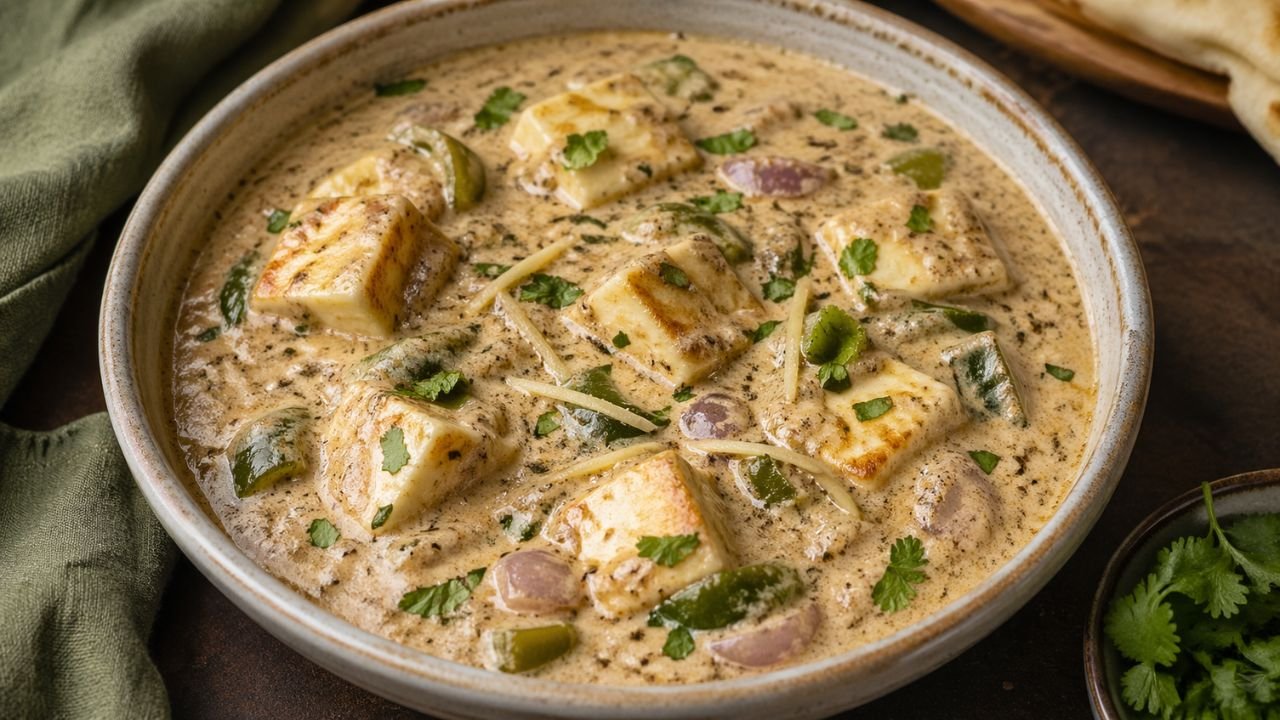
Paneer Peshawari is a good recipe for days when you want a rich North Indian gravy without making the cooking feel complicated. The common mistake with this dish is rushing the onion-tomato base or adding paneer too early, which can make the gravy sharp, watery, or rubbery. A good Paneer Peshawari recipe should give you a creamy, mildly spiced gravy with soft paneer pieces that hold their shape.
This version keeps the method practical. It uses everyday ingredients, a simple paste, and a controlled cooking order. The gravy is built in layers: onions for body, tomatoes for balance, cashews for creaminess, and dried fenugreek for the familiar restaurant-style finish. You do not need special equipment beyond a pan and a blender. The result works well with roti, naan, paratha, jeera rice, or even plain steamed rice.
Ingredients
- 250 g paneer, cut into medium cubes or rectangles
- 2 medium onions, roughly chopped
- 3 medium tomatoes, roughly chopped
- 10 to 12 cashews, soaked in warm water for 15 minutes
- 1 tablespoon oil
- 1 tablespoon butter, plus a little extra for finishing if desired
- 1 teaspoon cumin seeds
- 1 bay leaf
- 1 small cinnamon stick
- 2 green cardamoms, lightly crushed
- 1 tablespoon ginger-garlic paste
- 1 green chilli, slit or chopped, optional
- 1 teaspoon Kashmiri red chilli powder, for colour and mild heat
- 1 teaspoon coriander powder
- 1/2 teaspoon cumin powder
- 1/4 teaspoon turmeric powder
- 1/2 teaspoon garam masala
- 1 teaspoon kasuri methi, crushed between your palms
- 3 to 4 tablespoons fresh cream, or 2 tablespoons thick curd for a lighter option
- 1 teaspoon sugar or a small pinch, optional, only if tomatoes are too sharp
- Salt, as needed
- 3/4 to 1 cup water, adjusted for gravy thickness
- 2 tablespoons chopped coriander leaves for finishing
Use fresh paneer if possible, but packaged paneer also works well if softened before cooking. If using packaged paneer from the fridge, soak the pieces in warm water for 10 minutes, then drain. This simple step prevents the paneer from becoming dry in the gravy.
Cashews give the gravy body and smoothness. If you want a budget-friendly option, replace half the cashews with 1 tablespoon melon seeds or use 2 tablespoons thick cream at the end. The flavour will be slightly different, but the gravy will still be pleasant and creamy.
Preparation
Start by preparing the base. Put the chopped onions, tomatoes, and soaked cashews within easy reach. Keep the spices measured before heating the pan. Paneer gravies move quickly once the masala begins to cook, so having everything ready prevents burning and overcooking.
1. Soften the paneer. Place the paneer pieces in warm water for 10 minutes if they are firm or refrigerated. Drain them gently and keep aside. Do not boil the paneer. Warm water is enough to soften it without breaking the pieces.
2. Cook the onion-tomato mixture. Heat oil and butter in a heavy pan over medium heat. Add cumin seeds, bay leaf, cinnamon, and cardamoms. Let them sizzle for a few seconds. Add chopped onions with a pinch of salt and cook until they turn light golden. This should take 7 to 9 minutes on medium heat. The onions do not need to become dark brown, but they should lose their raw smell.
Add ginger-garlic paste and green chilli. Cook for about one minute, stirring often. Add the tomatoes and cook until they soften and the mixture looks pulpy. This usually takes 6 to 8 minutes. If the tomatoes stick, add one or two tablespoons of water, not too much. The aim is to soften the base, not boil it.
3. Blend the gravy base. Turn off the heat and let the mixture cool for a few minutes. Remove the bay leaf and cinnamon if your blender is not strong. Blend the onion-tomato mixture with soaked cashews into a smooth paste. Add a splash of water only if needed. A smooth paste gives Paneer Peshawari its creamy texture without needing too much cream.
4. Cook the spices properly. Return the same pan to low-medium heat. Add a small knob of butter if the pan looks dry. Add Kashmiri chilli powder, coriander powder, cumin powder, turmeric, and a tablespoon of water. Stir for 20 to 30 seconds. This prevents the powdered spices from burning and helps their colour spread evenly through the gravy.
Add the blended paste back to the pan. Stir well. Cook the paste for 6 to 8 minutes, stirring often, until it thickens slightly and leaves a light sheen around the edges. This is an important step. If the paste is not cooked enough, the gravy can taste raw even after adding cream.
5. Adjust the gravy consistency. Add 3/4 cup water and mix well. Let the gravy simmer for 5 minutes on low heat. If you want a thinner curry for rice, add a little more water. If you want it thick for naan or paratha, keep it slightly reduced. Add salt and taste the gravy. If the tomatoes taste too sharp, add a small pinch of sugar. Do not add too much because the dish should not become sweet.
6. Add cream and paneer. Lower the heat before adding cream. Stir it in slowly. Once the gravy looks smooth, add the paneer pieces. Mix gently so the paneer is coated but not broken. Simmer for 2 to 3 minutes only. Paneer does not need long cooking. Longer simmering makes it chewy, especially if the paneer is not very fresh.
7. Finish the Paneer Peshawari. Crush kasuri methi between your palms and add it to the gravy. Add garam masala and chopped coriander. Stir once and turn off the heat. Rest the curry for 5 minutes before serving. This short rest helps the gravy settle and cling better to the paneer.
Serve Paneer Peshawari hot with naan, tandoori roti, phulka, paratha, jeera rice, or plain basmati rice. For a simple meal, pair it with cucumber slices, onion rings, or a small bowl of plain curd. The gravy is rich, so it works best with something plain on the side.
Useful Kitchen Tools
A heavy-bottomed pan helps the onion-tomato paste cook evenly without catching at the base. A basic blender or hand blender is useful for getting a smooth gravy. A silicone spatula is also practical because it scrapes the thick masala from the sides of the pan without wasting it.
Cooking, Baking, or Use Tips
Cook the masala paste until thick, smooth, and slightly glossy before adding water. A good check is to drag a spatula through it: if the line stays visible briefly, it is ready. Add paneer near the end, since long cooking can make it firm. Soak firm paneer in warm water, stir gently after adding, and lightly sear only if needed.
Adjust gravy thickness and spice level based on serving style: thicker and spicier for naan or paratha, looser and milder for rice. Add cream on low heat to prevent splitting; curd needs even gentler heat. Add crushed kasuri methi at the end to avoid bitterness.
The gravy base can be made up to two days ahead; add water, cream, and paneer only when serving. If the gravy thickens, loosen it with hot water. If it tastes acidic, simmer longer before adding sugar or cashew paste. If it tastes dull, adjust salt first, then finish with kasuri methi and coriander.
Variations or Conservation
Paneer Peshawari is flexible enough for everyday cooking. You can keep it rich for guests or make it lighter for a weekday meal. The main structure should stay the same: a cooked onion-tomato base, a creamy element, gentle spices, and paneer added at the end.
- Lighter version: Reduce the butter to 1 teaspoon and replace cream with whisked thick curd. Keep the heat low after adding curd.
- Richer version: Add 1 extra tablespoon cream at the end and finish with a small knob of butter. This works well when serving with naan.
- Vegetable version: Add lightly cooked peas, capsicum, or mushrooms before adding paneer. Avoid overcrowding the gravy or it will lose its creamy texture.
- No-cashew version: Use melon seeds, sunflower seeds, or a little extra cream. Soak seeds before blending for a smoother result.
- Spicier version: Add one extra green chilli or a small pinch of hot chilli powder. Keep the Kashmiri chilli for colour.
For storage, cool the curry completely before placing it in an airtight container. Refrigerate for up to two days. The gravy will thicken as it sits because of the cashew and cream. Reheat it gently in a pan with a splash of hot water. Keep the flame low and stir from the bottom so the gravy does not stick.
Avoid repeated reheating. If you have made a larger batch, store the gravy and paneer separately when possible. This is the best method for texture. Keep the cooked gravy base in one container and softened paneer in another. When serving, heat only the amount of gravy you need, add paneer, simmer briefly, and finish with coriander. This keeps the paneer from becoming rubbery over two meals.
Freezing is possible for the gravy base, but not ideal after cream and paneer are added. If you want to freeze, freeze only the cooked onion-tomato-cashew masala before adding cream. Thaw it in the fridge, heat it in a pan, add water, cream, and fresh paneer. This gives a better texture than freezing the complete curry.
Leftover Paneer Peshawari can be reused without waste. Mash a few paneer pieces into the gravy and use it as a filling for a quick wrap with onions and cucumber. You can also loosen the gravy with hot water and use it as a sauce for cooked vegetables. If only a small amount is left, mix it into cooked rice for a simple lunch. Add a little fresh coriander or lemon juice at the end to make it taste fresh again.
When serving leftovers, check the thickness before heating. Thick cashew gravies can stick quickly. Add a spoon of water to the pan first, then add the curry. This small step protects the bottom of the pan and helps the gravy warm evenly.
Conclusion
Paneer Peshawari is worth repeating because it gives a creamy North Indian gravy without a complicated process. The ingredients are easy to find, the method is manageable, and the dish fits both regular meals and small gatherings. Once you understand when to cook the masala, when to add cream, and when to stop simmering the paneer, the recipe becomes reliable. It is rich but not difficult, practical but still satisfying, and easy to adjust based on what is already in the kitchen.
