
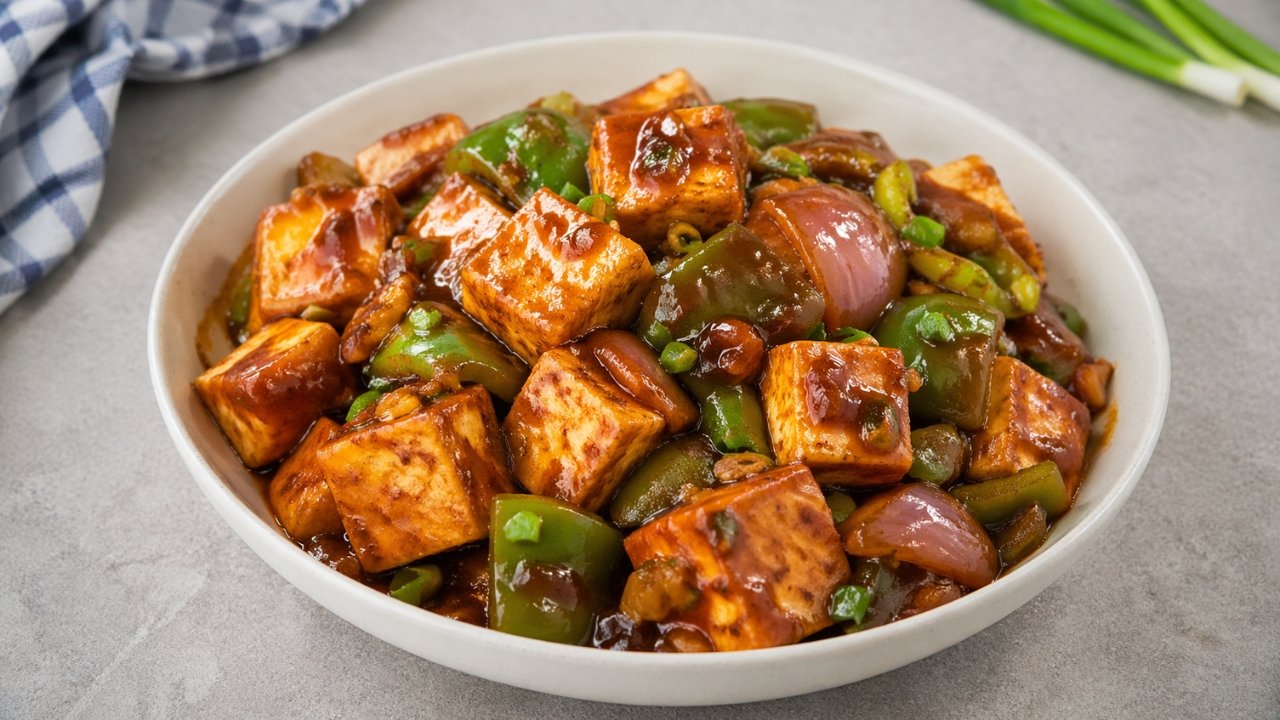
Paneer chilly masala is useful when you want something bold, quick, and filling without making a full restaurant-style spread. The common problem with this dish is that the paneer can turn rubbery, the vegetables can go soft, and the sauce can become watery or too salty. A good Indo-Chinese paneer chilly masala should be saucy but not thin, spicy but not harsh, and full of crisp edges from the paneer and vegetables.
This recipe keeps the method practical for a home kitchen. It uses everyday ingredients, a short cooking time, and a simple six-step sequence. You do not need a deep fryer or special equipment. The paneer is lightly coated and pan-fried, then tossed with onions, capsicum, garlic, green chillies, and a thick masala-style Indo-Chinese sauce. It works as a starter, a side dish with fried rice, or a quick dinner with plain paratha or roti.
Ingredients
- 250 g paneer, cut into medium cubes
- 2 tablespoons cornflour, for coating the paneer
- 1 tablespoon all-purpose flour, optional, for a slightly firmer coating
- 1/4 teaspoon salt for the paneer coating
- 1/4 teaspoon black pepper powder
- 2 to 3 tablespoons water, only as needed for coating
- 2 to 3 tablespoons oil, for pan-frying and cooking
- 1 medium onion, cut into squares or thick slices
- 1 medium capsicum, cut into squares; green works well, but red or yellow can also be used
- 1 small carrot, thinly sliced or cut into sticks, optional
- 1 tablespoon finely chopped garlic
- 1 teaspoon finely chopped ginger
- 2 green chillies, slit or chopped; adjust to taste
- 2 tablespoons spring onion whites, optional but useful for Indo-Chinese flavour
- 2 tablespoons spring onion greens, for finishing
- 1 tablespoon soy sauce
- 1 tablespoon red chilli sauce
- 1 tablespoon tomato ketchup
- 1 teaspoon vinegar
- 1 teaspoon green chilli sauce, optional
- 1/2 teaspoon sugar, useful for balancing vinegar and chilli sauce
- 1/4 cup water for the sauce
- 1 teaspoon cornflour mixed with 2 tablespoons water, for thickening
- Salt, only if needed after tasting, because soy sauce is already salty
Use firm paneer if you want neat cubes that hold shape. Soft malai paneer can be used, but handle it gently and avoid stirring too much. If using frozen paneer, thaw it first and soak it in warm water for 10 minutes. Drain and pat it dry before coating. This small step prevents the outside from becoming wet and sticky while frying.
Preparation
Start by preparing all ingredients before switching on the stove. Paneer chilly masala cooks quickly once the pan is hot, and the vegetables need only a short time. If you chop garlic while the onions are already cooking, the capsicum may soften too much before the sauce is ready.
Cut the paneer into medium cubes, about the size used for tikka or chilli paneer. Very small cubes dry out quickly. Very large cubes do not absorb enough sauce. Pat the paneer with a clean cloth or kitchen paper. This is important because wet paneer makes the coating slide off.
- Coat the paneer. In a bowl, mix cornflour, all-purpose flour, salt, and black pepper. Add the paneer cubes and toss gently. Sprinkle 2 to 3 tablespoons of water, just enough to make a thin coating cling to the paneer. The mixture should not become a flowing batter. A light sticky coating is enough for pan-frying.
- Pan-fry the paneer. Heat 1 to 2 tablespoons oil in a wide pan. Place the coated paneer pieces in a single layer. Cook on medium-high heat until the edges turn light golden. Turn the cubes gently and fry another side. You do not need to brown every side completely. The aim is to create a firm outside while keeping the paneer soft inside. Remove the paneer to a plate.
- Cook the aromatics. In the same pan, add a little more oil if the pan looks dry. Add chopped garlic, ginger, green chillies, and spring onion whites. Cook for about 30 to 40 seconds on medium-high heat. Do not brown the garlic too much. Burnt garlic can make the whole sauce taste bitter.
- Add the vegetables. Add onion, capsicum, and carrot if using. Toss on high heat for 1 to 2 minutes. The vegetables should stay slightly crisp. For Indo-Chinese style, the onion and capsicum should not become soft like a curry base. They should keep shape and give a fresh bite.
- Make the masala sauce. Lower the heat for a few seconds. Add soy sauce, red chilli sauce, tomato ketchup, vinegar, green chilli sauce if using, and sugar. Stir quickly. Add 1/4 cup water and bring it to a simmer. Taste before adding salt. In many kitchens, no extra salt is needed because soy sauce and chilli sauce already carry enough seasoning.
- Thicken and toss. Stir the cornflour-water mixture once again, because cornflour settles at the bottom. Pour it into the pan while stirring. The sauce will thicken in less than a minute. Add the fried paneer and toss gently until every piece is coated. Finish with spring onion greens. Switch off the heat as soon as the paneer is coated and glossy.
The final paneer chilly masala should look thick and shiny, not soupy. If the sauce becomes too thick, add one or two tablespoons of hot water and toss again. If it remains watery, cook for another minute on high heat, but do not overcook after adding paneer. Paneer continues to firm up in residual heat.
Useful Kitchen Tools
A wide non-stick or well-seasoned pan helps the paneer fry evenly without using too much oil. A flat spatula is better than a spoon because it turns paneer cubes without breaking them. Keep a small bowl ready for the cornflour slurry, as adding dry cornflour directly to the pan can create lumps.
Cooking, Baking, or Use Tips
Moisture control is the most important part of paneer chilly masala. Paneer, sauces, onion, and capsicum all release some water, so use a wide pan, cook the vegetables on fairly high heat, and do not cover the pan. Covering traps steam and can make the dish watery.
Test one paneer cube before frying the full batch. If the coating sticks to the pan or falls off, the paneer is too wet or the oil is not hot enough. Pat the paneer dry and let the oil heat a little more before continuing.
Do not soak paneer in hot water after frying. If the paneer feels hard, soak it in warm water before coating, then dry it well. Soaking after frying will loosen the coating and make the sauce cloudy.
Balance the sauce carefully. Soy sauce gives salt, chilli sauce gives heat, ketchup gives body, and vinegar gives sharpness. Add salt only at the end after tasting, because soy sauce is already salty. If the sauce tastes too sharp, add a small pinch of sugar or a spoon of water.
Cook garlic gently at first so it does not burn. If the pan has burnt cornflour bits after frying the paneer, wipe it lightly before making the sauce. This keeps the masala from tasting bitter.
For a dry starter-style version, use less water and less cornflour slurry. For a semi-gravy version, add a little more water and thicken gradually. Always add paneer after the sauce is ready, then toss briefly. Overcooking can make paneer chewy.
Adjust the thickness based on how you serve it. Keep it slightly saucy for fried rice or noodles. Keep it thicker for a snack or starter. Reheat leftovers in a pan with one or two tablespoons of water over low heat.
Variations or Conservation
Paneer chilly masala can be made dry, saucy, spicy, mild, or more vegetable-heavy. The main rule is to keep the vegetables slightly crisp and add the paneer near the end.
- Dry version: Use less water and less slurry. The sauce should only coat the paneer.
- Semi-gravy version: Add more water and thicken slowly. This works well with fried rice, noodles, or steamed rice.
- No onion version: Use extra capsicum, carrot, and spring onion instead.
- Less spicy version: Reduce green chillies and green chilli sauce. Keep ketchup and vinegar for balance.
- Tofu option: Add lightly sautéed tofu with paneer, or replace paneer with firm tofu.
For a budget-friendly version, use slightly less paneer and more capsicum, onion, and carrot. Cut the vegetables into similar sizes so they cook evenly and make the dish look fuller.
Use leftover spring onion stems, capsicum edges, and small carrot pieces in the sauce instead of wasting them. Finely chop them so they cook quickly and blend into the masala.
Store leftovers in an airtight container in the fridge for up to two days. Reheat in a pan with one or two tablespoons of water. If using a microwave, heat in short intervals and stir gently between each one.
Freezing is not ideal because paneer can turn crumbly and vegetables can lose their crisp texture. For advance prep, fry the paneer and chop the vegetables earlier, then make the sauce fresh before serving.
Leftover paneer chilly masala can be used in a paratha roll, mixed into noodles, or added to a toasted sandwich. Keep the sauce thick for sandwiches so the bread does not become soggy.
Conclusion
Paneer chilly masala in Indo-Chinese style is a simple, practical recipe that fits well into everyday cooking. It needs basic ingredients, cooks quickly, and can be served as a snack, side dish, or light meal with rice, noodles, roti, or paratha. With dry paneer, crisp vegetables, and a balanced sauce, the dish stays tasty, useful, and easy to repeat without much effort.
