
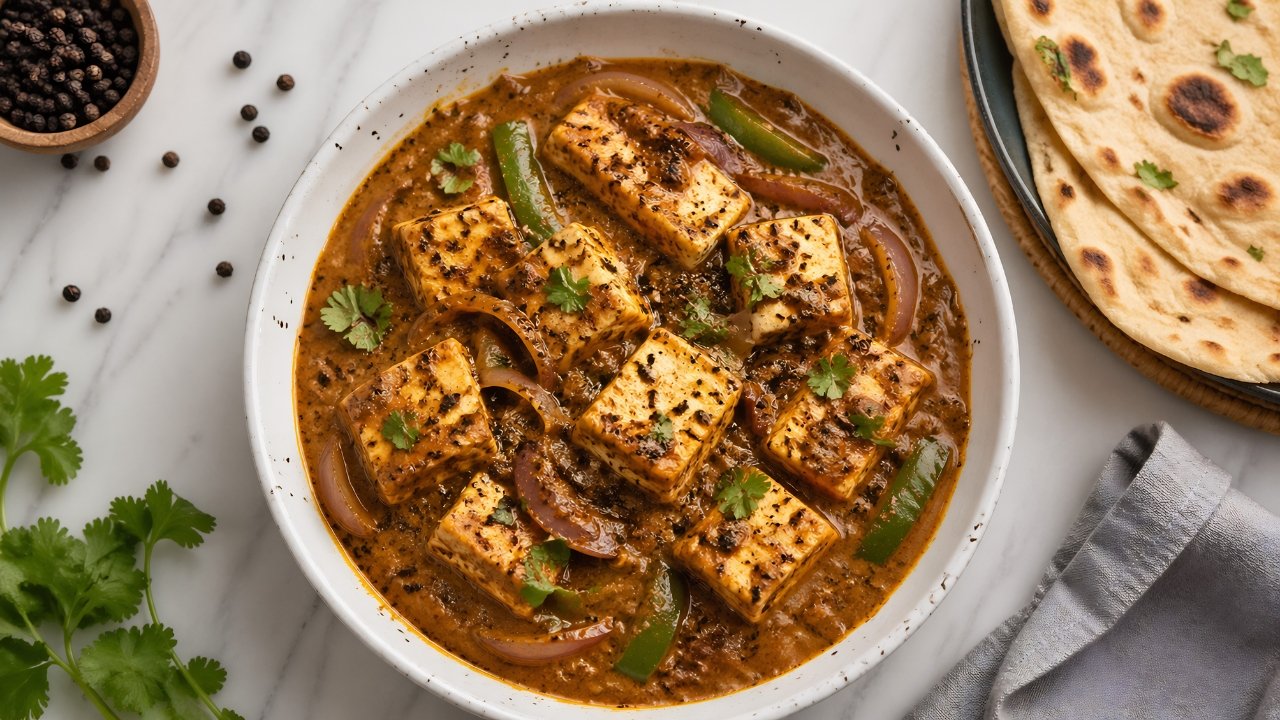
Paneer curries often become too rich, too sweet, or too heavy for everyday cooking. This paneer pepper masala recipe keeps the curry practical: firm paneer cubes, a simple onion-tomato base, and enough black pepper to make the dish warm and lively without turning it harsh.
The useful part of this recipe is control. Black pepper can taste sharp if it is added too early and boiled for too long. Paneer can become rubbery if it sits in a fierce gravy for several minutes. This version uses a 5-step method that builds the masala first, adds pepper at the right time, and finishes the paneer gently. The result is a curry that works with roti, rice, paratha, or even as a quick filling for wraps the next day.
Ingredients
- 250 g paneer, cut into medium cubes
- 2 tablespoons oil or ghee
- 1 large onion, finely chopped
- 2 medium tomatoes, finely chopped or blended
- 1 tablespoon ginger-garlic paste
- 1 green chilli, slit or finely chopped, optional
- 1 teaspoon cumin seeds
- 8 to 10 curry leaves, optional but useful for aroma
- 1/2 teaspoon turmeric powder
- 1 teaspoon coriander powder
- 1/2 teaspoon cumin powder
- 1/2 teaspoon garam masala
- 1 1/2 teaspoons freshly crushed black pepper, divided
- 1/2 teaspoon red chilli powder, optional
- 1/2 teaspoon salt, or to taste
- 1/2 teaspoon sugar, optional, only if tomatoes are very sour
- 1/3 cup thick curd or 3 tablespoons cream, optional for a softer gravy
- 1/2 to 3/4 cup water, as needed
- 1 small capsicum, cubed, optional
- 2 tablespoons chopped coriander leaves
- 1 teaspoon lemon juice, optional, added at the end
Freshly crushed black pepper is better than very fine pepper powder here. Fine powder can make the curry taste dusty and bitter if used heavily. Crush whole peppercorns in a mortar, spice grinder, or with the base of a heavy glass. Aim for a mix of coarse and small pieces, not a smooth powder.
Use regular paneer, homemade paneer, or store-bought paneer. If the paneer feels firm from refrigeration, soak it in warm water for 10 minutes before cooking. This small step makes the cubes softer and helps them absorb the masala without breaking.
Preparation
This paneer pepper masala recipe is written as a 5-step curry because the order matters. The masala needs enough time to cook, but the pepper and paneer need a shorter finish. Keep all ingredients ready before heating the pan. The curry moves quickly once the onion base is cooked.
- Prepare the paneer and pepper. Cut the paneer into medium cubes. If it is cold or firm, place the cubes in warm water for 10 minutes, then drain. Crush the black pepper just before cooking if possible. Keep half for the masala and half for the final finish.
- Start the base. Heat oil or ghee in a heavy pan over medium heat. Add cumin seeds and let them sizzle for a few seconds. Add curry leaves if using. Add the chopped onion and cook until it turns soft and light golden. Do not rush this stage. Raw onion taste is one of the main reasons a quick paneer curry feels unfinished.
- Cook the tomato masala. Add ginger-garlic paste and green chilli. Stir for about a minute, until the raw smell reduces. Add tomatoes, turmeric, coriander powder, cumin powder, red chilli powder if using, and salt. Cook until the tomatoes break down and the oil begins to separate slightly from the masala. If the pan looks dry before the tomatoes soften, add a tablespoon of water and continue cooking.
- Build the pepper gravy. Lower the heat. Add half of the crushed black pepper and stir for 20 to 30 seconds. Add 1/2 cup water and mix well, scraping the base of the pan. If using capsicum, add it now and simmer for 3 to 4 minutes, just until it loses its raw edge but still has some bite. If using curd, whisk it first, lower the heat fully, and stir it in slowly. If using cream, add it after the water has simmered for a minute.
- Finish with paneer. Add the paneer cubes and garam masala. Stir gently so the cubes are coated without breaking. Simmer on low heat for 2 to 3 minutes only. Add the remaining crushed black pepper, chopped coriander, and lemon juice if needed. Turn off the heat and rest the curry for 5 minutes before serving.
The resting time is small but useful. The gravy thickens slightly, the paneer settles, and the pepper aroma becomes rounder. If served straight from a boiling pan, the curry can taste sharper than it actually is.
Cooking, Baking, or Use Tips
The main flavor in paneer pepper masala is black pepper, so treat it like a fresh seasoning, not only as a dry spice. Adding all the pepper at the beginning makes the curry hot but flat. Adding some during cooking and some at the end gives two layers: warmth in the gravy and fresh pepper aroma on top.
A practical way to check pepper balance is to taste the gravy before adding paneer. It should taste slightly stronger than you want the final dish to be. Paneer softens the spice level because it is mild and creamy. If the gravy tastes perfect before paneer goes in, the finished curry may taste a little muted.
For a thicker curry, cook the tomato masala longer before adding water. Do not add extra cream just to thicken the dish. Cream changes the flavor and can make the black pepper feel less clear. A well-cooked onion-tomato base gives better body than extra dairy.
For a lighter curry, skip cream and use only water. You can also blend the cooked onion-tomato masala before adding paneer if you want a smoother gravy. Let the masala cool slightly before blending, then return it to the pan and simmer with pepper. This is useful when cooking for children or for anyone who prefers a less chunky curry.
Paneer should not be boiled hard. Once it goes into the gravy, keep the heat low. Two or three minutes are enough. Longer cooking does not add more flavor; it usually makes the paneer tighter and chewy. If you are preparing the curry ahead of time, cook the gravy first and add the paneer when reheating, not during the first cooking.
The size of the paneer cubes also matters. Very small cubes absorb salt quickly and can break when stirred. Very large cubes stay plain in the center. Medium cubes, about 2 cm wide, are easiest for everyday cooking. They hold shape and still take on enough masala.
There is one simple kitchen test that helps prevent a bitter pepper curry. After crushing the pepper, smell it. It should smell warm and sharp. If it smells dusty or dull, use less and add a little more garam masala or green chilli for support. Old pepper can make the dish taste harsh even when the quantity is correct. This is not about being fancy; it is just a quick check before the main spice goes into the pan.
If the curry becomes too spicy, do not add lots of water immediately. Water spreads the heat but also weakens the masala. Add two tablespoons of curd, cream, or milk, simmer gently, and taste again. A small pinch of sugar can also help if the tomatoes are sour and the pepper feels aggressive. Use sugar carefully; the curry should not become sweet.
If the curry tastes flat, it usually needs one of three things: more salt, a short simmer, or a fresh finish. Add salt first in small amounts. If the masala tastes raw, simmer it for 3 to 5 minutes before adding more spices. If it tastes cooked but dull, add a little crushed pepper and coriander at the end.
For serving, this curry works best with foods that can handle a thick masala. Roti, naan, paratha, jeera rice, plain rice, and millet rotis all work. If serving with rice, keep the gravy slightly looser. If serving with roti, reduce it until the masala clings to the paneer cubes.
A useful domestic shortcut is to cook the onion-tomato masala in a larger batch and refrigerate part of it. The next day, heat the masala with water, add freshly crushed pepper, and finish with paneer. Do not store the curry after adding a lot of fresh pepper and then expect the same aroma the next day. Pepper is strongest when freshly added, so keep a small portion for reheating.
Useful Kitchen Tools
A heavy-bottom pan helps the onion-tomato masala cook without sticking or burning. A small mortar and pestle is useful for crushing black pepper coarsely, which gives better texture than fine powder. A flat silicone or wooden spatula also helps turn paneer gently without breaking the cubes.
Cooking, Baking, or Use Tips
Black pepper is the main flavor in paneer pepper masala, so add it in two stages. Use some while cooking the gravy for warmth, and add the rest at the end for fresh aroma. If all the pepper is added early, the curry can taste hot but flat.
Taste the gravy before adding paneer. It should be slightly stronger than the final taste you want, because paneer softens the spice level. If the gravy tastes perfect before paneer goes in, the finished curry may taste mild.
For a thicker curry, cook the tomato masala longer before adding water. Avoid using too much cream just for thickness, as it can reduce the sharp pepper flavor. For a lighter curry, skip cream and use water.
Do not boil paneer hard. Add it near the end and simmer on low heat for only 2 to 3 minutes. Longer cooking can make paneer firm and chewy. Medium cubes work best because they hold shape and absorb enough masala.
Before using crushed pepper, smell it once. It should smell warm and sharp. If it smells dull or dusty, use less and support the curry with a little garam masala or green chilli.
If the curry becomes too spicy, do not add too much water. Add a spoonful of curd, cream, or milk and simmer gently. If the curry tastes flat, adjust salt first, then finish with fresh crushed pepper and coriander.
Serve with roti, naan, paratha, jeera rice, or plain rice. Keep the gravy looser for rice and thicker for roti. If cooking ahead, store the masala separately and add paneer with fresh pepper while reheating.
Conclusion
Paneer pepper masala is a simple, useful curry that fits well into everyday cooking. It uses basic ingredients, needs no complicated technique, and gets most of its flavor from freshly crushed black pepper. Cook the masala properly, add paneer gently, and keep the gravy as thick or loose as you like. Serve it with roti, rice, or paratha, and reuse leftovers for quick wraps or lunch boxes.
