
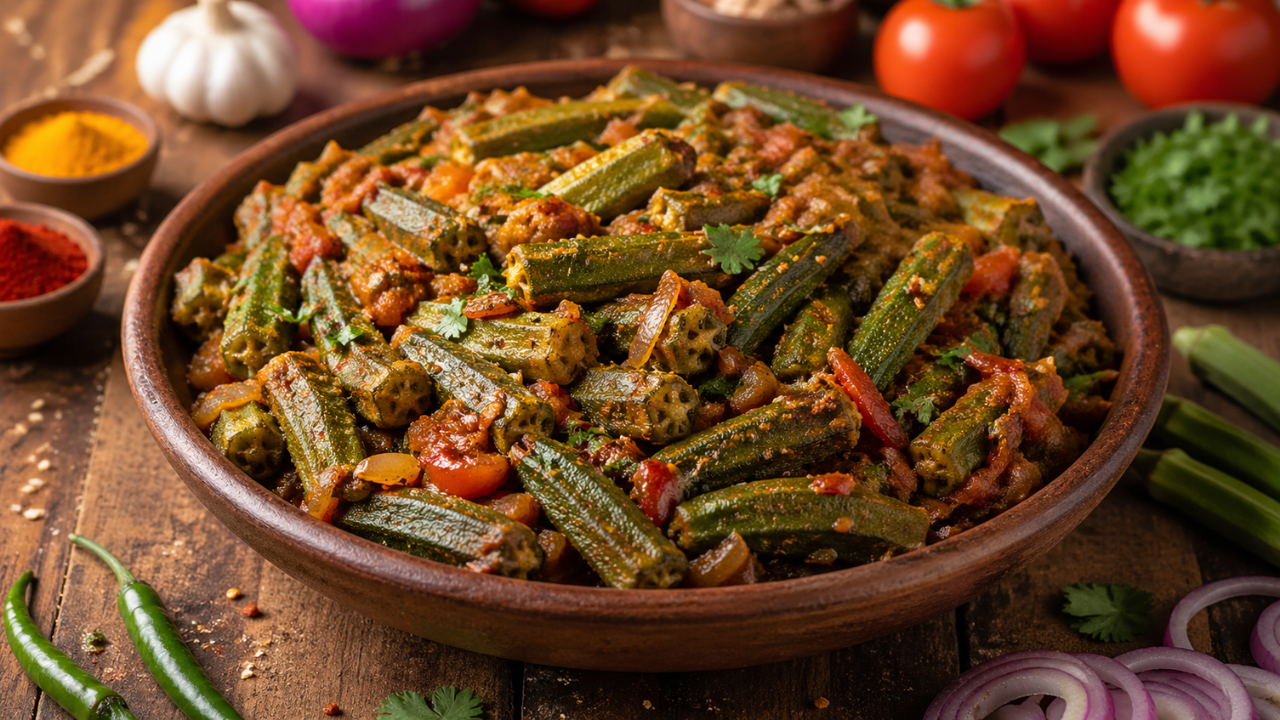
Bhindi masala is simple in theory, but many home cooks run into the same problem: sticky, slimy okra that clumps in the pan and loses its fresh texture before the masala is ready. The issue is usually not the recipe itself. It is moisture, overcrowding, early salt, and too much stirring.
This version keeps the method practical for everyday cooking. The bhindi is dried well, cooked in a wide pan, salted at the right time, and finished with a compact onion-tomato masala that coats the pieces without making them soggy. The result is a dry-style bhindi masala that works with roti, dal rice, paratha, or a lunchbox meal.
The five no-stickiness tricks are built into the method: wash early, dry completely, cut just before cooking, cook uncovered, and add salt only after the bhindi has lost most of its raw moisture. These small changes make a bigger difference than adding extra oil.
Recipe Information
Recipe Name: Bhindi Masala
Description: Fresh okra cooked until lightly crisp and non-sticky, then tossed with a dry onion-tomato masala, spices, and a little amchur for a simple everyday Indian side dish.
Servings: 4 as a side dish
Preparation Time: 20 minutes
Cooking Time: 25 minutes
Total Time: 45 minutes
Difficulty Level: Easy to Medium
Recipe Category: Vegetarian side dish
Cuisine Type: Indian, North Indian home-style
Resting Time / Inactive Time: 10 minutes for drying the washed bhindi thoroughly
Ingredients
- 500 g fresh bhindi, also called okra or ladyfinger
- 2 tablespoons oil, divided
- 1 large onion, thinly sliced or finely chopped
- 1 medium tomato, finely chopped
- 1 green chilli, slit or finely chopped
- 1 teaspoon ginger-garlic paste, or 1 teaspoon grated ginger and garlic mixed
- 1 teaspoon cumin seeds
- 1/2 teaspoon turmeric powder
- 1 teaspoon coriander powder
- 1/2 teaspoon red chilli powder, adjust to taste
- 1/2 teaspoon cumin powder
- 1/2 teaspoon garam masala
- 1/2 teaspoon amchur powder, or a small squeeze of lemon at the end
- Salt to taste
- 1 tablespoon chopped coriander leaves
- Optional: 1/4 teaspoon ajwain, useful if you like a sharper, digestive-style flavour
Preparation
Start by choosing the right bhindi. Look for pods that are small to medium, firm, bright green, and easy to snap at the tip. Very large bhindi can be fibrous and may take longer to cook, which often leads to extra stirring and more stickiness.
Wash the bhindi before cutting. This is important. Do not cut first and then wash, because water enters the cut surfaces and makes the slime worse during cooking. Rinse the whole pods, drain them well, and spread them on a kitchen towel. Pat them dry properly. If you have time, leave them uncovered for 10 minutes so the surface moisture evaporates.
Trim the tops and tips. Cut the bhindi into 2 to 3 cm pieces. Avoid slicing them too thin, because very thin pieces break quickly and release more sticky liquid. Cut them just before cooking, not hours in advance.
Heat 1 tablespoon oil in a wide kadai or frying pan. A wide pan is better than a deep narrow pan because the bhindi gets more contact with heat and less trapped steam. Add the cut bhindi and spread it out in one layer as much as possible.
Cook the bhindi uncovered on medium heat for 8 to 10 minutes. Stir only every 2 minutes, using a flat spatula. Do not keep tossing constantly. Constant stirring breaks the pieces and pulls out more moisture. The bhindi should darken slightly, shrink a little, and lose most of its stickiness.
Do not add salt at this stage. Salt draws moisture out of the bhindi, and if it is added too early, the pan becomes steamy and sticky. This is one of the most useful changes for a cleaner texture.
Once the bhindi is almost cooked and no longer looks slimy, transfer it to a plate. It does not need to be fully crisp. It should be about 80 percent cooked, with lightly browned edges in places.
In the same pan, add the remaining 1 tablespoon oil. Add cumin seeds and let them sizzle for a few seconds. If using ajwain, add it now, but keep the quantity small because it can dominate the dish.
Add the onion and cook on medium heat until it turns soft and lightly golden. This takes about 6 to 7 minutes. Do not rush this step with high heat, or the onion will brown outside while staying raw inside. A properly cooked onion gives the masala body without needing too much tomato.
Add the green chilli and ginger-garlic paste. Cook for 30 to 40 seconds, just until the raw smell reduces. If the masala starts sticking, sprinkle in 1 teaspoon water, not more. The goal is to loosen the spices without turning the dish wet.
Add turmeric, coriander powder, red chilli powder, cumin powder, and salt. Stir for a few seconds in the oil and onion mixture. Add the chopped tomato and cook until it softens and the moisture mostly evaporates. The masala should look thick, not saucy.
Now return the cooked bhindi to the pan. Toss gently so the masala coats the pieces. Cook for 4 to 5 minutes on medium-low heat, uncovered. This final cooking helps the bhindi absorb the masala without becoming limp.
Add garam masala and amchur powder. Mix gently once or twice. If using lemon juice instead of amchur, turn off the heat first and then add it. Finish with chopped coriander leaves.
Let the bhindi masala rest in the pan for 3 to 4 minutes before serving. This short rest helps the masala cling better and makes the flavour settle. Serve warm with roti, paratha, dal rice, curd rice, or as part of a simple thali.
Cooking, Baking, or Use Tips
The most important rule for no-stickiness bhindi masala is moisture control. Bhindi has a natural sticky liquid inside it. You do not need to remove it completely, but you do need to stop extra water and steam from making it worse. Washing whole bhindi, drying it well, and cooking it uncovered solves most of the problem.
A useful practical insight is to dry bhindi in two stages if your kitchen is humid. First, wipe it with a towel after washing. Then spread it on a plate or tray while you prepare onions, tomatoes, and spices. This short open-air drying time removes the thin moisture layer that towels often miss. It is a small step, but it makes the first few minutes in the pan much cleaner.
Use a wide pan whenever possible. If the bhindi is piled up, it steams instead of frying. Steaming makes the pieces soft and sticky. If your pan is small, cook the bhindi in two batches. This may seem slower, but it often saves time because the bhindi cooks better and needs less correction later.
Do not cover the pan while cooking bhindi. Covering traps steam, and steam falls back into the pan as moisture. This is one of the fastest ways to make okra sticky. Keep the pan open from start to finish.
Add salt after the bhindi has reduced and cooked partly. Salt is not wrong, but timing matters. Early salt pulls water out of the vegetable before the surface has had time to firm up. Late salt seasons the dish without creating a wet texture.
Avoid adding too much tomato. Tomato is useful for flavour, but too much tomato turns bhindi masala into a wet curry and softens the pieces. For 500 g bhindi, one medium tomato is enough for a dry-style masala. If your tomato is very juicy, cook it longer until most of the moisture evaporates before adding the bhindi back.
Do not use high heat from start to finish. High heat can burn the outside of the bhindi while the inside stays raw. Medium heat is safer and more even. You can raise the heat slightly for the last minute if you want drier edges, but only after the masala is cooked.
Stir gently and less often. Bhindi does not need constant movement. Frequent stirring breaks the pieces, releases more sticky liquid, and makes the dish look messy. A flat spatula is better than a spoon because it lifts and turns the pieces without crushing them.
If the masala sticks to the pan, use tiny splashes of water. Do not pour water directly over the bhindi. Add 1 teaspoon at a time only to loosen the onion-spice mixture. A dry bhindi masala should never need a large amount of water.
For a lunchbox, cook the bhindi slightly drier than you would for eating immediately. Food releases steam when packed hot, so let it cool for 10 minutes before closing the box. This keeps the texture better and prevents condensation from making the bhindi soft.
For reheating, use a pan rather than a microwave if texture matters. Heat it on medium-low for 3 to 4 minutes, uncovered. If using a microwave, heat in short bursts and keep the container loosely covered, not tightly sealed.
Leftover bhindi masala keeps well in the refrigerator for up to 2 days. Store it in a shallow airtight container after it cools. The texture will soften a little, but the flavour remains good. Avoid freezing cooked bhindi masala because thawed okra usually turns too soft and watery.
Variations or Conservation
For a more Punjabi-style bhindi masala, add 1/2 teaspoon kasuri methi near the end. Crush it between your palms before adding so the flavour spreads evenly. Keep the quantity small, because too much can make the dish bitter.
For a sharper dry bhindi, increase the amchur slightly and skip the tomato. This gives a cleaner, less moist version that works especially well for lunchboxes and travel meals. If skipping tomato, add a few extra drops of oil while cooking the onion so the spices do not taste raw.
For a South Indian-style variation, replace cumin seeds with mustard seeds and add a few curry leaves. You can also add a spoon of grated coconut at the end. Do not add coconut too early, or it may absorb oil and make the dish heavy.
For a simpler onion-free version, cook the bhindi first, then make a quick spice base with oil, cumin seeds, turmeric, coriander powder, chilli powder, and amchur. Toss the cooked bhindi in this spice oil for 2 to 3 minutes. This version is faster and useful when you want a lighter side dish.
For extra texture, add thinly sliced capsicum after the onion has softened. Cook it for only 2 minutes before adding tomato. Capsicum should stay slightly firm, not fully soft. It adds volume and freshness without making the dish watery.
If you have a small amount of leftover bhindi masala, use it as a filling for a quick roll. Spread curd or chutney on a roti, add the bhindi, and roll tightly. It also works as a side with plain dal, khichdi, or lemon rice.
To reduce waste, save tender bhindi tips if they are fresh. Finely chop them and add them to dal, sambar, or mixed vegetable sabzi the same day. Do not store trimmed tips for long, because they dry out quickly.
If some bhindi pods are too mature and fibrous, do not force them into this recipe. Slice one and check the texture. If the knife struggles or the seeds look large and hard, set those pieces aside for stock or compost. Tough bhindi will not become pleasant just by cooking longer, and longer cooking can spoil the texture of the rest of the dish.
You can also pre-cook the bhindi a few hours ahead if needed. Cook it until the stickiness is gone, cool it on a plate, and keep it covered in the refrigerator. When ready to serve, make the masala and toss the bhindi through it. This is useful for busy evenings because the most sensitive part of the recipe is already done.
Conclusion
Good bhindi masala does not need complicated ingredients. It needs dry bhindi, a wide pan, moderate heat, late salt, and a masala that is cooked thick before the okra goes back in. Once the method becomes familiar, the recipe is flexible. Keep it dry for lunchboxes, add tomato for a softer masala, use amchur for sharpness, or turn leftovers into rolls. The main idea stays the same: control moisture first, add flavour second, and handle the bhindi gently.
