
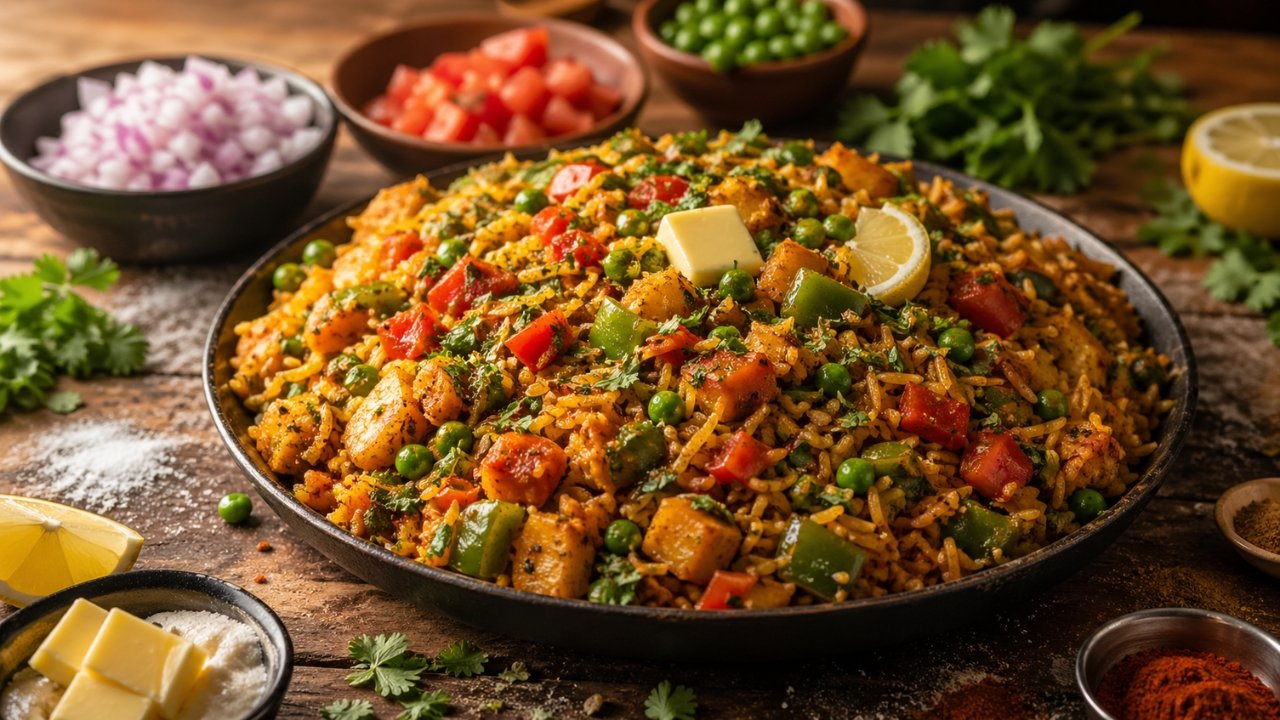
Tawa pulao often goes wrong at home because the rice turns soft, the vegetables release too much water, or the spice mix tastes flat instead of bold and street-style. The fix is not complicated. Use cold cooked rice, cook the masala hard enough on the tawa or pan, and add the rice only after the vegetables and spices have reduced into a thick coating.
This 5-step tawa pulao is built for everyday cooking. It uses cooked rice, common vegetables, pav bhaji masala, butter, and a few pantry ingredients to create the familiar Mumbai-style flavor without needing a huge street cart tawa. You can make it for lunch, dinner, a packed meal, or as a quick way to reuse leftover rice without making plain fried rice again.
Recipe Information
Recipe Name: 5-Step Tawa Pulao
Description: Cooked rice tossed on a hot tawa or wide pan with butter, pav bhaji masala, vegetables, tomatoes, capsicum, and chilli-garlic flavor for a bold street-style pulao.
Servings: 4 as a main dish
Preparation Time: 20 minutes
Cooking Time: 25 minutes
Total Time: 45 minutes
Difficulty Level: Easy to Medium
Recipe Category: Main course, vegetarian rice dish
Cuisine Type: Indian street-style
Resting Time / Inactive Time: 10 minutes for cooling the cooked rice before tossing
Ingredients
- 3 cups cooked basmati rice or regular long-grain rice, cooled
- 2 tablespoons butter
- 1 tablespoon oil
- 1 teaspoon cumin seeds
- 1 medium onion, finely chopped
- 1 tablespoon ginger-garlic paste
- 1 green chilli, finely chopped, optional
- 2 medium tomatoes, finely chopped
- 1/2 cup capsicum, finely chopped
- 1/2 cup carrots, finely chopped and lightly cooked
- 1/2 cup green peas, boiled or thawed
- 1/2 cup cauliflower florets, small and lightly cooked, optional
- 1/2 teaspoon turmeric powder
- 1 1/2 teaspoons red chilli powder, adjust to taste
- 2 to 2 1/2 teaspoons pav bhaji masala
- 1 tablespoon tomato ketchup, optional but useful for street-style balance
- 1 teaspoon lemon juice
- Salt, as needed
- 2 tablespoons chopped coriander leaves
- 2 tablespoons chopped spring onion greens, optional
- Extra butter for finishing, optional
- Lemon wedges and sliced onion, for serving
Preparation
Start with the rice because it decides the final texture. If you are cooking fresh rice, rinse it well, cook it with slightly less water than usual, and spread it on a large plate after cooking. Let it cool for at least 10 minutes. Warm rice breaks easily and absorbs moisture from the masala too quickly, which makes the pulao heavy.
If you are using leftover rice from the fridge, loosen it gently with your fingers before cooking. Do not crush the grains. If the rice is very dry, sprinkle one or two teaspoons of water over it and leave it covered for five minutes. This softens only the surface without making the rice wet.
Prepare the vegetables before heating the tawa. Chop the onion, tomatoes, and capsicum finely so they cook quickly. Carrots, peas, and cauliflower should be cooked only until just tender. They should not become mushy because they will cook again with the masala. A practical shortcut is to microwave the harder vegetables with a splash of water for two to three minutes, then drain them well.
Step 1: Heat the tawa and start the base. Place a large iron tawa, flat griddle, or wide heavy pan on medium-high heat. Add oil and butter together. The oil helps prevent the butter from burning too fast, while the butter gives the street-style flavor. Add cumin seeds and let them sizzle for a few seconds.
Add the chopped onion and cook until it turns light golden at the edges. Do not rush this part. Onion that is only softened will taste sweet and raw in the finished rice. Onion that has a little color gives the pulao a stronger base.
Step 2: Cook the chilli-garlic tomato masala. Add ginger-garlic paste and green chilli. Stir for about 30 seconds, just until the raw smell reduces. Add the chopped tomatoes, turmeric, red chilli powder, pav bhaji masala, and salt. Cook the mixture until the tomatoes soften and the butter begins to separate slightly from the sides.
This is the most important stage. The masala should not look watery before the rice goes in. Press the tomatoes lightly with the spatula and keep cooking until the mixture looks thick, shiny, and paste-like. If the masala stays loose, the rice will soak it up and become sticky instead of coated.
Step 3: Add vegetables and build the street-style coating. Add capsicum, carrots, peas, and cauliflower if using. Toss everything well on high heat for two to three minutes. The capsicum should remain slightly crisp because that fresh bite is part of good tawa pulao. Add tomato ketchup if using and mix again.
The ketchup is optional, but it helps in a practical way. It adds slight sweetness and tang, which balances the pav bhaji masala and chilli powder. Use only a small amount. Too much will make the dish taste like tomato rice instead of tawa pulao.
Step 4: Add the rice and toss gently. Lower the heat slightly before adding the cooked rice. Add the rice in two batches instead of dumping it all at once. This is a small but useful home-cooking trick. When rice is added in batches, the first batch absorbs the strongest masala, and the second batch helps distribute it evenly without overmixing.
Use a flat spatula and lift the rice from the bottom, turning it through the masala. Avoid pressing down hard. Once all the rice is in, increase the heat for one minute and toss again. The goal is to coat the rice, not fry it until dry.
Step 5: Finish with lemon, coriander, and rest. Switch off the heat. Add lemon juice, coriander leaves, and spring onion greens if using. Taste and adjust salt or chilli. Add a small knob of butter at the end if you want a richer street-style finish.
Let the tawa pulao rest for five minutes before serving. This short rest helps the rice settle and allows the spices to cling better to the grains. Serve hot with lemon wedges, sliced onion, curd, raita, papad, or a simple cucumber salad.
Cooking, Baking, or Use Tips
The best tawa pulao starts with rice that is cooked but not soft. The grains should be separate and slightly firm. If the rice is overcooked, spread it on a plate and refrigerate it uncovered for 20 to 30 minutes before using. This dries the surface and makes it easier to toss.
Use a wide pan if you do not have a tawa. A narrow kadai traps steam and can make the vegetables watery. A wide surface helps the masala reduce faster and gives the pulao a better street-style texture.
Keep the vegetables small and even. Large pieces take longer to heat and make the dish feel more like mixed vegetable rice. Fine chopping helps the spice, rice, and vegetables mix evenly.
Do not add too much water to the masala. If the tomatoes stick, add only one tablespoon of water at a time and cook it off before adding rice. The masala should be thick, not loose.
Pav bhaji masala is the main flavor, so add it gradually. Start with two teaspoons, taste after mixing the rice, and add more only if needed. Too much can make the pulao taste harsh or salty.
For stronger street-style flavor, cook the tomatoes longer instead of adding more chilli powder. Properly reduced tomatoes give depth, while extra chilli only adds heat.
If packing tawa pulao for lunch, cool it for 10 minutes before closing the box. Pack lemon, onion, or raita separately so the rice does not turn soft.
For reheating, sprinkle one tablespoon of water over each serving and warm it covered on low heat. Then uncover and toss briefly. Reheat only once for the best texture.
For low waste, add small portions of leftover boiled vegetables such as peas, carrots, potatoes, beans, or cauliflower. Avoid vegetables cooked in strong gravies unless the flavors suit pav bhaji masala.
Variations or Conservation
For a spicier version, add a spoon of red chilli-garlic paste while cooking the ginger-garlic base. Soak dried red chillies in hot water, grind them with garlic and a little salt, and use a small amount. This gives a cleaner chilli flavor than adding more dry chilli powder at the end.
For a Jain-style tawa pulao, skip onion and ginger-garlic paste. Use finely chopped capsicum, tomatoes, pav bhaji masala, chilli powder, and a little grated ginger if suitable for your kitchen rules. Add boiled raw banana or paneer for more body if you want a filling version.
For paneer tawa pulao, add small paneer cubes after the vegetables are cooked. Toss them gently for one minute before adding rice. Do not fry paneer for too long or it can become rubbery. A light coating of masala is enough.
For a more filling dinner version, add boiled potatoes cut into small cubes. Potatoes absorb the masala well and make the dish satisfying without needing a separate curry. Keep the cubes small so they mix evenly with the rice.
For a lighter version, reduce butter to one tablespoon and use more oil, or use only oil and finish with a very small amount of butter for aroma. The flavor will be less rich, but the pulao will still work if the masala is cooked properly.
You can also use brown rice, short-grain rice, or millet rice, but the texture will change. Brown rice needs a slightly stronger masala because the grains have a nuttier taste. Short-grain rice should be fully cooled before tossing because it sticks more easily.
Store leftover tawa pulao in an airtight container in the refrigerator. Use it within one day for the best texture. Cool it before storing, but do not leave cooked rice at room temperature for long. Divide larger quantities into shallow containers so they cool faster.
To reuse leftovers, turn the pulao into stuffed capsicum, a quick rice cutlet mixture, or a lunch wrap filling. For cutlets, mash a small boiled potato into the leftover pulao, shape patties, coat lightly with breadcrumbs, and pan-cook until crisp. This works especially well when the rice has dried a little in the fridge.
If you have leftover masala but not enough rice, use it as a quick sandwich filling. Spread it between bread slices with a little cheese or butter and toast it. This avoids wasting the concentrated tawa masala and gives you another simple snack without starting from scratch.
Conclusion
5-step tawa pulao is practical because it turns cooked rice and everyday vegetables into a bold, filling meal with very little extra work. The main trick is to cook the masala until thick before adding rice, then toss gently so the grains stay separate.
Once you understand that timing, the recipe becomes easy to repeat. Use what vegetables you have, control the spice level, and finish with lemon and coriander for freshness. It is a reliable street-style rice dish for busy days, leftover rice, and simple home dinners.
