
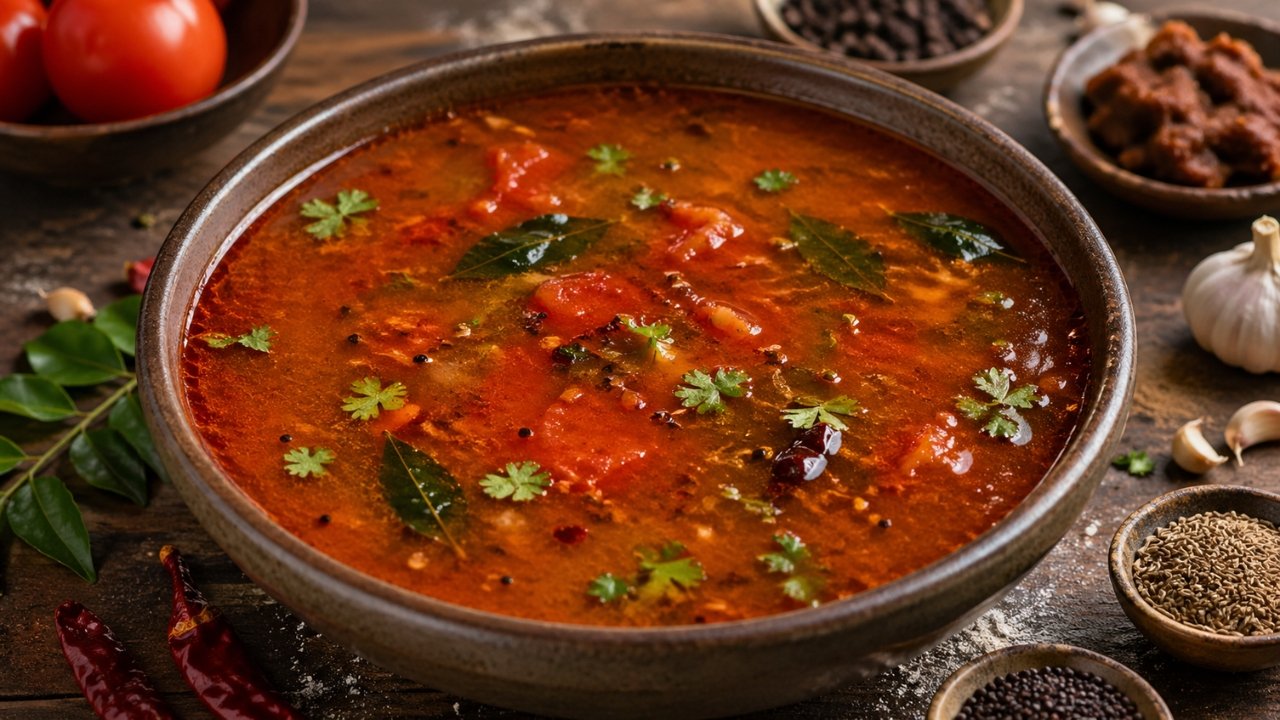
Tomato rasam is one of the easiest ways to turn a few everyday ingredients into something warm, sharp, and useful. The common mistake is treating rasam like a thick soup or curry. Good rasam should be light, pourable, aromatic, and balanced enough to drink from a cup or mix into hot rice.
This 7-step tomato rasam is built for regular home cooking. It uses ripe tomatoes, tamarind, pepper, cumin, garlic, curry leaves, and a small tempering to create a broth that feels comforting without being heavy. It is especially useful when you want a quick meal with rice, a light dinner, or something soothing after rich food.
The practical key is timing. Rasam should not be boiled aggressively for a long time after the spice mix goes in. A short simmer extracts flavor, but overboiling flattens the aroma and makes the tomatoes taste dull. Keep the rasam thin, bright, and freshly tempered.
Recipe Information
- Recipe Name: 7-Step Tomato Rasam 2026
- Description: A light South Indian tomato rasam made with ripe tomatoes, tamarind, crushed pepper, cumin, garlic, curry leaves, and a fragrant mustard seed tempering.
- Servings: 4 servings
- Preparation Time: 12 minutes
- Cooking Time: 23 minutes
- Total Time: 35 minutes
- Difficulty: Easy to Moderate
- Recipe Category: Soup, Side Dish, Comfort Food
- Cuisine: South Indian
Ingredients
- 4 medium ripe tomatoes, chopped
- 1 small lemon-sized ball of tamarind, soaked in 1/2 cup warm water, or 1 1/2 teaspoons tamarind paste
- 3 cups water, plus more if needed
- 1/2 teaspoon turmeric powder
- 1 teaspoon rasam powder, homemade or store-bought
- 1/2 teaspoon black peppercorns
- 1 teaspoon cumin seeds
- 4 garlic cloves, lightly crushed
- 1 green chilli, slit, optional
- 1 small sprig curry leaves
- 2 tablespoons chopped coriander leaves and tender stems
- Salt to taste
- 1/2 teaspoon jaggery or sugar, optional, useful if tomatoes are very sharp
- 1 teaspoon ghee or oil
- 1/2 teaspoon mustard seeds
- 1 dried red chilli, broken
- 1 pinch asafoetida
- 6 to 8 extra curry leaves for tempering
- Cooked rice, for serving
Preparation
Start by soaking the tamarind if you are using whole tamarind. Pour warm water over it and let it sit while you prepare the tomatoes and spices. Once soft, squeeze it well and strain the liquid. If using tamarind paste, dissolve it directly in warm water so it spreads evenly through the rasam.
Chop the tomatoes roughly. They do not need to be neat because they will soften and break down. Use ripe tomatoes for the best result. If your tomatoes are pale or firm, add the small amount of jaggery listed in the ingredients. It will not make the rasam sweet; it will simply round off the acidity.
Crush the black peppercorns, cumin seeds, and garlic together. A mortar and pestle works best, but a small grinder can be used with short pulses. Keep the texture coarse. Do not grind it into a smooth paste. The coarse crush gives rasam its fresh, peppery lift and prevents the broth from tasting flat.
Put the chopped tomatoes in a saucepan with 1 cup of water, turmeric, salt, green chilli if using, and a few curry leaves. Cook over medium heat until the tomatoes soften fully. This should take about 8 to 10 minutes. Press the tomatoes lightly with the back of a spoon to release their juice.
Add the strained tamarind water and another 2 cups of water. Stir well. Add the crushed pepper-cumin-garlic mixture and rasam powder. Keep the heat medium-low and let the rasam come slowly to a gentle simmer.
The rasam should foam lightly at the surface and smell aromatic. Once you see this stage, simmer for only 3 to 5 minutes. Do not keep boiling it hard. A practical sign is this: when the raw smell of tamarind has gone and the pepper-garlic aroma is clear, the rasam is ready for tempering.
Turn the heat to low. Taste and adjust salt. Add a little more hot water if the rasam feels too concentrated. Tomato rasam should be thin enough to sip but flavorful enough to season rice. Stir in chopped coriander leaves and tender stems. The stems add more aroma than many people realize, so do not throw them away if they are fresh.
For the tempering, heat ghee or oil in a small pan. Add mustard seeds and let them crackle. Add the dried red chilli, asafoetida, and curry leaves. The curry leaves will splutter, so keep the pan away from your face. Pour the hot tempering immediately over the rasam and cover the pot for 2 minutes.
This short covered rest is useful. It traps the aroma from the tempering and lets the curry leaves perfume the rasam without needing extra cooking. After resting, stir once and serve hot with rice, a spoon of ghee, papad, pickle, or a simple vegetable side.
Cooking, Baking, or Use Tips
Use ripe tomatoes, but do not worry if they are not perfect. Rasam is forgiving. The balance comes from tomato, tamarind, pepper, cumin, and salt working together. If the tomatoes are very sour, reduce the tamarind slightly. If the tomatoes are mild, use the full tamarind amount.
Do not make rasam too thick. A useful domestic test is to stir it with a ladle and look at the back of the spoon. Rasam should coat it lightly, then run off quickly. If it sits like curry, add hot water and adjust salt.
Avoid overboiling after adding rasam powder. Many store-bought rasam powders contain roasted spices that have already been cooked once. Long boiling can make them taste dusty or bitter. Add them after the tomatoes have softened, then simmer briefly.
Crushing pepper, cumin, and garlic fresh makes a noticeable difference. This is the one step worth doing even on a busy day. Ready rasam powder gives body and background flavor, but freshly crushed spices give the rasam its clean heat.
For a softer rasam, reduce the black pepper slightly and skip the green chilli. For a sharper, cold-weather version, use the full pepper amount and crush one extra garlic clove. Keep the chilli optional because pepper heat suits rasam better than harsh chilli heat.
Salt needs attention because rasam is diluted with water. Add less at first, then adjust near the end. If it tastes sour but not lively, it may not need more tamarind. It may simply need salt. Add a pinch, stir, and taste again.
If the rasam tastes too sour, do not add a lot of sugar. Add hot water, a small pinch of jaggery, and a little more rasam powder if needed. If it tastes too watery, simmer it uncovered for a few minutes before tempering.
One practical insight is to cook the tomatoes fully before adding tamarind. Tamarind slows down softening because of its acidity. If you add tamarind too early, the tomato skins can remain tough and the tomato flavor will not blend as smoothly into the broth.
For serving with rice, keep the rasam slightly stronger than you would for drinking. Rice absorbs flavor and mutes acidity. For drinking as a light soup, dilute it a little more and strain if you prefer a smoother texture.
Use a small saucepan for tempering so the mustard seeds crackle properly. If the pan is too large, the ghee spreads thin and the spices may burn before they bloom. Add curry leaves only after the mustard seeds crackle, not before.
Rasam is best served hot, but it should not be reheated repeatedly. Reheat only the amount you need. Warm it gently until steaming. Do not boil it hard again, especially after the coriander and tempering have been added.
If packing rasam for lunch, carry it separately from rice if possible. It keeps the rice from becoming too soft. If mixing ahead, use slightly less rasam and keep the rice firm.
Variations or Conservation
For a no-dal tomato rasam, follow the recipe exactly as written. It will stay light, clear, and quick. For a slightly fuller version, add 1/4 cup cooked and mashed toor dal along with the water. This makes the rasam more filling without turning it into sambar.
For garlic-free rasam, skip the garlic and increase cumin by 1/4 teaspoon. Add a little extra asafoetida in the tempering. The flavor will be different but still aromatic.
For a stronger pepper rasam, reduce tomato by one and increase black pepper to 3/4 teaspoon. This version is sharper and works well with plain rice and ghee. Do not add too much tamarind to this version, or it can become harsh.
For a quick pantry version, use canned tomatoes or tomato puree in small amounts. Use about 1 cup chopped canned tomatoes or 3/4 cup puree. Simmer well to remove the raw canned taste before adding the tamarind and spices.
For a clearer rasam, strain the cooked tomato-tamarind base before tempering. This is useful if serving it as a drink. For everyday rice meals, leaving the softened tomato bits in the rasam is more practical and reduces waste.
Leftover rasam can be stored in the refrigerator for up to 2 days. Cool it completely before storing. Use a clean container with a lid. The flavor may become slightly sharper as it rests, so dilute with a little hot water while reheating.
Do not freeze rasam if you can avoid it. The fresh spice and curry leaf aroma will fade, and the tomato texture can become dull. If you must freeze it, freeze only the tomato-tamarind base before adding coriander and tempering. Add fresh tempering after thawing and reheating.
Leftover rasam is useful beyond rice. Use it to loosen thick dal, pour it over idli, or simmer cooked millets in it for a light meal. It can also be used as a warm broth for leftover plain vegetables. Avoid using it in creamy dishes because the tamarind and tomato acidity may clash.
Add tomato skins and uneven pieces to the pot instead of discarding them. They soften, add flavor, and can be strained later if you want a smoother rasam.
Coriander stems are also worth saving. Finely chop tender stems and add them near the end. Tough stems can be simmered with the tomatoes and removed before serving. They add a clean, fresh flavor without needing extra ingredients.
If you make rasam often, prepare a small jar of crushed pepper and cumin, but keep garlic fresh. Pre-crushed pepper-cumin saves time on weekdays. Garlic loses its lively aroma once crushed and stored, so crush it just before cooking.
Conclusion
This 7-step tomato rasam is light, tangy, and practical enough for regular cooking. The method is simple: soften the tomatoes first, balance tamarind carefully, crush the spices fresh, simmer briefly, and finish with a hot tempering.
Once you understand the timing, tomato rasam becomes easy to repeat without measuring every detail. Keep it thin, hot, and aromatic, and it will work as a rice companion, a light soup, or a simple comfort dish on busy days.
