
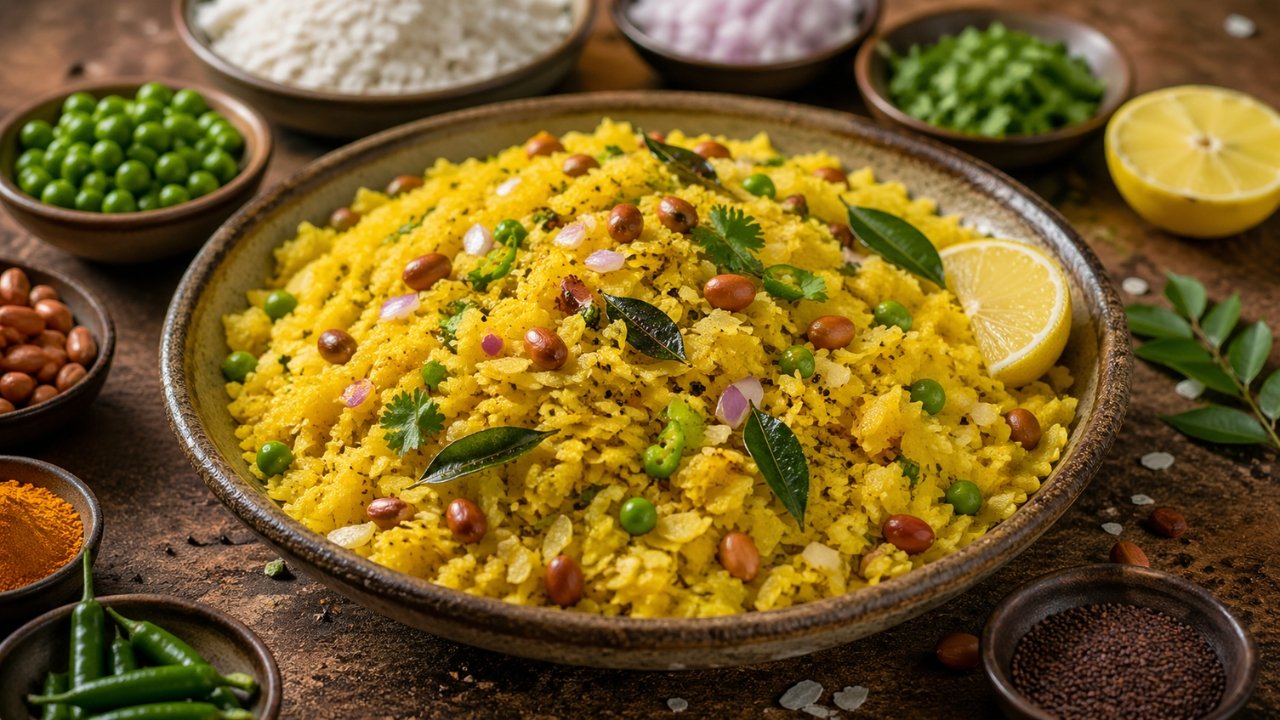
Poha is one of India’s most comforting, practical, and beloved breakfast dishes. Made with flattened rice, onions, mild spices, curry leaves, peanuts, and a bright squeeze of lemon, this poha recipe is light enough for a weekday morning yet satisfying enough to keep you energized for hours. It is especially popular in Maharashtra, Madhya Pradesh, Gujarat, and many parts of North India, where it is served as a quick breakfast, evening snack, or even a simple lunch when the day calls for something easy and nourishing.
The beauty of poha lies in its balance. It is soft but not mushy, mildly spiced but never heavy, and flavorful without requiring a long list of complicated ingredients. The flattened rice absorbs the seasoning beautifully, while roasted peanuts add crunch, turmeric gives a warm golden color, and lemon juice lifts the entire dish with freshness. When prepared correctly, poha feels airy, moist, and gently aromatic, not dry or sticky.
This recipe focuses on five clear steps for making a light Indian breakfast at home. It is designed for beginners as well as regular home cooks who want dependable results every time. The key is to rinse the poha gently, drain it well, cook the aromatics patiently, and avoid overmixing once the flattened rice goes into the pan. With a few simple techniques, you can turn basic pantry ingredients into a wholesome breakfast that tastes fresh, homemade, and deeply satisfying.
Recipe Information
This poha recipe serves four people and takes only twenty minutes from start to finish. The preparation time is 10 minutes, and the cooking time is 10 minutes. Because poha cooks quickly, it is ideal for busy mornings when you want something warm and homemade without spending too much time in the kitchen. It also works well for meal planning because the ingredients are affordable, widely available, and easy to store.
The main ingredient is thick poha, also known as thick flattened rice. Thick poha is preferred because it softens nicely after rinsing but still holds its shape during cooking. Thin poha can become soggy very quickly, so it is better used for dry snacks rather than this style of breakfast preparation. If you are buying poha for the first time, choose a medium-thick or thick variety for the best texture.
The flavor profile of this dish is mild, savory, slightly tangy, and gently nutty. Mustard seeds provide the first layer of aroma, cumin seeds add earthiness, green chilies bring a light heat, and curry leaves give the dish its classic Indian breakfast fragrance. Turmeric is used not only for color but also for its warm, subtle flavor. A small amount of sugar is optional, but it helps balance the lemon juice and salt, especially in the Maharashtrian style of poha.
- Preparation time: 10 minutes
- Cooking time: 10 minutes
- Total time: 20 minutes
- Servings: 4
- Recipe category: Breakfast
- Recipe cuisine: Indian
- Difficulty level: Easy
- Main ingredient: Thick flattened rice
- Best served: Hot and fresh with lemon wedges
Ingredients
The ingredients for poha are simple, but each one has a purpose. Flattened rice forms the base, peanuts provide crunch and richness, onions add sweetness, and lemon juice gives brightness. Fresh coriander at the end makes the dish fragrant and colorful. You can adjust the chilies according to your spice preference, but keeping the spice moderate helps maintain the light breakfast quality of this recipe.
- 2 cups thick poha, also called thick flattened rice
- 2 tablespoons oil
- 1/3 cup raw peanuts
- 1 teaspoon mustard seeds
- 1/2 teaspoon cumin seeds
- 10 to 12 curry leaves
- 2 green chilies, finely chopped
- 1 medium onion, finely chopped
- 1 small potato, peeled and cut into small cubes, optional
- 1/2 teaspoon turmeric powder
- 3/4 teaspoon salt, or to taste
- 1/2 teaspoon sugar, optional
- 2 tablespoons fresh lemon juice
- 2 tablespoons chopped fresh coriander leaves
- 2 tablespoons fresh grated coconut, optional
- Lemon wedges for serving
Before you start cooking, check the texture of your poha. Good thick poha should feel dry, light, and separate in the packet. If it has too much powder or broken flakes, rinse it with extra care so it does not turn pasty. Also, keep all the ingredients ready before heating the pan because the cooking process moves quickly once the tempering begins.
Oil is traditionally used because it keeps the dish light and allows the spices to bloom properly. A neutral oil works well, though peanut oil can add a pleasant nutty note. Peanuts are usually fried or roasted in the oil before the tempering, which gives them a deep flavor and crisp bite. If you prefer a lighter version, you can dry roast the peanuts separately and add them later.
Preparation
Step 1: Rinse and soften the poha. Place the thick poha in a large sieve or colander and rinse it gently under running water for a few seconds. Do not soak it in a bowl for a long time, because that can make the flakes too soft. After rinsing, let the poha drain completely for about five minutes. Sprinkle salt, sugar, and turmeric over the softened poha and gently fluff it with your fingers or a fork. The flakes should be moist and separate, not wet or clumpy.
Step 2: Roast the peanuts. Heat oil in a wide pan over medium heat. Add the raw peanuts and cook them until they turn crisp and slightly darker. Stir often so they roast evenly and do not burn. Once roasted, remove the peanuts from the pan and keep them aside. This step gives the poha a pleasant crunch and prevents the peanuts from becoming soft while the rest of the ingredients cook.
Step 3: Prepare the tempering. In the same pan, add mustard seeds and let them crackle. Add cumin seeds, curry leaves, and chopped green chilies. Stir for a few seconds until aromatic. This tempering is the flavor foundation of poha, so allow the spices to release their aroma without burning them. The curry leaves should sizzle, and the chilies should soften slightly.
Step 4: Cook the onions and potato. Add the chopped onion to the pan and cook until it becomes soft and lightly translucent. If using potato, add the small cubes after the onion begins to soften. Cover and cook on low to medium heat until the potato pieces are tender. Keep the cubes small so they cook quickly within the 10-minute cooking time. If the pan feels too dry, sprinkle one or two teaspoons of water, but do not add too much liquid.
Step 5: Add the poha and finish. Add the seasoned poha to the pan and mix gently with the onion and spice mixture. Use a light folding motion rather than heavy stirring, because softened poha can break if handled roughly. Cover the pan and let it steam on low heat for two to three minutes. Turn off the heat, add roasted peanuts, lemon juice, chopped coriander, and grated coconut if using. Mix once more gently and serve hot with extra lemon wedges.
The finished poha should look bright yellow, feel soft and fluffy, and taste balanced. If it tastes flat, add a little more lemon juice or salt. If it feels dry, sprinkle a tablespoon of warm water, cover the pan for one minute, and fluff again. If it feels too soft, leave the lid off for a minute so excess moisture can escape.
Tips
Use thick poha for the best result. This is the most important tip because the thickness of the flattened rice controls the final texture. Thin poha absorbs water quickly and can become mushy before it even reaches the pan. Thick poha gives you enough time to rinse, season, and cook without losing structure.
Rinse briefly rather than soaking deeply. Many beginners soak poha like rice, but poha does not need that treatment. A quick rinse softens it enough. After rinsing, let it rest in the sieve so the flakes absorb just the right amount of moisture. When pressed between your fingers, a flake should break easily but not dissolve.
Season the poha before adding it to the pan. Mixing salt, sugar, and turmeric into the softened flakes helps the seasoning spread evenly. If turmeric is added only to the pan, some parts may become too yellow while others remain pale. Pre-seasoning also reduces the need for aggressive stirring later.
Cook on medium or low heat after adding poha. High heat can dry out the flattened rice and make the bottom layer stick to the pan. Once poha is added, it only needs gentle steaming, not heavy frying. Covering the pan for a short time helps the flavors settle and keeps the dish moist.
Add lemon juice after turning off the heat. Fresh lemon juice tastes brighter when it is not cooked for too long. Adding it at the end preserves its freshness and prevents bitterness. Taste before serving and adjust the lemon according to your preference.
Do not skip the peanuts unless necessary. They add texture, protein, and flavor to an otherwise soft dish. If you have a peanut allergy, roasted cashews, roasted chana dal, or sunflower seeds can be used instead. The goal is to include something crisp that contrasts with the tender poha.
Serve poha immediately for the best texture. It can be reheated, but it tastes freshest right after cooking. If reheating, sprinkle a little water before warming it in a covered pan. This restores moisture and prevents dryness.
Variations
Kanda poha is the classic onion-based version and is one of the most popular styles in Maharashtra. It keeps the ingredient list short and highlights the natural sweetness of onions. For this version, you can skip the potato and focus on onions, curry leaves, peanuts, lemon, and coriander. It is quick, light, and perfect with tea.
Batata poha includes potato and feels slightly more filling. Small potato cubes are cooked with the tempering until tender before the poha is added. This version is useful when you want a breakfast that keeps you full for longer. The potato should be cut small so it cooks quickly and blends naturally with the flattened rice.
Vegetable poha is a colorful variation that includes peas, carrots, bell peppers, or beans. Add finely chopped vegetables after the onion and cook them until just tender. Avoid adding too many vegetables, because poha should remain light and fluffy. A small handful of mixed vegetables is enough for flavor, color, and nutrition.
Indori poha is a famous variation from Madhya Pradesh. It is often softer, slightly sweeter, and served with sev, pomegranate seeds, chopped onions, coriander, and sometimes a sprinkle of jeeravan masala. If you want a street-style breakfast, garnish the finished poha with crunchy sev and a few fresh pomegranate seeds just before serving.
Lemon poha has a brighter and tangier flavor. Increase the lemon juice slightly and keep the spices simple. This version is refreshing during warmer months and pairs well with coconut, coriander, and roasted peanuts. You can also add a pinch of grated ginger for extra freshness.
Protein-rich poha can be made by adding sprouts, green peas, roasted chana, or paneer cubes. Keep the additions moderate so the dish does not become heavy. Sprouts should be lightly cooked, while paneer can be added near the end. This variation is helpful when serving poha as a post-workout breakfast or a more substantial morning meal.
Conclusion
Poha is a perfect example of how simple Indian cooking can be flavorful, nourishing, and practical at the same time. With flattened rice, a few spices, onions, peanuts, and lemon juice, you can prepare a breakfast that is light yet satisfying. The five-step method keeps the process easy: rinse the poha, roast the peanuts, prepare the tempering, cook the onions and potato, then combine everything gently and finish with lemon and coriander.
The most important parts of this recipe are texture and timing. Use thick poha, rinse it briefly, drain it well, and avoid overcooking after it enters the pan. These small details make the difference between poha that is fluffy and fresh and poha that is sticky or dry. Once you understand the basic method, the recipe becomes flexible. You can keep it classic with onions, make it heartier with potato, add vegetables for color, or garnish it street-style with sev and pomegranate.
Serve poha hot with lemon wedges, fresh coriander, and a cup of masala chai for a comforting Indian breakfast. It is quick enough for daily cooking, gentle enough for a light meal, and flavorful enough to feel special even on an ordinary morning. Whether you are new to Indian cooking or revisiting a familiar favorite, this poha recipe gives you a reliable way to make a warm, balanced, and delicious breakfast in just twenty minutes.
