
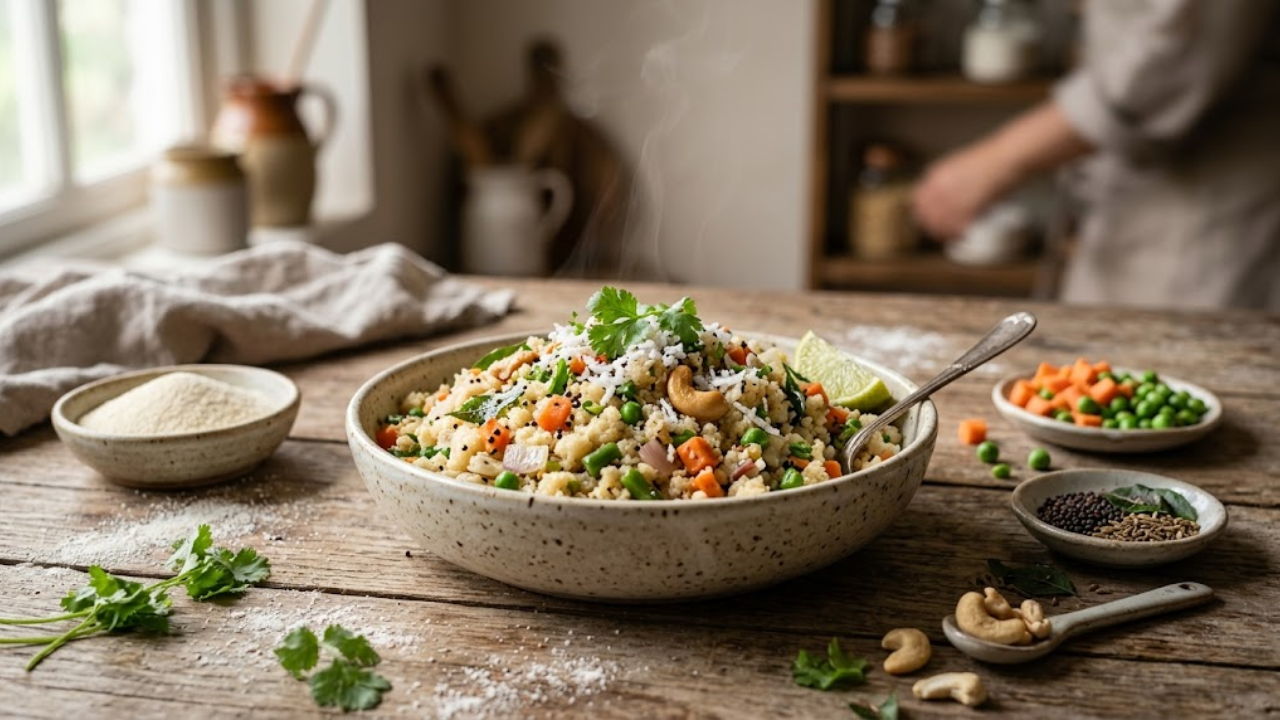
Upma is one of the most comforting and widely loved breakfast dishes in Indian cuisine, particularly in South India where it is a daily staple in many homes. Made using semolina, also known as rava or sooji, upma is appreciated for its simplicity, versatility, and ability to deliver both nutrition and satisfaction in every bite. The dish is quick to prepare, highly customizable, and perfect for busy mornings when you want something wholesome yet easy to cook.
This version of upma, made with roasted rava and simple vegetables, enhances the traditional recipe by adding depth of flavor and improved texture. Roasting the rava before cooking gives it a nutty aroma and prevents stickiness, resulting in a fluffy and light consistency. The addition of vegetables such as carrots, peas, and beans not only boosts the nutritional value but also adds color, freshness, and a subtle sweetness that balances the savory elements of the dish.
Upma is more than just a breakfast item—it is a comfort food that evokes warmth, familiarity, and nostalgia. Whether served at home, in restaurants, or at traditional gatherings, it holds a special place in Indian culinary culture. Its adaptability allows you to experiment with ingredients, spices, and textures, making it suitable for people of all ages and preferences.
In this comprehensive guide, we will explore every aspect of making the perfect upma—from selecting ingredients and understanding cooking techniques to learning expert tips and creative variations. By the end of this article, you will have a deep understanding of how to prepare a delicious, soft, and flavorful upma that can easily become a regular part of your meal routine.
Recipe Information
- Preparation Time: 10 minutes
- Cooking Time: 20 minutes
- Total Time: 30 minutes
- Recipe Category: Breakfast
- Recipe Cuisine: Indian
- Servings: 4 servings
Ingredients
- 1 cup roasted rava (semolina)
- 2 tablespoons oil or ghee
- 1 teaspoon mustard seeds
- 1 teaspoon urad dal (split black gram)
- 1 teaspoon chana dal (split chickpeas)
- 1 medium onion, finely chopped
- 1 green chili, finely chopped
- 1 teaspoon grated ginger
- 1/2 cup chopped carrots
- 1/4 cup green peas
- 1/4 cup chopped beans
- 2 1/2 cups water
- Salt to taste
- 2 tablespoons chopped coriander leaves
- Juice of half a lemon (optional)
The ingredients listed above form the foundation of a classic vegetable upma. Each component plays a significant role in building the dish’s flavor and texture. The roasted rava acts as the main base, while the tempering ingredients such as mustard seeds and lentils provide aroma and crunch. Vegetables contribute freshness and nutrition, and the finishing touches like coriander leaves and lemon juice enhance the overall taste.
You can easily adjust the quantities or substitute ingredients based on availability and personal preference. This flexibility is one of the reasons why upma is such a popular dish across different regions and households.
Preparation
Start by ensuring that your rava is properly roasted. If you are using packaged roasted rava, you may still choose to lightly roast it again for enhanced flavor. Place the rava in a dry pan over medium heat and stir continuously until it becomes aromatic and slightly golden. Avoid over-roasting, as it can lead to a bitter taste. Once done, transfer it to a plate and set it aside.
Next, heat oil or ghee in a heavy-bottomed pan or kadhai. The choice between oil and ghee depends on your preference; ghee adds richness and a traditional flavor, while oil keeps the dish lighter. Once the oil is hot, add mustard seeds and allow them to splutter. This is a crucial step that releases essential oils and forms the base flavor of the dish.
Add urad dal and chana dal to the pan. Fry them until they turn golden brown, which adds a delightful crunch to the otherwise soft upma. Stir continuously to ensure even cooking and prevent burning.
Now add finely chopped onions, green chili, and grated ginger. Sauté the mixture until the onions turn translucent and slightly soft. This stage is important for building flavor, as the combination of onion, chili, and ginger creates a fragrant base.
Introduce the vegetables—carrots, beans, and peas—into the pan. Stir well and cook for a few minutes until they begin to soften. The vegetables should retain a slight crunch, as overcooking can make them mushy and reduce their nutritional value.
Pour in the measured water and add salt according to taste. Increase the heat and bring the mixture to a rolling boil. The water-to-rava ratio is critical for achieving the right texture, so ensure accurate measurement.
Once the water starts boiling, reduce the heat to low and gradually add the roasted rava while stirring continuously. This step must be done carefully to prevent lumps from forming. Constant stirring ensures that the rava is evenly distributed and absorbs the water properly.
Continue stirring until the mixture thickens. Cover the pan with a lid and let it cook on low heat for a few minutes. During this time, the rava absorbs all the moisture and becomes soft and fluffy.
After a few minutes, open the lid and gently fluff the upma using a spoon or fork. Turn off the heat and let it rest briefly. Garnish with freshly chopped coriander leaves and a squeeze of lemon juice if desired. Serve hot for the best taste and texture.
Tips
Roasting the rava is one of the most important steps in making upma. It enhances flavor and prevents the dish from becoming sticky. Always roast on medium heat and stir continuously.
Maintaining the correct water ratio is essential. A ratio of approximately 2.5 cups of water for 1 cup of rava works well for soft and fluffy upma.
Adding rava slowly while stirring helps prevent lumps. This is a common mistake among beginners, so take your time during this step.
Using fresh vegetables improves both taste and nutrition. Avoid overcooking them to retain their texture and color.
For extra flavor, consider adding curry leaves during the tempering stage. They provide a distinctive South Indian aroma.
If you prefer a richer taste, use ghee instead of oil. It adds a unique depth of flavor that elevates the dish.
Always serve upma hot, as it tends to thicken as it cools. If needed, you can sprinkle a little hot water and reheat to restore its texture.
Variations
Upma is an incredibly versatile dish that can be customized in numerous ways. One popular variation is adding roasted peanuts or cashews for added crunch and richness. These nuts complement the soft texture of the upma and provide a delightful contrast.
For a healthier version, you can include additional vegetables such as broccoli, corn, or spinach. This not only enhances the nutritional profile but also introduces new flavors and textures.
Masala upma is another variation where spices like turmeric, garam masala, or sambar powder are added. This creates a more robust and spicy flavor profile, perfect for those who enjoy bold tastes.
If you prefer a tangy twist, increase the amount of lemon juice or add chopped tomatoes while cooking the vegetables. The acidity balances the richness of the dish and adds freshness.
You can also experiment with different types of rava, such as fine or coarse semolina, to achieve varying textures. Coarse rava gives a more grainy and rustic feel, while fine rava results in a smoother consistency.
Another creative option is to add grated coconut at the end for a slightly sweet and tropical flavor. This is especially popular in certain South Indian regions.
For a protein-rich version, you can include paneer cubes or cooked lentils. This makes the dish more filling and suitable for a complete meal.
Conclusion
Upma with roasted rava and simple vegetables is a timeless dish that perfectly embodies the essence of Indian home cooking—simple, nourishing, and full of flavor. Its ease of preparation makes it accessible to beginners, while its versatility allows experienced cooks to experiment and innovate.
This dish is not only quick and convenient but also highly nutritious, making it an excellent choice for a balanced meal. The combination of roasted rava, aromatic spices, and fresh vegetables creates a harmony of textures and flavors that is both satisfying and comforting.
Whether you are preparing breakfast for your family, a light dinner after a long day, or a quick snack, upma is a reliable option that never disappoints. By following the techniques and tips outlined in this guide, you can consistently achieve a perfect result.
Cooking is an art that brings people together, and dishes like upma remind us of the joy of simple, home-cooked meals. Once you master this recipe, you can explore endless variations and make it uniquely your own. With practice and creativity, this humble dish can become a staple in your kitchen, offering warmth, comfort, and satisfaction every time you prepare it.
