
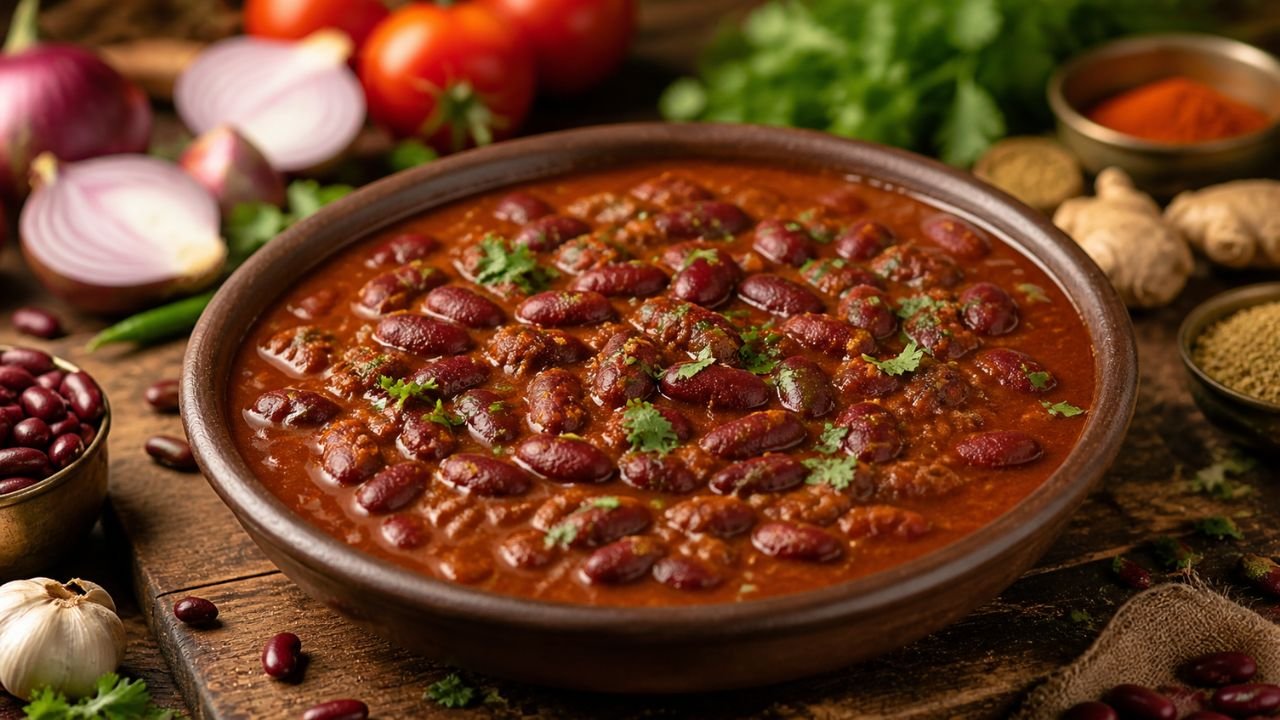
Rajma Masala is one of the most loved North Indian comfort foods, known for its rich tomato-onion gravy, warming spices, and creamy kidney beans that turn soft without losing their shape. When made well, this dish has a deep, homestyle flavor that tastes even better with steamed rice, jeera rice, or fresh roti. The secret to an excellent Rajma Masala is not just the spice blend, but the balance between properly soaked and cooked kidney beans, slow-cooked masala, and enough simmering time for the beans to absorb the gravy. This version is designed for anyone who wants a thick gravy and soft kidney beans without ending up with watery curry or beans that feel undercooked in the center.
A good Rajma Masala should have a smooth, clingy gravy that coats every bean. The onions need to cook down until sweet and well browned, the tomatoes should lose their rawness completely, and the spices should bloom in oil to build the dish layer by layer. The kidney beans must be soaked well, pressure cooked until tender, and simmered with the masala so that the starch from the beans naturally thickens the curry. This process creates the restaurant-style body people often look for, while still keeping the wholesome, familiar taste of homemade rajma.
Although the ingredient list is simple, the method matters a lot. Rushing any stage can affect the final texture. Undercooked beans stay grainy, half-cooked onions make the gravy sharp, and uncooked tomatoes give the curry an acidic taste. The good news is that Rajma Masala is forgiving once you understand the sequence. Soak the beans well, cook them until buttery soft, prepare the masala patiently, then combine both and let them simmer together. That final simmer is what turns separate components into one flavorful dish. With a few basic tips, you can make rajma that tastes rich, hearty, and deeply satisfying every time.
Recipe Information
- Preparation Time: 8 hours 20 minutes
- Cooking Time: 1 hour 10 minutes
- Total Time: 9 hours 30 minutes
- Recipe Yield: 4 servings
- Recipe Category: Main Course
- Recipe Cuisine: North Indian
- Difficulty Level: Moderate
This timing includes soaking the kidney beans, which is essential for achieving soft, evenly cooked rajma. Active hands-on work is much shorter, but soaking should never be skipped. The cooking time includes pressure cooking the beans, preparing the masala base, and simmering everything together until the gravy thickens. If you prefer a looser gravy for rice, you can reduce the final simmer slightly, but for a thick and flavorful version, allow the curry to reduce properly.
Ingredients
- 1 cup dried rajma, also known as red kidney beans
- 4 cups water for soaking
- 3 to 4 cups water for pressure cooking
- 2 medium onions, finely chopped
- 3 medium tomatoes, pureed or very finely chopped
- 1 tablespoon ginger-garlic paste
- 2 green chilies, slit or finely chopped
- 3 tablespoons oil or 2 tablespoons oil plus 1 tablespoon butter
- 1 teaspoon cumin seeds
- 1 bay leaf
- 1 black cardamom
- 1 inch cinnamon stick
- 2 cloves
- 1 teaspoon coriander powder
- 1 teaspoon cumin powder
- 1 teaspoon Kashmiri red chili powder
- 1/2 teaspoon turmeric powder
- 1/2 teaspoon regular red chili powder, optional
- 1 teaspoon salt, or to taste
- 1 teaspoon garam masala
- 1/2 teaspoon roasted cumin powder, optional
- 1 tablespoon fresh cream or 1 tablespoon butter, optional
- 2 tablespoons chopped fresh coriander leaves
- 1 to 1 1/2 cups reserved rajma cooking liquid
The ingredients are pantry-friendly, but each one plays an important role. Rajma is, of course, the heart of the dish. Tomatoes provide body and tang, onions create sweetness and thickness, and the whole spices add warmth in the background. Kashmiri red chili powder gives color without too much heat, while coriander and cumin powders create the classic North Indian curry profile. A little garam masala at the end lifts the aroma and makes the gravy more rounded. The reserved cooking liquid is especially useful because it contains starch from the beans and helps create a naturally thick gravy without relying on flour or cream.
Preparation
Start by sorting the kidney beans and rinsing them thoroughly under running water. Transfer them to a large bowl and soak in 4 cups of water for at least 8 hours or overnight. During soaking, the beans expand, soften, and cook more evenly later. If your kitchen is very warm, keep the bowl in a cooler place. After soaking, drain the water and rinse the beans again. The beans should look plumper and slightly lighter in color.
Add the soaked rajma to a pressure cooker with 3 to 4 cups of fresh water and a little salt if you like. Pressure cook until the beans are completely tender. Depending on the variety and age of the beans, this may take anywhere from 25 to 40 minutes after the first whistle. The ideal rajma should mash easily between your fingers. If the beans are still firm, cook them longer. Soft beans are non-negotiable for a good Rajma Masala because they help thicken the gravy and absorb the masala better.
Once the beans are done, do not discard the cooking liquid. Keep the beans and liquid aside. Now begin the masala. Heat oil in a deep pan or kadai. Add cumin seeds, bay leaf, black cardamom, cinnamon, and cloves. Let them sizzle for a few seconds until fragrant. Add the chopped onions and cook on medium heat, stirring often. This stage is important because the onions need to turn light brown and lose their raw smell. If they remain pale, the final gravy may taste flat and slightly sharp instead of rich and rounded.
When the onions are nicely browned, add the ginger-garlic paste and green chilies. Cook for 1 to 2 minutes until the raw aroma fades. Then add the tomato puree or finely chopped tomatoes. Stir well and cook on medium heat. At first, the mixture will look loose and glossy, but as it cooks, it will become thicker and deeper in color. This stage can take 8 to 12 minutes depending on the water content in the tomatoes. Be patient here. The masala should lose its raw smell completely and oil should begin to separate at the edges.
Now add coriander powder, cumin powder, Kashmiri red chili powder, turmeric, optional regular red chili powder, and salt. Stir the spices into the cooked tomato-onion base. If the masala looks too dry, add a splash of the reserved bean liquid so the spices do not burn. Cook for another 2 minutes. This brief roasting of the spice powders helps them release their aroma and blend into the gravy base rather than sitting on top of it as raw seasoning.
Add the cooked rajma along with 1 to 1 1/2 cups of the reserved cooking liquid. Mix well and bring everything to a boil. Once it starts bubbling, reduce the heat and let the curry simmer uncovered for 20 to 25 minutes. Stir occasionally to prevent sticking. During this time, the beans begin to absorb the masala and the gravy thickens naturally. For an even creamier texture, mash a few spoonfuls of rajma against the side of the pan and stir them back into the curry. This gives body to the gravy without changing the character of the dish.
As the curry simmers, taste and adjust salt if needed. If the gravy becomes too thick, add a little more cooking liquid or hot water. If it seems too thin, continue simmering until it reaches your preferred consistency. Rajma Masala is best when the gravy is thick enough to cling to rice and coat the beans well, but not so dry that it feels pasty. The final texture should be smooth, spoonable, and rich.
Finish with garam masala, optional roasted cumin powder, fresh cream or butter if using, and chopped coriander leaves. Stir and simmer for 2 more minutes, then turn off the heat and let the curry rest for 5 to 10 minutes before serving. This resting time helps the flavors settle. Serve hot with steamed basmati rice, jeera rice, chapati, naan, or laccha paratha. A side of sliced onions and lemon wedges complements the meal beautifully.
If you are cooking Rajma Masala ahead of time, that is even better. Like many bean curries, its flavor deepens after a few hours, and the next day it often tastes even richer. Store leftovers in the refrigerator and reheat gently with a splash of hot water to loosen the gravy if needed. Because the beans continue to absorb liquid as they sit, the curry may thicken further over time.
Tips
- Always soak rajma for at least 8 hours. Proper soaking improves texture and helps the beans cook evenly.
- Use fresh or reasonably new stock of kidney beans. Very old beans can take much longer to soften.
- Cook the beans until they are truly soft. If they are even slightly hard, the finished curry will not have the right texture.
- Reserve the cooking liquid from the beans. It adds flavor and natural starch to the gravy.
- Brown the onions well but do not burn them. This creates depth and sweetness in the masala.
- Cook the tomatoes until the raw smell disappears and oil begins to separate from the masala.
- Simmer the rajma with the masala long enough for the flavors to merge and the gravy to thicken.
- Mash a small portion of the beans to create a thicker, creamier consistency.
- Add garam masala near the end so its aroma stays fresh and pronounced.
- Let the curry rest for a few minutes before serving for the best flavor.
One of the most common mistakes in Rajma Masala is using too much water during the final simmer. The beans should not swim in a thin sauce. Start with less liquid and add more only if needed. Another common issue is adding spice powders too early before the tomatoes are cooked down. If the tomato base is still raw, the spices will not blend properly and the curry may taste harsh. Taking time at each stage gives you a much better result than trying to rush everything at high heat.
Variations
There are several ways to adapt Rajma Masala depending on your taste. For a Punjabi-style version, use a little butter and cream at the end for a richer finish. For a more homestyle everyday version, skip the cream and keep the seasoning simple. You can also add a small amount of kasuri methi near the end for a subtle restaurant-style aroma. Crush it between your palms before adding so it releases more flavor.
If you like a smokier profile, you can use the dhungar method by placing a small piece of hot charcoal in a metal bowl inside the cooked curry, adding a drop of ghee over it, and covering the pot briefly. This gives the curry a gentle smoky aroma without overpowering the masala. For a spicier version, increase the green chilies or regular red chili powder. For a milder version, use only Kashmiri red chili powder for color and keep the chilies minimal.
You can also make this dish with canned kidney beans if needed, though dried beans generally give better flavor and texture. If using canned beans, skip the soaking and pressure cooking, but simmer the beans with the masala for long enough that they absorb the flavors. Since canned beans do not come with the same starchy cooking liquid, you may need to mash more beans or simmer a little longer to thicken the gravy naturally.
Some cooks add a spoonful of yogurt during the tomato stage for a slight tang, while others include a little onion paste for a smoother gravy. Both methods work, but the classic tomato-onion base is often enough when cooked properly. You can even blend the cooked masala before adding the beans if you prefer a more restaurant-style silky gravy. Just be careful while blending hot mixtures, and return the masala to the pan before combining it with the rajma.
Conclusion
Rajma Masala Recipe with Thick Gravy and Soft Kidney Beans is a timeless dish that proves simple ingredients can create deeply satisfying food. When the beans are soaked well, cooked until tender, and simmered with a patiently prepared masala, the result is warm, hearty, and full of flavor. The thick gravy comes naturally from the beans and the slow reduction of the curry, while the spices create a balanced taste that is comforting rather than overpowering.
This recipe is perfect for family lunches, weekend dinners, meal prep, or anytime you want a filling vegetarian main course. Served with rice or roti, it becomes a complete and nourishing meal that appeals to both everyday home cooks and those looking for classic Indian comfort food. Once you understand the method, Rajma Masala becomes easy to repeat and adapt. Make it once with care, and it will quickly become a recipe you return to again and again.
