
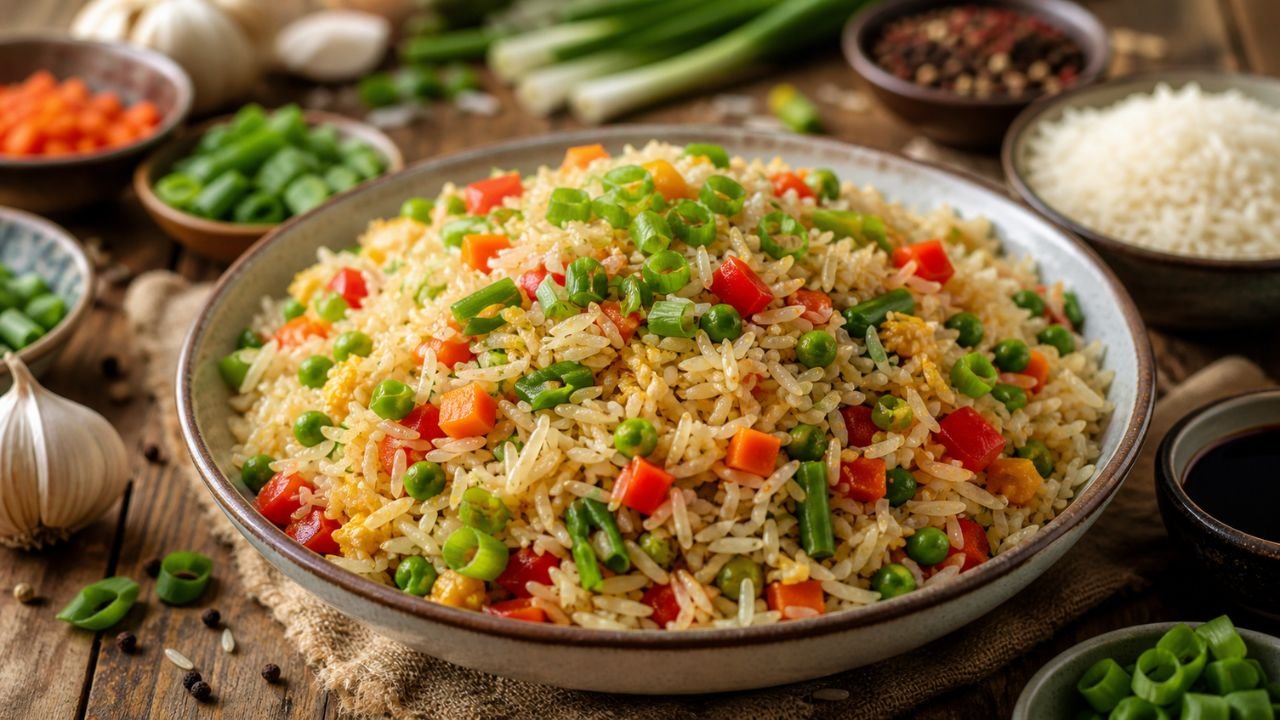
Veg Fried Rice is one of those dependable dishes that feels comforting, practical, and satisfying at the same time. It is quick enough for a busy weekday dinner, flexible enough for using up leftover vegetables, and flavorful enough to feel like a special meal instead of a rushed one. The secret to a great restaurant-style version is not complicated technique or hard-to-find ingredients. It comes down to using cooled rice, cooking over high heat, keeping the vegetables crisp, and seasoning at the right stages. When made properly, every grain stays separate, lightly glossy, and full of smoky, savory flavor.
This Veg Fried Rice Recipe: 7 Steps for a Quick Restaurant-Style Meal is designed for home cooks who want dependable results without turning the kitchen upside down. The method is straightforward, but it also explains why each step matters so you can repeat the recipe confidently. You do not need a commercial wok burner to make delicious fried rice at home. A wide pan, steady heat, and good preparation can still deliver a flavorful dish with excellent texture.
Whether you want a simple lunch, a side for Indo-Chinese meals, or a complete dinner with a bowl of gravy Manchurian or chili paneer, this recipe fits beautifully. It is colorful, aromatic, and easy to adapt depending on what you have in the refrigerator. Carrots, beans, cabbage, capsicum, spring onions, peas, and corn all work well, but the best versions avoid overcrowding the pan. The goal is bright vegetables with a little crunch rather than a soft mixed rice dish. Once you understand that balance, you will be able to make fried rice that looks and tastes far more polished than an ordinary leftover meal.
Recipe Information
- Servings: 4 people
- Prep Time: 20 minutes
- Cook Time: 15 minutes
- Total Time: 35 minutes
- Category: Main Course
- Cuisine/Style: Indo-Chinese, Chinese-style Home Cooking
- Diet Type: Vegetarian
- Difficulty Level: Beginner-friendly
The flavor profile is savory, lightly peppery, and aromatic rather than spicy. Soy sauce adds color and depth, vinegar brings brightness, and black pepper gives that familiar restaurant-style edge. Spring onion greens added at the end lift the entire dish and make it smell fresh. This is the kind of recipe that rewards good organization. Once the pan is hot, the cooking moves quickly, so having all the ingredients chopped and ready makes a noticeable difference.
Ingredients
- 3 cups cooked basmati rice or long-grain rice, cooled completely
- 2 tablespoons oil
- 1 tablespoon finely chopped garlic
- 1 teaspoon finely chopped ginger
- 2 tablespoons spring onion whites, chopped
- 1/4 cup carrots, finely chopped
- 1/4 cup French beans, finely chopped
- 1/4 cup cabbage, shredded
- 1/4 cup capsicum, finely chopped
- 1/4 cup green peas, boiled or thawed
- 2 tablespoons sweet corn, optional
- 2 tablespoons spring onion greens, chopped
- 1 tablespoon soy sauce
- 1 teaspoon vinegar
- 1/2 teaspoon black pepper powder
- Salt to taste
- Optional: 1 teaspoon chili sauce or green chili for extra heat
The rice is the heart of the recipe, so choose grains that cook fluffy and separate easily. Basmati is a popular choice because it stays long and elegant, but any long-grain variety works. Vegetable size also matters. Chop everything finely and evenly so the vegetables cook quickly over high heat without becoming limp. If the pieces are too large, they may remain undercooked or release excess moisture. Spring onions deserve special attention because using both the whites and greens gives the fried rice a more layered flavor.
Soy sauce should be used carefully. Too much can dominate the dish, darken the rice excessively, and make it salty. The goal is balance, not a sauce-heavy finish. Vinegar sharpens the flavor slightly and keeps the dish tasting lively. Black pepper gives warmth without overwhelming the vegetables. This combination creates that clean, savory taste many people associate with restaurant-style fried rice.
Preparation
Step 1: Prepare the rice. If you are cooking rice specifically for this recipe, rinse it well until the water runs mostly clear. Cook it with just enough water so the grains stay firm and not mushy. Once cooked, spread it on a plate or tray to cool. Refrigerated leftover rice is even better because it dries slightly and fries more cleanly. Before using, gently loosen the grains with your fingers or a fork. Avoid pressing or mashing the rice.
Step 2: Chop and organize the vegetables. Finely chop the carrots, beans, capsicum, and spring onion whites. Shred the cabbage and keep the spring onion greens aside for later. Measure all sauces, salt, and pepper in advance. Fried rice cooks quickly, so arranging everything before turning on the stove helps you maintain high heat and good timing.
Step 3: Heat the pan properly. Place a wok or wide frying pan over high heat and let it become hot before adding oil. This stage is important because hot cookware helps sear the vegetables instead of steaming them. Once the oil is hot, add garlic, ginger, and spring onion whites. Stir for a few seconds only until fragrant. Do not brown them too much, or the flavor can turn bitter.
Step 4: Stir-fry the vegetables. Add carrots, beans, capsicum, cabbage, peas, and corn. Toss continuously on high heat for 2 to 4 minutes. The vegetables should become slightly tender while still looking bright and crisp. This is one of the defining features of good fried rice. Soft, overcooked vegetables can make the whole dish feel dull. If your pan is small, cook the vegetables in batches so they fry instead of sweating.
Step 5: Season at the right moment. Add soy sauce, vinegar, black pepper, and salt. Stir quickly to coat the vegetables evenly. Keep in mind that soy sauce already contains salt, so season carefully. If you enjoy mild heat, add a little chili sauce or finely chopped green chili at this point. Let the seasonings coat the vegetables for a few seconds so the flavors bloom in the hot pan.
Step 6: Add the rice and toss gently. Add the cooled rice to the pan. Use a broad spatula or spoon to lift and fold the rice with the vegetables rather than stirring aggressively. The aim is to keep the grains intact and separate. Continue tossing on high heat for 2 to 3 minutes until the rice is heated through and evenly coated with the seasonings. If needed, taste and adjust salt, pepper, or vinegar.
Step 7: Finish and serve. Add the spring onion greens and toss once more. Turn off the heat immediately to keep their fresh flavor and color. Serve the fried rice hot on its own or with a favorite side such as veg Manchurian, chili paneer, hot garlic sauce, or a simple cucumber salad. The final dish should be aromatic, lightly smoky, colorful, and fluffy.
The reason this 7-step process works so well is that each part protects texture. Cooling the rice prevents clumping. High heat preserves the vegetables. Gentle tossing keeps grains from breaking. Final garnishing adds freshness. If you rush through these details, the dish may still be edible, but it will not have the clean restaurant-style finish that makes fried rice truly satisfying.
Tips
The best tip for fried rice is to never use steaming hot fresh rice directly from the pot. Warm rice releases starch and sticks together as soon as it hits the pan. Chilled rice or thoroughly cooled rice fries much better and gives you that signature grain-by-grain texture. If your rice is a little soft, refrigerate it uncovered for a short time before using so excess moisture evaporates.
Another important tip is to use the widest pan available. A cramped pan traps steam, which softens both the vegetables and the rice. A wide cooking surface allows quick evaporation and better browning. Do not fill the pan too much at once. If doubling the recipe, it is often better to cook in two rounds than to overcrowd the pan.
Cut vegetables uniformly and keep them small. Fried rice should be easy to eat, with rice and vegetables blending naturally in each spoonful. Large chunks interrupt the texture and take longer to cook. Also, resist the urge to add too many sauces. Restaurant-style fried rice is not supposed to be wet or heavily coated. It should taste seasoned, not saucy.
Use salt with care because soy sauce varies by brand. Taste near the end and adjust gradually. Freshly ground black pepper gives better aroma than pepper that has been sitting open for a long time. If you want a little more smoky flavor, let the rice sit undisturbed in the hot pan for a few seconds between tosses. This creates a mild roasted note without drying it out.
Finally, prep everything before cooking. Fried rice is one of the fastest dishes once the stove is on. Stopping midway to chop vegetables or measure sauces can lead to uneven cooking. Good preparation makes the process calm, quick, and far more professional.
Variations
One of the biggest strengths of veg fried rice is its flexibility. You can make it simpler or richer depending on the meal you want. For a more colorful version, add red and yellow bell peppers. For extra texture, include bean sprouts at the very end so they stay crunchy. Mushrooms can also be added, but cook them separately first if they release a lot of water.
If you want a spicier Indo-Chinese style, add finely chopped green chilies, a little chili garlic sauce, or even Schezwan sauce. This changes the flavor profile significantly and creates a bolder rice that pairs especially well with dry appetizers. For a slightly sweeter vegetable-forward version, add more corn and peas while keeping the seasoning mild.
You can also turn this into a more protein-rich vegetarian meal by mixing in paneer cubes, tofu, or scrambled egg if you are not aiming for a strictly vegetarian dish. Paneer should be lightly sautéed separately and folded in at the end so it stays soft. Tofu works best when pressed and pan-fried before adding. These additions make the rice filling enough to serve as a complete one-bowl meal.
Brown rice can be used for a wholesome twist, though the flavor and texture will be a little earthier than traditional restaurant-style fried rice. Millet or quinoa can be adapted similarly, but those versions move away from the classic result. If you want the most authentic texture, stay with long-grain white rice.
Seasoning can also be adjusted according to preference. A tiny dash of sesame oil at the finish can add nuttiness, while a pinch of white pepper gives a sharper heat. Just keep the changes moderate so the vegetables and rice remain the stars of the dish.
Conclusion
Veg Fried Rice is proof that a fast meal can still feel polished and deeply satisfying. With the right rice, high heat, crisp vegetables, and balanced seasoning, you can create a dish that has the flavor and appearance of restaurant-style fried rice without complicated steps. This 7-step method is easy to follow, but it also teaches the core principles that make fried rice successful every time.
Once you make it a few times, the recipe becomes wonderfully intuitive. You start noticing how the rice should feel before it goes into the pan, how long vegetables need to stay crisp, and how a small amount of soy sauce can transform the whole dish. That confidence is what turns a basic recipe into a regular household favorite. Serve it fresh and hot, keep the ingredients simple and well prepared, and you will have a reliable meal that works for lunch, dinner, guests, or quick family cooking any day of the week.
