
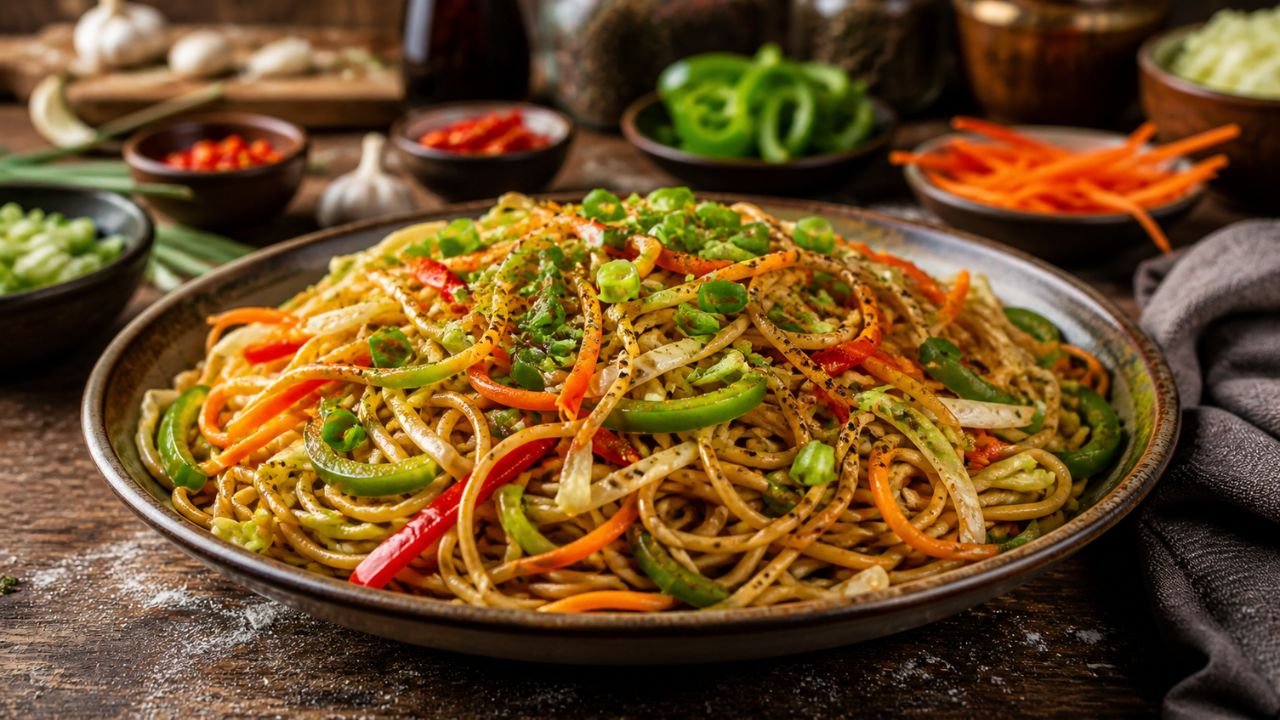
This recipe is perfect for weeknight dinners, casual get-togethers, lunch boxes, or even as a party side dish. It comes together quickly once all the ingredients are prepared, which makes it ideal for busy days. The beauty of Hakka noodles lies in their versatility too. You can keep them simple with cabbage, capsicum, carrots, and spring onions, or enhance them with mushrooms, baby corn, beans, and paneer. The base method remains the same: high heat, fast tossing, and bold seasoning.
Unlike traditional Chinese noodles, the Indo-Chinese version has a distinct spicy and savory character. It uses familiar pantry ingredients in a way that delivers restaurant-style flavor at home. Garlic and green chilies provide the signature sharpness, soy sauce adds umami depth, vinegar contributes brightness, and black pepper lifts the entire dish. When cooked properly, each strand of noodle remains separate and lightly coated, while the vegetables add freshness and crunch in every bite.
Another reason this recipe is so popular is that it can be served on its own or paired with other favorites like chili paneer, gobi Manchurian, vegetable Manchurian, or hot and sour soup. It is also easy to adjust according to your taste. Make it milder for children, spicier for street-food lovers, or more loaded with vegetables for a wholesome meal. Once you understand the technique, you can recreate the same fast-food-style experience in your own kitchen with simple ingredients and clear steps.
Recipe Information
This recipe makes a satisfying meal for about 4 servings. The preparation time is 20 minutes, which includes chopping the vegetables, boiling the noodles, and measuring out the sauces. The cooking time is 15 minutes, since the stir-frying process happens quickly over high heat. That brings the total time to 35 minutes. The recipe falls under the category of main course or quick meal, and the cuisine is best described as Indo-Chinese. It is a vegetarian noodle dish with a savory, spicy, and slightly tangy flavor profile. The texture is one of its biggest strengths, with soft yet springy noodles paired with crisp vegetables and aromatic seasonings.
For the best results, it helps to get all the ingredients ready before you start cooking. Stir-frying moves quickly, and once the wok or pan is hot, there is very little time to chop or measure anything. This dish also benefits from cooking on the highest heat your stove can safely provide. High heat creates the slightly smoky character that is often associated with restaurant-style Hakka noodles. If you are making the recipe for a crowd, it is better to cook in batches than to overload the pan, because overcrowding causes steaming instead of stir-frying.
- Servings: 4 people
- Prep Time: 20 minutes
- Cook Time: 15 minutes
- Total Time: 35 minutes
- Category: Main Course
- Cuisine/Style: Indo-Chinese, Chinese
- Diet Type: Vegetarian
Ingredients
- 250 grams Hakka noodles or any thin stir-fry noodles
- 4 to 5 cups water for boiling noodles
- 1 teaspoon salt for boiling
- 1 teaspoon oil for boiling noodles
- 2 tablespoons oil for stir-frying
- 1 tablespoon finely chopped garlic
- 2 teaspoons finely chopped ginger
- 2 green chilies, finely sliced
- 1 medium onion, thinly sliced
- 1 cup shredded cabbage
- 1 medium carrot, julienned
- 1 medium capsicum, thinly sliced
- 8 to 10 French beans, thinly sliced
- 3 to 4 spring onions, chopped, with greens separated
- 1 tablespoon soy sauce
- 2 teaspoons green chili sauce
- 1 teaspoon red chili sauce
- 1 teaspoon vinegar
- 1/2 teaspoon black pepper powder
- Salt to taste
- Optional: 1 teaspoon toasted sesame oil for finishing
The vegetables listed here create the classic crunchy texture associated with Hakka noodles. Cabbage adds sweetness and bite, carrots bring color and a gentle earthiness, capsicum gives freshness, beans add a pleasant snap, and spring onions deliver a mild onion flavor that works beautifully in Indo-Chinese cooking. Garlic and ginger are essential for aroma, while green chilies add heat. The sauces should be used carefully. The aim is to season the noodles, not drown them. Too much sauce can make the dish overly salty and soggy.
Preparation
Begin by bringing water to a boil in a large pot. Add salt and a teaspoon of oil. Once the water is boiling well, add the noodles and cook them according to package instructions until just tender. They should be cooked through but still slightly firm, because they will cook a little more during stir-frying. Overcooked noodles will break, clump, and lose their attractive texture.
As soon as the noodles are done, drain them in a colander and rinse under running water. This stops the cooking process and washes away excess starch, which helps prevent sticking. Toss the drained noodles with a few drops of oil and spread them lightly so they cool and remain separate. Set them aside while you prepare the stir-fry.
Next, wash and cut all the vegetables. The key is to slice everything thinly and uniformly. Thin strips cook quickly and blend well with the noodles. Keep the white part of the spring onions separate from the greens, because the white part goes into the stir-fry earlier while the greens are added toward the end for freshness. Also measure the sauces into a small bowl or keep them close at hand, since the cooking will move fast.
Heat a wok or a wide pan on high heat. Once it is hot, add the oil. Swirl the oil around the surface, then add chopped garlic, ginger, and green chilies. Stir-fry briefly for a few seconds until fragrant. Do not brown the garlic too much, because that can make the dish bitter. Immediately add the sliced onion and the white part of the spring onions. Toss them for a short time so they soften slightly while still holding shape.
Add the beans first, since they take a little longer to cook than the other vegetables. Stir-fry them on high heat for about a minute. Then add carrots, cabbage, and capsicum. Continue tossing everything rapidly. The vegetables should cook just enough to lose their rawness but remain crisp. This quick cooking method is what gives the dish its signature crunch and bright appearance. If cooked too long, the vegetables release water and the noodles lose their dry, stir-fried character.
Now add soy sauce, green chili sauce, red chili sauce, vinegar, black pepper, and a little salt. Mix quickly so the vegetables are evenly coated. Be careful with the salt because soy sauce already contains saltiness. Add the boiled noodles to the pan and toss everything together using tongs or two spatulas. Lift and mix gently so the noodles do not break. The goal is to coat every strand lightly with the seasoning while distributing the vegetables evenly throughout the dish.
Keep tossing for 2 to 3 minutes over high heat. This final step allows the noodles to absorb the flavors and develop the slightly smoky edge that makes Hakka noodles so appealing. Add the spring onion greens and toss once more. If desired, drizzle a tiny amount of toasted sesame oil at the end for extra aroma. Turn off the heat immediately and serve hot.
These noodles are best enjoyed right after cooking, when the vegetables are still crisp and the noodles are loose and glossy. Serve them on their own or pair them with vegetable Manchurian, paneer chili, or a spicy gravy dish for a complete Indo-Chinese meal.
Tips
The most important tip for successful Hakka noodles is to avoid overcooking the noodles. Always boil them until just done and rinse them right away. A little oil after draining helps keep the strands separate. If your noodles are sticky, the final dish will be heavy and clumped rather than light and restaurant-style.
Use a wok or the widest pan you have. A broad cooking surface allows the ingredients to fry quickly instead of steaming. High heat is essential, but it also means you must keep stirring and tossing. Have all ingredients chopped and sauces measured before turning on the stove.
Do not overcrowd the pan with too many vegetables or too many noodles at once. If doubling the recipe, cook in two batches. Overcrowding lowers the heat and causes moisture buildup, which softens the vegetables and makes the noodles soggy.
Cut vegetables into thin, even strips. This is not just for appearance. Uniform cutting ensures quick and even cooking, so every bite feels balanced. Thick chunks of vegetables can remain undercooked while the rest of the dish becomes overdone.
Season with restraint. Soy sauce, chili sauce, and vinegar should support the noodles, not overpower them. The best Hakka noodles have a clean, savory taste with layers of garlic, pepper, and subtle tang. Too much sauce can make them dark, salty, and sticky.
If you like a stronger street-style flavor, sprinkle a little extra black pepper and chopped spring onion greens just before serving. For children or those who prefer a milder version, reduce the green chilies and skip the red chili sauce. The dish will still be flavorful because garlic, ginger, and soy sauce provide plenty of character.
A final small tip is to serve the noodles immediately. Stir-fried noodles taste best fresh from the pan. If they sit too long, the vegetables lose some crunch and the noodles absorb more moisture. Reheating is possible, but the texture is always at its peak right after cooking.
Variations
One of the best things about this recipe is how adaptable it is. You can change the vegetables depending on what you have at home. Baby corn, mushrooms, bok choy, snow peas, red bell pepper, or thinly sliced zucchini can all be added. Just remember to stir-fry harder vegetables first and tender vegetables later.
For a protein-rich version, add paneer strips, tofu cubes, or scrambled egg. Paneer should be lightly sautéed before mixing into the noodles so it holds shape and gains flavor. Tofu works especially well if pressed and pan-fried beforehand. Egg Hakka noodles are also very popular and can be made by scrambling two eggs in the pan before adding the vegetables.
You can turn this into a spicier version by adding more green chilies, a pinch of chili flakes, or a spoonful of Schezwan sauce. This creates a hotter, bolder style that many people enjoy with Indo-Chinese appetizers. If you want a more aromatic twist, add a little white pepper instead of black pepper for a sharper finish.
For a healthier variation, increase the quantity of vegetables and slightly reduce the noodles. Whole wheat noodles can also be used, though the texture will be a little denser than regular Hakka noodles. You can even add shredded spinach or bean sprouts at the end for extra freshness. These changes make the dish more filling while keeping the familiar flavor profile.
If you prefer a restaurant-style glossy finish, use a few drops of sesame oil at the end and garnish generously with spring onion greens. To create a more saucy version for younger eaters, increase the chili sauce slightly and add a spoonful of tomato ketchup, though this gives the dish a sweeter, less traditional flavor. For a more authentic stir-fry feel, keep the sauce minimal and let the vegetables and aromatics shine.
Conclusion
Hakka Noodles Recipe with Crunchy Vegetables and Indo-Chinese Flavor is a reliable, crowd-pleasing dish that combines speed, color, texture, and bold taste in one pan. It is easy enough for everyday cooking yet special enough to serve when guests come over. The combination of springy noodles, crisp vegetables, garlic, chilies, soy sauce, and vinegar creates a lively plate of food that feels comforting and exciting at the same time.
Once you master the basic technique of boiling the noodles correctly, prepping everything in advance, and stir-frying on high heat, you can customize the dish in many ways. Whether you enjoy it mild or spicy, simple or loaded with vegetables, this recipe offers the classic Indo-Chinese flavor that so many people love. Serve it hot, pair it with your favorite side dish, and enjoy a homemade version of a beloved takeout classic that tastes fresh, vibrant, and deeply satisfying.
