
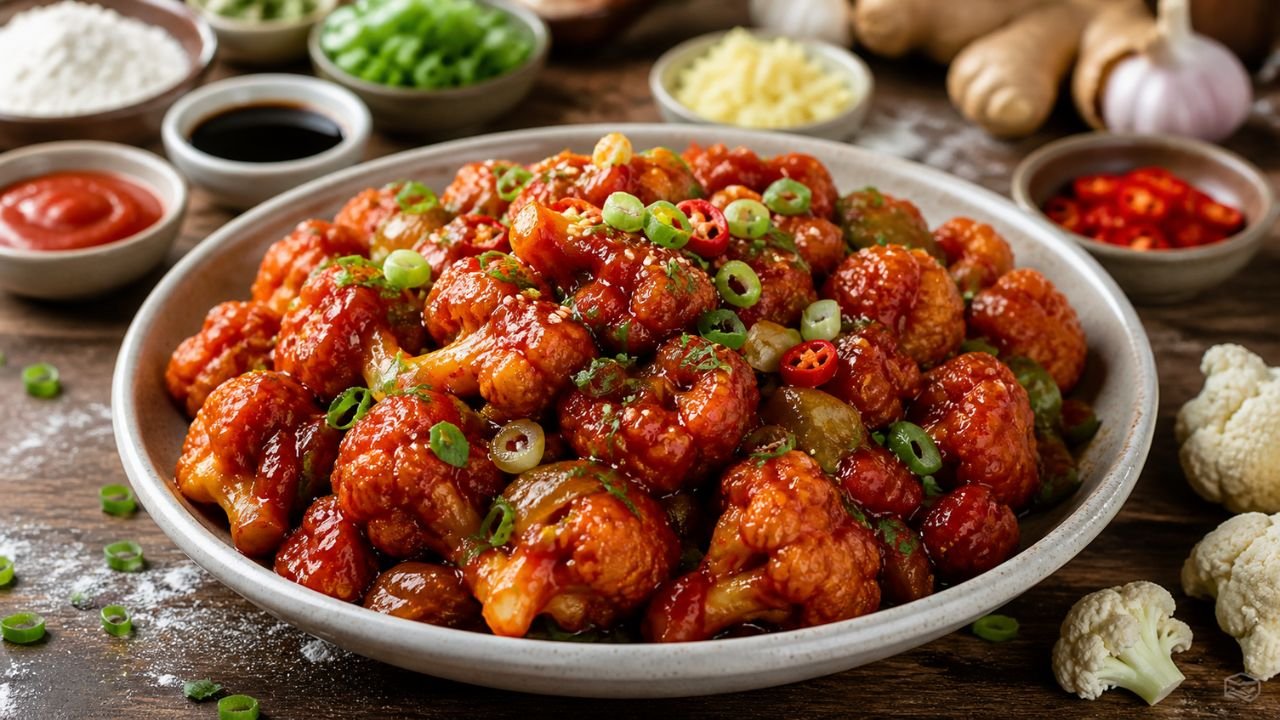
Gobi Manchurian Recipe with Crispy Cauliflower and Tangy Sauce is a beloved Indo-Chinese dish that delivers everything people crave in a starter or side: crunch, heat, sweetness, and a glossy sauce that clings to every bite. It takes humble cauliflower and turns it into something bold and exciting, with a crisp batter on the outside and a punchy, savory-tangy coating on the inside. The dish is popular in restaurants, street food stalls, and home kitchens because it feels festive, satisfying, and surprisingly easy to make once the steps are broken down clearly.
This version focuses on keeping the cauliflower crisp even after it is tossed in the sauce. The florets are lightly seasoned, coated in a seasoned batter, and fried until golden. Then they are finished in a quick Manchurian sauce made with aromatics, soy sauce, tomato ketchup, chili sauce, and a little vinegar for brightness. You can serve it as a dry appetizer, which is the most popular style, or keep a little extra sauce if you want a slightly saucier version for rice or noodles.
What makes this recipe so appealing is the balance. The cauliflower should be cooked until tender but not soft, the coating should stay crisp, and the sauce should be bold without overwhelming the natural flavor of the vegetable. With the right heat control, proper batter consistency, and a fast toss at the end, you get restaurant-style Gobi Manchurian at home with excellent texture and a deep, satisfying flavor.
Recipe Information
Preparation Time: 20 minutes
Cooking Time: 25 minutes
Total Time: 45 minutes
Servings: 4
Recipe Category: Appetizer, Side Dish
Recipe Cuisine: Indo-Chinese
Difficulty: Medium
Ingredients
For the cauliflower:
- 1 medium cauliflower, cut into medium-sized florets
- 4 cups water
- 1 teaspoon salt
- 1 cup all-purpose flour
- 1/4 cup cornstarch
- 1 teaspoon ginger-garlic paste
- 1/2 teaspoon black pepper
- 1/2 teaspoon salt
- 1/2 teaspoon chili powder
- 1/2 cup water, or as needed for batter
- Oil for deep frying or shallow frying
For the Manchurian sauce:
- 2 tablespoons oil
- 1 tablespoon finely chopped garlic
- 1 tablespoon finely chopped ginger
- 2 to 3 green chilies, finely chopped
- 1 small onion, finely chopped
- 1/2 cup spring onion greens, chopped
- 2 tablespoons soy sauce
- 2 tablespoons tomato ketchup
- 1 tablespoon red chili sauce
- 1 teaspoon vinegar
- 1 teaspoon sugar
- 1/2 teaspoon black pepper
- 1/2 cup water
- 1 teaspoon cornstarch mixed with 2 tablespoons water
- Salt to taste
For garnish:
- 2 tablespoons chopped spring onion greens
- 1 teaspoon sesame seeds, optional
- Fresh coriander, optional
Preparation
Begin by preparing the cauliflower. Wash the florets well and make sure they are cut into even-sized pieces so they cook at the same rate. Bring 4 cups of water to a boil with 1 teaspoon of salt. Add the cauliflower florets and blanch them for 2 to 3 minutes only. This step helps soften the florets slightly without fully cooking them. Drain immediately and spread them on a clean kitchen towel or paper towels. Pat them dry thoroughly. Removing excess moisture is important because dry florets fry better and stay crisp longer.
Next, prepare the batter. In a large bowl, combine the all-purpose flour, cornstarch, ginger-garlic paste, black pepper, salt, and chili powder. Add water gradually and whisk until you get a thick, smooth batter that coats the back of a spoon. The batter should not be too runny, because a thin batter will slide off the cauliflower during frying. At the same time, it should not be so thick that it forms heavy lumps. A medium-thick coating gives the best crunch.
Add the blanched cauliflower florets to the batter and toss gently until every piece is evenly coated. Heat oil in a deep pan or kadai over medium-high heat. Test the oil by dropping in a tiny bit of batter; it should rise steadily without burning immediately. Fry the cauliflower in batches so the pan is not overcrowded. Overcrowding lowers the oil temperature and makes the coating soggy. Fry until the florets are golden brown and crisp on all sides. Remove them with a slotted spoon and place them on a wire rack or paper towel. If needed, fry them for a second short round just before tossing in sauce for extra crunch.
Now prepare the sauce. Heat 2 tablespoons of oil in a wide pan or wok. Add the chopped garlic, ginger, and green chilies. Stir-fry for a few seconds until fragrant, but do not let the garlic burn. Add the finely chopped onion and cook for 1 to 2 minutes until it turns slightly soft but still has a little bite. Add the spring onion greens and stir quickly. This builds the savory base of the sauce and gives the dish a fresh aroma.
Pour in the soy sauce, tomato ketchup, red chili sauce, vinegar, sugar, and black pepper. Stir well so the flavors combine. Add 1/2 cup water and bring the mixture to a gentle simmer. Taste the sauce and adjust salt carefully, remembering that soy sauce already adds saltiness. If you want the dish more tangy, add a few drops more vinegar. If you prefer more heat, add a little extra chili sauce or chopped green chili.
Once the sauce is simmering, add the cornstarch slurry slowly while stirring constantly. Cook for 1 to 2 minutes until the sauce thickens and becomes glossy. It should lightly coat the back of a spoon and cling to the cauliflower without being too heavy. If the sauce becomes too thick, add a splash of water. If it looks too thin, let it cook for another minute. The goal is a shiny, well-balanced sauce that coats every floret without pooling excessively in the pan.
Add the fried cauliflower to the sauce and toss very gently but quickly. The coating should be covered just enough to pick up flavor while still retaining texture. Do not stir for too long after adding the cauliflower, because excessive tossing softens the crust. If you prefer an extra-crisp version, you can drizzle only a portion of the sauce over the florets and serve the rest on the side. This is a great method when serving Gobi Manchurian as a starter for guests.
Transfer the finished dish to a serving plate or bowl. Garnish with chopped spring onion greens, sesame seeds if using, and a little fresh coriander. Serve immediately while the cauliflower is still crisp and the sauce is hot. Gobi Manchurian pairs beautifully with fried rice, vegetable hakka noodles, or can be enjoyed on its own as a party snack or evening appetizer.
Tips
Drying the cauliflower after blanching is one of the most important steps in this recipe. Any extra water on the florets will weaken the batter and reduce crispiness. Letting them sit for a few minutes after draining helps a lot. If you are in a humid kitchen, pat them dry twice for the best results.
Keep the batter thick enough to cling to the cauliflower. A batter that is too thin makes the coating patchy, while one that is too dense creates a heavy crust. If the batter thickens while sitting, add a spoonful of water and mix again before coating the florets. A smooth, even batter gives the most attractive finish.
Fry in batches and maintain the oil at a steady medium-high temperature. If the heat is too low, the cauliflower absorbs more oil and turns greasy. If the heat is too high, the outside browns too fast while the inside stays undercooked. Balanced heat is the key to a crunchy shell and tender center.
Use a wide pan or wok for the sauce so the cauliflower can be tossed quickly and evenly. A crowded pan can break the coating and make the dish soggy. It also helps to prepare all sauce ingredients in advance because the cooking process moves fast once the garlic goes into the oil.
If you like a dryer restaurant-style version, keep the sauce slightly thicker and add the fried cauliflower only at the very end. For a semi-dry version, use a little more water in the sauce. For a gravy-style dish, increase the water and slurry slightly, then serve it with steamed rice. The base flavor remains the same, but the texture can be adjusted for different meals.
For extra flavor, you can add a small pinch of MSG if that fits your cooking style, although it is completely optional. A little black pepper adds warmth, and a tiny amount of sugar balances the acidity and chili. Taste as you go, because the best Manchurian sauce has harmony, not just heat.
Variations
You can make a healthier baked version by brushing the battered cauliflower with oil and baking it until crisp, then coating it with sauce. The texture will be slightly different from deep-fried Gobi Manchurian, but it is still flavorful and satisfying. An air-fryer version also works well if the florets are lightly oiled and cooked in a single layer.
If you enjoy extra vegetables, you can add diced bell peppers, carrots, or cabbage to the sauce for more color and crunch. These vegetables give the dish a fuller stir-fry feel and make it a little heartier. This style works especially well if you are serving it as a main side with noodles or rice.
For a garlic-forward version, increase the amount of chopped garlic in the sauce and add a few garlic slivers at the beginning for texture. For a spicier street-food style, add more green chilies and a little extra red chili sauce. For a sweeter family-friendly style, increase the ketchup slightly and reduce the vinegar a touch.
You can also turn this into a dry appetizer by keeping the sauce minimal and tossing only just enough to lightly coat the cauliflower. Another variation is to fry the cauliflower twice for an even stronger crunch before adding it to the sauce. This is a good technique when you want the dish to stay crisp for a longer time at a party or buffet table.
If you want a gluten-free version, replace the all-purpose flour with rice flour or a gluten-free flour blend and verify that your soy sauce is gluten-free. The flavor profile will still be close to the original, and the texture can become especially crisp with rice flour. This gives the recipe more flexibility for different dietary needs.
Conclusion
Gobi Manchurian Recipe with Crispy Cauliflower and Tangy Sauce is a dish that brings together simple ingredients, fast cooking, and big flavor. It transforms cauliflower into a snack that feels indulgent, vibrant, and deeply satisfying. The crisp exterior, the tender vegetable inside, and the glossy sauce create a combination that never feels boring.
Once you understand the key steps, especially drying the cauliflower well, frying it correctly, and making the sauce quickly, this recipe becomes easy to repeat at home. It is ideal for weekend dinners, party platters, or whenever you want something savory with a little kick. Serve it fresh, serve it hot, and enjoy a classic Indo-Chinese favorite that always disappears fast.
