
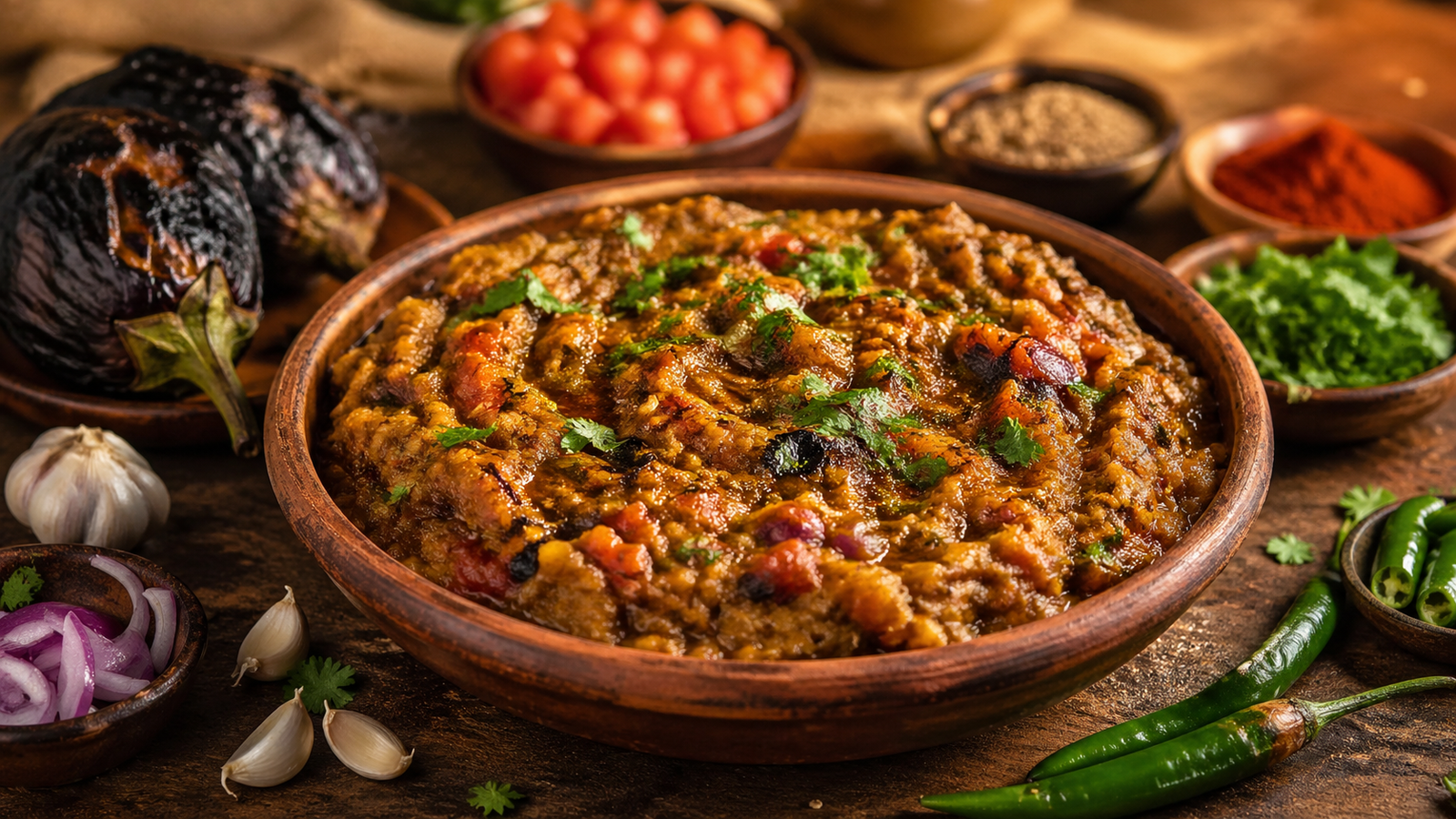
Baingan bharta often goes wrong for one simple reason: the eggplant is cooked, but not smoked deeply enough. Without that smoky base, the dish can taste flat, watery, or too sharp from raw onion and tomato. This 5-step baingan bharta recipe keeps the process simple and practical while helping you get that soft, roasted, slightly charred flavor at home without any complicated method.
The recipe is useful for everyday cooking because it needs basic Indian kitchen ingredients, works well with roti, paratha, rice, dal, or even toast, and can be adjusted easily depending on how smoky, spicy, or chunky you like it. The main idea is to roast the baingan properly, remove excess moisture, cook the masala briefly but correctly, and finish the bharta in a way that keeps the taste fresh instead of heavy.
Recipe Information
Recipe Name: 5-Step Baingan Bharta
Description: Large eggplant roasted until smoky and soft, mashed, then cooked with onion, tomato, garlic, green chilli, spices, and fresh coriander for a simple homemade Indian bharta.
Servings: 4 as a side dish
Preparation Time: 15 minutes
Cooking Time: 30 minutes
Total Time: 45 minutes
Difficulty Level: Easy to medium
Recipe Category: Vegetarian side dish, everyday main accompaniment
Cuisine Type: North Indian
Resting Time / Inactive Time: 10 minutes for cooling the roasted baingan before peeling
Ingredients
- 1 large baingan, around 500 to 600 g, preferably round and light for its size
- 2 tablespoons mustard oil or regular cooking oil
- 1 medium onion, finely chopped
- 2 medium tomatoes, finely chopped
- 4 to 5 garlic cloves, 2 for roasting and the rest finely chopped
- 1 inch ginger, finely chopped or grated
- 1 to 2 green chillies, finely chopped
- 1/2 teaspoon cumin seeds
- 1/2 teaspoon turmeric powder
- 1 teaspoon red chilli powder, adjust to taste
- 1 teaspoon coriander powder
- 1/2 teaspoon roasted cumin powder, optional but useful for extra flavor
- Salt, as needed
- 2 tablespoons fresh coriander leaves, chopped
- 1 teaspoon lemon juice, optional
- 1 small piece of charcoal, optional, for extra smoky flavor
- 1/2 teaspoon ghee, optional, for charcoal smoking
Preparation
Choose a baingan that feels light for its size and has smooth, shiny skin. A heavy baingan can sometimes have too many seeds and more water inside. Wash it well and dry it completely. Drying is important because wet skin slows down roasting and may stop the surface from charring properly.
Make two or three small cuts in the baingan with a knife. Push one or two garlic cloves into the cuts. This is a simple way to roast the garlic inside the eggplant itself, so the smoky flavor goes deeper into the mash instead of staying only on the surface.
Rub the baingan lightly with a few drops of oil. Place it directly over a gas flame and roast on medium heat. Turn it every few minutes using tongs. The skin should become black and blistered, while the inside should turn soft. This usually takes 12 to 18 minutes depending on the size of the baingan.
If you do not have a gas flame, roast it in an oven at 220°C until soft and wrinkled. You can also use an air fryer, but the smoky taste will be lighter. For better flavor in an oven or air fryer version, char the peeled mash later with the optional charcoal smoking method.
Once roasted, place the baingan in a bowl and cover it for 10 minutes. This resting time helps the steam loosen the skin, making it easier to peel. After it cools slightly, peel off the burnt skin. Do not wash the roasted baingan under water because that removes the smoky taste. Instead, use your fingers or a spoon to remove any large burnt flakes.
Cut the peeled baingan open and check for hard seed patches. If the seeds are too dark, bitter, or very dense, remove that portion. Mash the soft flesh with a fork. Keep it slightly chunky if you like texture. Do not blend it in a mixer, because baingan bharta should feel rustic and soft, not like a smooth paste.
Heat mustard oil in a kadai or pan. If using mustard oil, heat it until it lightly smokes, then reduce the flame. Add cumin seeds and let them crackle. Add chopped garlic, ginger, and green chilli. Cook for less than a minute until the raw smell reduces.
Add the chopped onion and cook until it turns soft and light golden. Do not rush this part. Raw onion can make bharta taste sharp, while deeply browned onion can make it too sweet and heavy. A soft golden stage gives the best balance for everyday baingan bharta.
Add tomatoes, turmeric, red chilli powder, coriander powder, and salt. Cook until the tomatoes soften and the oil starts to separate slightly from the masala. This step removes the raw tomato taste and gives the bharta a rounded flavor. If the masala sticks, add one or two tablespoons of water, not too much.
Add the mashed roasted baingan and mix well. Cook for 5 to 7 minutes on medium flame. Stir often so the mash absorbs the masala evenly. This short cooking time is enough because the baingan is already roasted. Overcooking after mashing can make the bharta lose its fresh smoky taste.
Add roasted cumin powder if using. Taste and adjust salt. Finish with fresh coriander leaves and a small squeeze of lemon juice if the tomatoes are not tangy enough. Mix once and turn off the heat.
For a stronger smoky flavor, place a small steel bowl in the middle of the cooked bharta. Heat a small piece of charcoal until red hot. Put it in the bowl, add a few drops of ghee, and immediately cover the pan for 2 minutes. Remove the charcoal bowl before serving. Do not smoke for too long, or the flavor can become bitter.
Cooking, Baking, or Use Tips
The most important tip for baingan bharta is to roast the eggplant until it collapses fully. If the baingan looks charred outside but feels firm inside, the bharta will not mash properly. Press it gently with tongs while roasting. It should feel soft from all sides.
A useful practical trick is to place the roasted and peeled baingan in a sieve for 3 to 5 minutes if it looks too watery. This removes extra liquid without losing flavor. Many people cook watery baingan directly into the masala, but that can make the onion and tomato mixture loose and dull. Draining just a little moisture gives a thicker, better bharta.
Do not wash the roasted baingan after peeling. Some tiny charred bits are fine and add flavor. Only remove the large burnt pieces. Washing makes the flesh watery and removes much of the smoky aroma.
Cook the tomato masala before adding the baingan. If tomatoes remain raw, the final dish may taste sour and unfinished. The tomato should soften properly and blend with the onion. A little oil separation is a good sign that the masala is ready.
Keep spice levels moderate. Baingan has a soft flavor, so too much red chilli or garam masala can cover the smoky taste. This recipe does not need heavy spices. Garlic, chilli, cumin, onion, tomato, and coriander are enough for a balanced homemade taste.
If using an oven or air fryer, the baingan will cook well but may not taste as smoky as flame-roasted baingan. In that case, use the charcoal smoke method for 1 to 2 minutes. This gives a closer flavor without needing a gas flame.
For reheating, warm baingan bharta in a pan on low heat. Add one or two teaspoons of water only if it feels dry. Avoid microwaving for too long because it can make the texture slightly rubbery and the smell stronger. If using a microwave, heat in short intervals and stir once.
Baingan bharta tastes best fresh, but leftovers can be stored in the fridge for up to 2 days in a covered container. Let it cool completely before storing. Do not leave it at room temperature for too long, especially in hot weather.
If the bharta tastes bitter, the baingan may have had too many mature seeds or the charcoal smoking may have gone too long. To balance slight bitterness, add a little lemon juice, fresh coriander, and a small spoon of cooked tomato. Do not add sugar unless absolutely needed.
For a lunchbox, keep the bharta slightly thicker. A loose bharta can make roti soggy. Cook it for one or two extra minutes until it holds together better. It can also be used as a filling for paratha rolls with sliced onion and a little curd.
Variations or Conservation
For a Punjabi-style baingan bharta, use mustard oil, extra garlic, green chilli, and plenty of fresh coriander. Keep the texture chunky and serve it with hot roti or paratha. This version works well when the baingan is properly flame-roasted.
For a lighter everyday version, reduce the oil to one tablespoon and use less onion. Add more tomato for softness. This makes the bharta easier to pair with dal and rice. The flavor will be less rich but still useful for a simple meal.
For a no-onion version, cook garlic, green chilli, tomato, and spices directly in oil, then add the mashed baingan. You can add a pinch of asafoetida with cumin seeds for extra flavor. This version is good for days when onion is avoided.
For extra vegetables, add finely chopped capsicum after the onion softens. Cook it for 2 to 3 minutes before adding tomatoes. Capsicum adds crunch and a mild sweet taste. You can also add green peas, but cook them before adding the mashed baingan so they do not remain hard.
For a more filling version, mix in boiled and lightly mashed potatoes. This changes the dish from classic baingan bharta to a thicker baingan-aloo mash, but it is useful when you need to stretch one baingan for more servings.
For leftover use, spread cold baingan bharta inside a sandwich with sliced onion and a little cheese or paneer. It can also be used as a stuffing for wraps. Keep the filling thick and avoid adding watery chutneys.
If you have leftover roasted baingan but do not want to cook bharta immediately, peel and mash it, then store it in an airtight container in the fridge for one day. Add a few drops of oil on top to reduce drying. Cook it with fresh masala the next day.
For longer storage, freeze only the roasted and mashed baingan, not the fully cooked bharta. Onion and tomato masala can change texture after freezing. Freeze the mash in a small container, thaw it in the fridge, drain extra water, and cook it fresh with masala.
To reduce waste, use soft tomato ends, coriander stems, and slightly small onions in the masala. Coriander stems have good flavor when finely chopped and cooked with onion. Do not use spoiled or sour-smelling vegetables, but small usable trimmings can improve the base.
If the baingan skin is fully charred but the inside is not cooked, do not throw it away. Peel it, chop the flesh, and cook it covered in the pan with the masala for a few extra minutes. It will not be as smoky as perfectly roasted bharta, but it can still become soft and usable.
Conclusion
This 5-step baingan bharta is practical because it focuses on the parts that matter most: choosing the right baingan, roasting it deeply, avoiding excess water, cooking the masala properly, and finishing without overcomplicating the dish. The result is smoky, soft, and easy to repeat in a regular home kitchen.
Once the roasting method is understood, baingan bharta becomes a flexible everyday recipe. It can be served with roti, rice, dal, paratha, or used in wraps and sandwiches. Keep the spices simple, protect the smoky flavor, and adjust the texture to your meal. That is what makes this recipe useful beyond one cooking session.
