
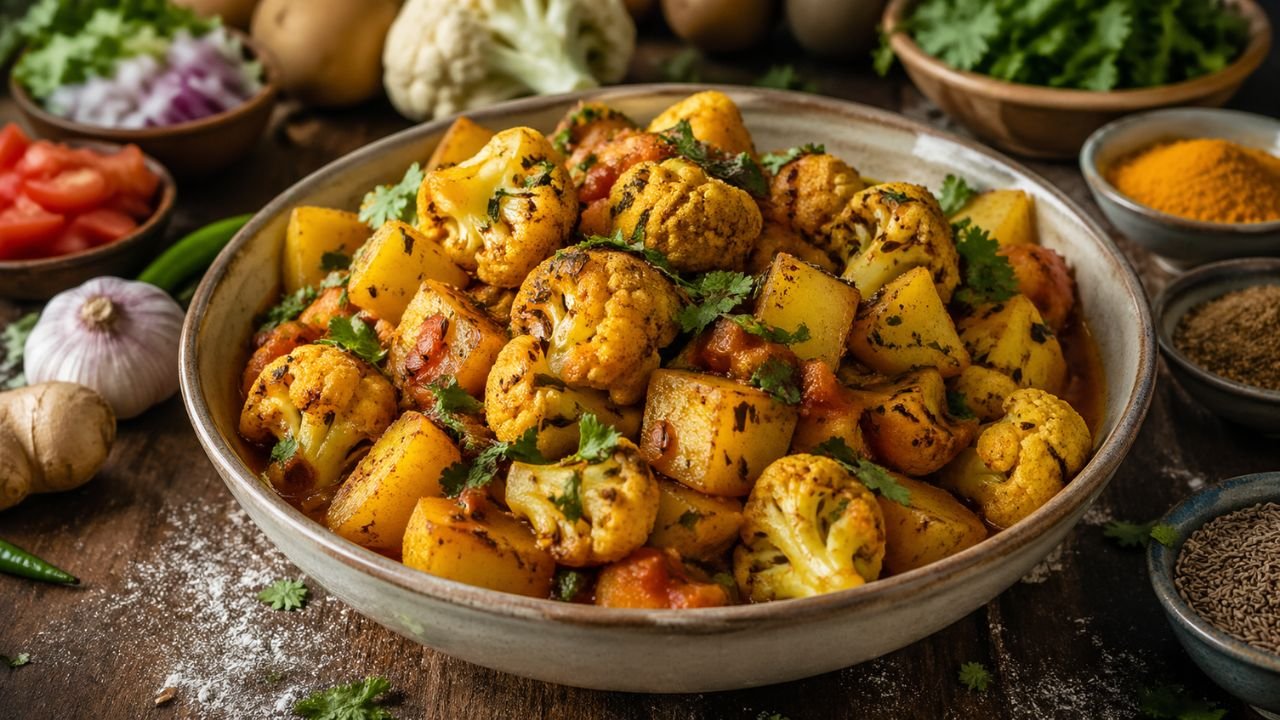
Aloo gobi is one of those rare dishes that proves restraint can be just as powerful as abundance. Built from potatoes, cauliflower, warm spices, and a careful hand at the stove, it carries the quiet depth of home cooking while still feeling elegant enough for a thoughtful table. The best version is not heavy or oily; it is fragrant, gently crisp at the edges, and tender without collapsing.
This 6-Step Aloo Gobi Recipe focuses on precision: cutting the vegetables evenly, blooming the spices correctly, controlling moisture, and finishing the dish when the potatoes are soft and the cauliflower still has character. These details may seem small, but they are the difference between a pale vegetable stir-fry and a deeply seasoned Indian classic with aroma, structure, and grace.
Serve it on a quiet weekday with warm roti, or place it beside dal, rice, chutney, and yogurt for a fuller meal. However it arrives at the table, aloo gobi offers comfort without heaviness, spice without aggression, and a golden warmth that feels timeless.
Recipe Information
- Recipe Name: 6-Step Aloo Gobi Recipe 2026: Simple Yet Crucial Tips
- Description: A dry-style Indian potato and cauliflower dish cooked with tomatoes, ginger, cumin, turmeric, coriander, and garam masala for a fragrant, golden finish.
- Servings: 4 servings
- Preparation Time: 15 minutes
- Cooking Time: 30 minutes
- Total Time: 45 minutes
- Difficulty: Easy to moderate
- Recipe Category: Main course or side dish
- Cuisine: Indian
Ingredients
For the vegetables
- 450 g cauliflower, cut into medium florets
- 350 g potatoes, peeled and cut into 2 cm cubes
- 1 medium onion, finely sliced
- 2 medium tomatoes, finely chopped
- 2 green chilies, slit lengthwise
- 1 tablespoon fresh ginger, finely grated
- 2 tablespoons neutral oil or mustard oil
- 2 tablespoons chopped fresh coriander, for finishing
For the spices
- 1 teaspoon cumin seeds
- 1 teaspoon ground coriander
- 1/2 teaspoon turmeric powder
- 1/2 teaspoon Kashmiri chili powder, or mild red chili powder
- 1/4 teaspoon ground cumin
- 1/2 teaspoon garam masala
- 3/4 teaspoon fine sea salt, plus more to taste
- 1/4 teaspoon freshly ground black pepper
- 1 teaspoon fresh lemon juice, optional but recommended
Kitchen Tools
- Large heavy-bottomed skillet or kadai with lid
- Sharp chef’s knife
- Chopping board
- Measuring spoons
- Wooden spoon or heatproof spatula
- Small bowl for mixing spices
Preparation
Preparing the vegetables
- Cut with intention: Begin by cutting the cauliflower into medium florets and the potatoes into evenly sized cubes. This is a small but crucial step in any refined aloo gobi recipe, because uneven pieces cook at different speeds. Rinse the cauliflower and potatoes, then pat them dry thoroughly. Excess surface water encourages steaming, which can make the dish soft rather than beautifully dry and textured.
- Build the spice base: Place a heavy skillet or kadai over medium heat and add the oil. When the oil shimmers, add the cumin seeds and let them sizzle for a few seconds until aromatic. Add the sliced onion and cook for 5 to 6 minutes, stirring often, until the edges begin to turn golden. Add the ginger and green chilies, then cook for another minute. The fragrance should be lively but not sharp.
Cooking the masala
- Cook the tomatoes properly: Add the chopped tomatoes, salt, turmeric, ground coriander, Kashmiri chili powder, ground cumin, and black pepper. Stir well and cook for 6 to 7 minutes, pressing the tomatoes gently with the back of the spoon. The masala is ready when it looks glossy and the oil begins to separate slightly from the mixture. Do not rush this stage; undercooked tomato leaves the dish tasting thin and raw.
Cooking the potatoes and cauliflower
- Start with the potatoes: Add the potato cubes to the masala and stir until every piece is coated. Cook uncovered for 4 minutes, allowing the potatoes to absorb the spices and begin softening at the edges. This brief head start matters because potatoes need a little more time than cauliflower, and it prevents the florets from becoming overcooked later.
- Add the cauliflower: Fold in the cauliflower gently, keeping the florets as intact as possible. Cover the pan, reduce the heat to medium-low, and cook for 15 to 18 minutes, stirring every 4 to 5 minutes. Tip: If the mixture catches at the bottom, add only 1 to 2 tablespoons of water. Aloo gobi should not swim in liquid; the vegetables should cook in their own steam and the cling of the masala.
Finishing the dish
- Finish dry and fragrant: Once the potatoes are tender and the cauliflower is cooked but still holds its shape, remove the lid and increase the heat slightly. Cook uncovered for 3 to 4 minutes to evaporate any excess moisture and lightly toast the edges. Sprinkle over the garam masala, chopped coriander, and lemon juice if using. Taste and adjust the salt. The finished dish should be golden, aromatic, and gently spiced, with each vegetable distinct rather than mashed together.
Serving Suggestions
Aloo gobi is at its best when served warm, shortly after cooking, when the spices are still blooming and the vegetables retain their shape. Spoon it into a shallow serving bowl rather than a deep one, so the golden cauliflower and potatoes are visible. A final scattering of coriander gives freshness, while a wedge of lemon on the side offers brightness for those who enjoy a sharper finish.
For a simple meal, serve this 6-Step Aloo Gobi Recipe with soft roti, paratha, or steamed basmati rice. For a more generous spread, pair it with yellow dal, cucumber raita, mango pickle, and a small salad of sliced onions and herbs. It also works beautifully as part of a vegetarian thali, where its dry texture balances saucier dishes.
Chef Tips
Keep the vegetables dry
The most common mistake in aloo gobi is adding too much water. Moisture can flatten the spices and turn the cauliflower limp. After washing, dry the vegetables well, and rely on gentle covered cooking rather than boiling. A good pan with a snug lid is your quiet ally here.
Respect the timing
Potatoes and cauliflower do not cook at the same pace. Giving the potatoes a short head start keeps the final texture balanced. The cauliflower should be tender when pierced but not collapsing; a little structure gives the dish its elegance.
Toast the finish
The final uncovered cooking stage is essential. It concentrates the masala, removes unwanted steam, and gives the potatoes and cauliflower a lightly roasted character. This is where the dish gains depth without becoming greasy.
Adjust the heat with care
Green chilies bring freshness, while chili powder brings warmth and color. For a gentler version, use one chili and mild Kashmiri chili powder. For a bolder table, increase the fresh chili rather than overloading the powdered spice, which can make the dish taste harsh.
Storage and Make-Ahead Tips
Aloo gobi stores well, though it is most fragrant on the day it is cooked. Let leftovers cool completely, then place them in an airtight container and refrigerate for up to 3 days. Reheat gently in a skillet over medium-low heat with a teaspoon of oil or a small splash of water if needed. Avoid microwaving for too long, as cauliflower can become overly soft.
For make-ahead preparation, cut the cauliflower and potatoes earlier in the day. Keep the cauliflower dry in a covered container and submerge the potatoes in cold water to prevent browning. Drain and dry the potatoes before cooking. The spice mixture can also be measured in advance, making the cooking process smooth and precise.
Additional Information
Aloo gobi has roots in the everyday kitchens of North India and Pakistan, though it is now loved across the world. Its appeal lies in its practicality: potatoes provide comfort and substance, cauliflower brings sweetness and texture, and a modest collection of spices transforms both into something deeply satisfying. It is the kind of dish that reveals the intelligence of home cooking, where technique and timing matter as much as ingredients.
In a chef-led kitchen, aloo gobi is a lesson in restraint. The spices should support the vegetables rather than bury them. The tomato should enrich, not dominate. The oil should carry flavor, not weigh down the plate. When made with care, this humble dish becomes remarkably expressive: earthy, warm, gently floral from the coriander, and finished with the quiet perfume of garam masala.
This 2026 version keeps the spirit of the classic intact while sharpening the details for modern home cooks. It asks for no complicated technique, only attention. Cut evenly, cook patiently, season thoughtfully, and finish dry. Those simple yet crucial tips are what make a memorable Aloo Gobi Recipe feel both familiar and beautifully refined.
