
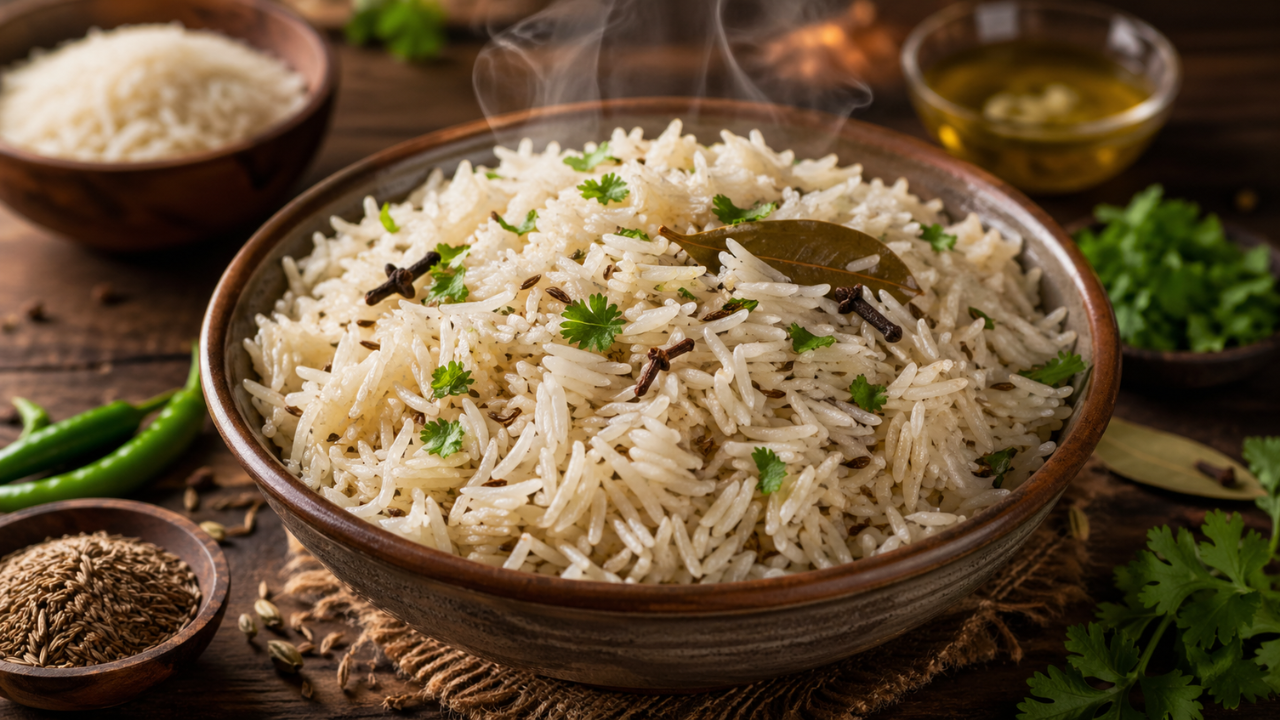
Jeera rice looks simple, but it is easy to get slightly wrong. The rice can turn sticky, the cumin can burn, or the grains can taste plain even when the dish smells good. The real method is not complicated. It is about washing the rice properly, using the right water, blooming the cumin at the right moment, and letting the rice rest before serving.
This 6-step jeera rice method is designed for everyday cooking. It works well for lunch, dinner, meal prep, tiffin-style meals, and quick sides for dal, rajma, chole, paneer, vegetable curry, or yogurt-based dishes. The recipe uses basic pantry ingredients and keeps the flavor clean: warm cumin, separate rice grains, light ghee or oil, and a simple finish.
The most useful thing to remember is this: jeera rice is not just plain rice with cumin added. The cumin needs fat, heat, and a short pause before the rice goes in. That small step gives the whole pot a deeper, more even flavor.
Recipe Information
Recipe Name: Jeera Rice
Description: Long-grain rice cooked with cumin seeds, ghee or oil, mild whole spices, and just enough water to keep the grains separate, fragrant, and soft without becoming sticky.
Servings: 4 as a side
Preparation Time: 10 minutes
Cooking Time: 20 minutes
Total Time: 30 minutes
Difficulty Level: Easy
Recipe Category: Rice dish, vegetarian side
Cuisine Type: Indian
Resting Time / Inactive Time: 10 minutes after cooking
Ingredients
- 1 cup basmati rice, preferably aged
- 1 3/4 cups water, or as needed depending on rice age and brand
- 1 tablespoon ghee, or use neutral oil for a vegan version
- 1 1/2 teaspoons cumin seeds
- 1 bay leaf, optional
- 2 green cardamom pods, lightly crushed, optional
- 1 small piece cinnamon, optional
- 1 small green chilli, slit, optional
- 1/2 teaspoon salt, or to taste
- 1 tablespoon chopped coriander leaves, optional, for finishing
- 1 teaspoon lemon juice, optional, for brightness
Preparation
Start by washing the rice. Place the basmati rice in a bowl and rinse it with cool water. Swirl gently with your fingers, then drain. Repeat this 3 to 4 times, until the water is much clearer. It does not have to be perfectly transparent, but it should no longer look heavily cloudy.
Soak the washed rice for 15 to 20 minutes if you have time. This helps the grains cook more evenly and reduces breakage. After soaking, drain the rice well. Do not leave extra water sitting in the rice bowl, because that changes the cooking ratio and can make the final rice softer than planned.
Choose a heavy-bottomed saucepan with a tight lid. Add the ghee and warm it over medium heat. When the ghee melts and looks slightly glossy, add the cumin seeds. Let them sizzle gently until they darken by one shade and smell nutty. This usually takes 20 to 30 seconds. Do not wait until they turn black. Burnt cumin makes the rice bitter.
Add the bay leaf, cardamom, cinnamon, and green chilli if using. Stir for a few seconds. These are optional, but they give the rice a warmer aroma without turning it into a heavy pulao. Keep the heat controlled. Whole spices should bloom, not fry aggressively.
Add the drained rice to the pan. Stir it gently for about 1 minute so the grains get coated in the cumin-flavored fat. This step is small but important. It helps the grains stay separate and allows the cumin flavor to spread through the rice instead of staying only at the bottom of the pot.
Add water and salt. Stir once, lightly, then bring the water to a steady boil. As soon as it boils, reduce the heat to low and cover the pan with a tight lid. Cook for 12 to 14 minutes without lifting the lid. If your stove runs very hot, use the lowest flame and place a flat tawa under the pan to diffuse the heat.
After 12 minutes, check only if needed. If the water has absorbed and the rice looks cooked, turn off the heat. If there is still visible water, cover again and cook for another 2 minutes. Once done, leave the pan covered and untouched for 10 minutes. This resting time is not optional if you want separate grains.
After resting, open the lid and fluff the rice with a fork or the side of a spoon. Do not mash or stir hard. Finish with chopped coriander and a few drops of lemon juice if you like. Serve hot with dal, curry, yogurt, pickle, or a simple vegetable side.
Cooking, Baking, or Use Tips
The most common mistake with jeera rice is using the same water ratio for every type of rice. Fresh basmati usually needs slightly less water than older rice. Aged basmati often handles 1 3/4 cups water per 1 cup rice well. Softer or newer rice may need closer to 1 1/2 cups. If your rice often turns mushy, reduce the water by 2 tablespoons before changing anything else.
Do not skip draining the soaked rice properly. A practical way to check is to tilt the sieve or bowl and wait until no steady stream of water runs out. Wet rice is fine. Rice sitting in a puddle is not. That extra water is enough to make the final dish heavy.
Cumin needs attention. It should sizzle and smell warm, but it should not smoke. If the ghee is too hot, the cumin will burn in seconds. If you are unsure, add one cumin seed first. If it sizzles gently, add the rest. If it darkens instantly, remove the pan from heat for a moment before continuing.
For better texture, avoid stirring the rice repeatedly after adding water. Stirring releases starch and breaks the grains. One light stir after adding water is enough. After that, let heat and steam do the work.
A useful domestic trick is to fold a clean kitchen towel around the lid if your lid is loose. Keep the towel away from the flame. This helps trap steam and prevents condensation from dripping heavily back into the rice. It is especially helpful when cooking a small quantity in a larger pot.
If you are making jeera rice for guests or a larger meal, cook it slightly earlier and let it rest longer off the heat. Rice that has rested for 15 to 20 minutes often fluffs better than rice served immediately. Keep it covered, then fluff just before serving.
If the rice is undercooked but the water has dried, sprinkle 2 tablespoons hot water over the top, cover, and cook on very low heat for 3 to 4 minutes. Then rest again. Do not pour in cold water, because it drops the temperature and can make the grains cook unevenly.
If the rice is slightly sticky, spread it gently on a wide plate for 5 minutes. The extra steam will escape and the grains will firm up a little. This will not fully fix overcooked rice, but it can make it much better for serving.
For reheating, sprinkle a spoonful of water over cold jeera rice, cover, and warm it on low heat or in the microwave. Covered reheating is important because rice dries out quickly. Fluff after heating, not before.
For meal prep, cool the rice quickly before storing. Spread it in a shallow container, let steam escape for a few minutes, then refrigerate. Do not leave cooked rice sitting out for long. Store it covered in the fridge and use it within 2 days for best texture and safety.
Variations or Conservation
The simplest variation is onion jeera rice. After the cumin sizzles, add 1 small sliced onion and cook until lightly golden before adding the rice. This gives the dish a sweeter, fuller flavor. Keep the onion thin so it cooks quickly and does not release too much moisture.
For a slightly richer version, use 1 tablespoon ghee and 1 teaspoon oil together. The oil raises the cooking tolerance a little, while the ghee gives flavor. This is useful if you are nervous about cumin burning.
For a vegan version, use neutral oil or coconut oil. Neutral oil keeps the flavor closest to classic jeera rice. Coconut oil gives a different aroma, which works better with South Indian-style vegetable curries than with North Indian dal or rajma.
You can add peas for a quick vegetable version. Add 1/2 cup frozen peas after the rice and before the water. No need to thaw them. They cook with the rice and make the dish more filling. Avoid adding watery vegetables like tomato unless you adjust the water, because they can make the rice soft.
For a lunchbox version, add a little extra cumin and finish with lemon juice. Rice tastes milder after cooling, so the extra seasoning helps it hold up better. Let the rice cool slightly before closing the lunchbox to avoid trapped steam making it wet.
Leftover jeera rice is useful. Turn it into quick fried rice by heating a little oil, adding chopped vegetables, then tossing in the cold rice with a little salt and pepper. You can also mix it with curd, cucumber, and roasted cumin powder for a fast curd rice-style meal.
If you have a small amount left, do not waste it. Add it to soup, stuff it into paratha dough, or mix it with mashed potatoes and spices for simple rice-potato cutlets. Since jeera rice is already seasoned, it needs less adjustment than plain rice.
For storage, keep jeera rice in a shallow airtight container. Deep containers trap heat for longer and can make the rice clump. If storing a large batch, divide it into two smaller boxes. This cools faster and reheats more evenly.
You can freeze jeera rice, though fresh is better. Cool it fully, pack it flat in freezer-safe bags or containers, and freeze for up to 1 month. Reheat from frozen with a sprinkle of water, covered, until steaming hot. Fluff gently after reheating.
If you want to conserve ghee, use less but bloom the cumin properly. Even 2 teaspoons of ghee can flavor the rice well if the cumin is handled correctly. The key is not quantity but contact: cumin must release its aroma into the fat before the rice is added.
Conclusion
Good jeera rice depends on small, repeatable steps: wash the rice, drain it well, bloom the cumin without burning it, measure the water carefully, cook covered, and rest before fluffing. None of these steps are difficult, but together they make the difference between plain rice with cumin and a proper everyday jeera rice.
Once you understand the method, it becomes one of the most useful side dishes in a home kitchen. It is quick enough for a weekday meal, simple enough for beginners, and flexible enough to serve with almost any Indian curry, dal, or vegetable dish.
