
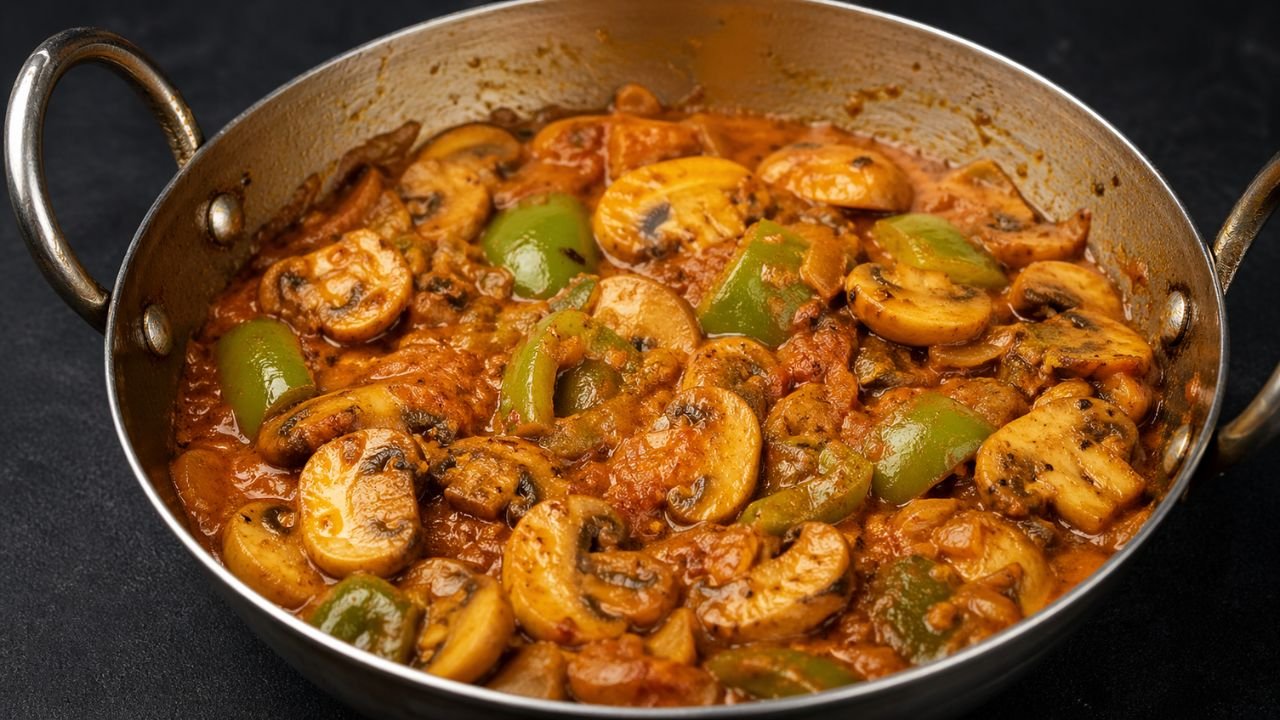
Mushrooms cook fast, but they also release water fast. That is where many mushroom curries go flat: the pan gets crowded, the capsicum softens too early, and the masala turns thin instead of coating the vegetables. This kadai mushroom recipe keeps the curry practical and balanced, with juicy mushrooms, lightly crisp capsicum, and a thick tomato-onion masala that works well with roti, paratha, naan, rice, or even a simple lunch box meal.
Kadai mushroom is a useful everyday curry because it does not need long simmering. The main work is controlling moisture and adding ingredients in the right order. The recipe below uses common pantry spices, fresh mushrooms, capsicum, onion, tomato, and a quick kadai-style spice mix. It is a 6-step mushroom curry with capsicum, designed for home cooking rather than restaurant fuss.
Ingredients
- 250 g button mushrooms, wiped clean and halved or quartered
- 1 medium green capsicum, cut into 2 cm pieces
- 1 medium onion, finely chopped
- 1 small onion, cut into petals or chunky pieces
- 2 medium tomatoes, finely chopped or blended
- 1 tablespoon ginger-garlic paste
- 2 tablespoons oil, preferably neutral oil or mustard oil if you like a stronger taste
- 1 teaspoon cumin seeds
- 1 bay leaf, optional
- 1 teaspoon coriander seeds, lightly crushed
- 1/2 teaspoon fennel seeds, optional but useful for a rounded kadai-style flavour
- 1/2 teaspoon turmeric powder
- 1 teaspoon red chilli powder, adjust to taste
- 1 1/2 teaspoons coriander powder
- 1/2 teaspoon cumin powder
- 1/2 teaspoon garam masala
- 1 teaspoon kasuri methi, crushed between your palms
- Salt, to taste
- 1/4 cup water, only if needed
- 2 tablespoons cream, curd, or cashew paste, optional for a richer curry
- Fresh coriander leaves, chopped, for finishing
- 1 teaspoon lemon juice, optional, added at the end if tomatoes are not sharp enough
Button mushrooms are the easiest choice because they are affordable and cook quickly. If they are large, quarter them. If they are small, halve them. Avoid slicing them too thin for this kadai mushroom recipe because thin pieces shrink quickly and disappear into the masala.
Green capsicum gives the most familiar kadai flavour, but red or yellow capsicum can also be used. They are slightly sweeter, so keep the chilli and kasuri methi balanced. Use ripe tomatoes for a natural gravy. If tomatoes are pale or watery, cook them longer before adding mushrooms.
Preparation
Start by cleaning the mushrooms correctly. Do not soak them in a bowl of water. Mushrooms absorb moisture and then release it into the curry. Wipe them with a damp cloth or rinse very quickly under running water, then dry them well with a kitchen towel. This small step makes a visible difference to the final texture.
Cut the capsicum into pieces similar in size to the mushroom pieces. This helps both vegetables feel balanced in each bite. Keep the chopped onion, onion petals, tomatoes, and spices ready before heating the pan. Kadai mushroom moves quickly once the pan is hot, so preparation prevents overcooking.
This recipe is written as a 6-step mushroom curry with capsicum. The order matters because mushrooms and capsicum behave differently in heat.
- Lightly toast the kadai spices. Heat a kadai or wide pan over medium heat. Add the coriander seeds and fennel seeds for about 30 to 40 seconds, just until fragrant. Remove and crush them roughly. You do not need a fine powder. A coarse crush gives the curry a better texture and a more kadai-style finish.
- Sauté the capsicum and onion petals. Add 1 teaspoon oil to the same pan. Add the capsicum and onion petals with a small pinch of salt. Cook on medium-high heat for 2 to 3 minutes. They should get a few lightly browned edges but remain firm. Remove them to a plate. This prevents the capsicum from becoming limp later.
- Cook the base masala. Add the remaining oil to the pan. Add cumin seeds and the bay leaf if using. When the cumin sizzles, add the finely chopped onion. Cook until the onion turns golden at the edges. Add ginger-garlic paste and cook for about 1 minute, until the raw smell reduces.
- Reduce the tomatoes properly. Add the chopped or blended tomatoes. Add turmeric, red chilli powder, coriander powder, cumin powder, and salt. Cook this mixture until it thickens and the oil begins to separate slightly from the masala. This may take 6 to 8 minutes depending on tomato moisture. Do not rush this step. If the tomato base is watery now, the curry will taste unfinished later.
- Add mushrooms and control the moisture. Add the mushrooms and mix well so they are coated with the masala. Cook uncovered on medium-high heat for 4 to 5 minutes. The mushrooms will release water. Keep stirring occasionally and allow that water to reduce. Add only a splash of water if the masala sticks before the mushrooms soften. For a semi-dry kadai mushroom, do not add extra water at this stage.
- Finish with capsicum, spices, and optional richness. Return the sautéed capsicum and onion petals to the pan. Add the crushed toasted spices, garam masala, and kasuri methi. Mix and cook for 2 minutes. If using cream, curd, or cashew paste, lower the heat and stir it in gently. Finish with fresh coriander and a little lemon juice if the curry needs brightness.
The finished curry should be thick enough to coat the mushrooms. It should not look like a watery stew. If you want more gravy, add hot water in small amounts and simmer briefly. Adding too much water at once will dilute the kadai flavour.
Useful Kitchen Tools
A wide kadai or heavy frying pan helps moisture evaporate quickly, which is important for mushroom curry. A small spice crusher or mortar is useful for making a coarse kadai spice mix without turning it into dust. A flat spatula also helps scrape the tomato masala from the pan so it cooks evenly and does not burn in patches.
Cooking, Baking, or Use Tips
Cook kadai mushroom in a wide pan, not a deep saucepan. A wide kadai helps mushroom moisture evaporate quickly, giving a thicker, more concentrated curry that goes well with roti.
After adding mushrooms, listen to the pan. First, you will hear a wet simmer as they release water. When the sound changes to light frying and the masala starts clinging again, add the capsicum back. This keeps the capsicum slightly firm instead of soft and watery.
Do not add capsicum with the onions. Sauté it quickly first, remove it, and add it near the end. Add a little salt while sautéing capsicum, and add the main salt with tomatoes. Avoid salting mushrooms too early, as it makes them release more water.
Cook tomatoes properly before adding cream or curd. If the curry tastes sharp, the tomato masala needs more time. If the masala sticks, add only 1–2 tablespoons of hot water and scrape the pan instead of adding too much water.
For better flavour, use roughly crushed toasted coriander seeds instead of only coriander powder. Reheat leftovers gently on low heat with a little water, and cook the curry slightly drier for lunch boxes. Clean mushroom stems can also be chopped and added to the masala to reduce waste.
Variations or Conservation
Kadai mushroom with capsicum is flexible, but changes should respect cooking time. Mushrooms cook quickly, capsicum needs only a short sauté, and the masala needs the longest time. When adding other ingredients, place them according to how long they need to soften.
- Paneer mushroom kadai: Add paneer cubes with the sautéed capsicum near the end. Do not simmer paneer for too long or it may become firm.
- Peas and mushroom curry: Add boiled or frozen peas after the tomatoes have reduced. They need only a few minutes to heat through.
- Vegan rich version: Use cashew paste instead of cream. Soak cashews in hot water, blend smooth, and stir in at low heat.
- Drier sabzi style: Skip extra water and cook until the masala tightly coats the mushrooms. This version is good with chapati and lunch boxes.
- More gravy: Add 1/2 cup hot water after the mushrooms reduce, then simmer for 3 to 4 minutes. Keep the gravy thick rather than soupy.
For a lighter weekday version, skip cream and use only tomatoes, onion, and spices. The curry will still be satisfying if the masala is cooked well. For a richer weekend version, use cashew paste or a small amount of cream, but add it at the end on low heat.
Leftover kadai mushroom can be stored in an airtight container in the refrigerator for up to 2 days. The capsicum will soften as it sits, so leftovers are better with rice, toast, or stuffed into wraps rather than served as a fresh-looking curry. If you plan to cook ahead, keep the sautéed capsicum separate and mix it in while reheating. This keeps the texture better.
This curry also works as a filling. Reduce it until thick, then use it in a roll with roti, sliced onion, and a little curd or chutney. It can also be spooned over toast or used as a quick sandwich filling if chopped slightly smaller. For this use, avoid extra gravy.
If you have extra capsicum, slice it and store it in a covered container for the next day’s omelette, pulao, noodles, or stir-fry. If you have extra tomato masala, freeze it in a small portion and use it later as a base for paneer, chickpeas, or boiled potatoes. This saves time and reduces waste without changing the basic cooking routine.
Do not freeze the finished mushroom curry if texture matters. Mushrooms can become spongy after thawing. Freezing the cooked masala base is more useful than freezing the full dish. When needed, thaw the masala, heat it well, then add fresh mushrooms and capsicum.
Conclusion
This kadai mushroom recipe is quick, practical, and made with simple ingredients. Cook the tomato masala well, reduce the mushroom moisture, and add capsicum in two stages for a fresh, flavorful curry. It works well with rotis, rice, wraps, or packed lunches.
