
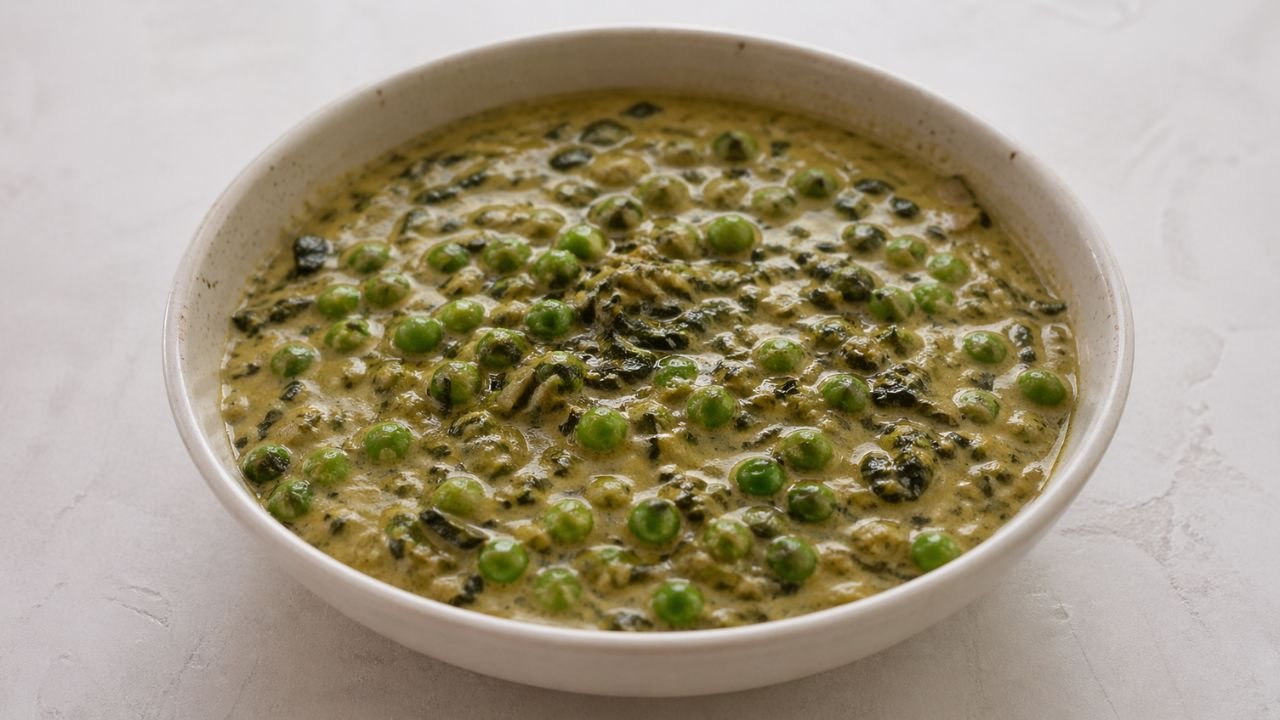
Methi malai matar is one of those curries that can go wrong in two common ways: the fenugreek tastes too bitter, or the cream turns the dish heavy and flat. A good methi malai matar recipe keeps the balance clear. The peas stay sweet, the methi gives a light bitter edge, and the creamy sauce feels smooth without becoming too rich.
This creamy peas curry is useful for everyday cooking because it works with simple pantry ingredients, cooks quickly, and pairs well with roti, paratha, naan, jeera rice, or plain steamed rice. It is also a good way to use a small bunch of fresh methi before it wilts in the fridge.
The method below uses 5 simple steps. The main practical point is to control the bitterness of methi before it goes into the curry, and to add cream at the right time so the sauce stays smooth. You do not need restaurant-style equipment or complicated ingredients. A pan, a blender, and a little patience with the base are enough.
Ingredients
- 1 cup green peas, fresh or frozen. Frozen peas work well and save time.
- 1 packed cup fresh methi leaves, cleaned and chopped. Use only tender leaves and thin stems.
- 2 tablespoons oil or ghee. A mix of both gives good flavour without making the curry too heavy.
- 1 medium onion, sliced or chopped.
- 8 to 10 cashews, soaked in hot water for 10 minutes. They help thicken the sauce.
- 1 teaspoon ginger, chopped.
- 2 garlic cloves, chopped. Optional, but useful for depth.
- 1 green chilli, slit or chopped. Adjust to taste.
- 1/2 teaspoon cumin seeds.
- 1/4 teaspoon turmeric powder.
- 1/2 teaspoon coriander powder.
- 1/4 teaspoon garam masala.
- 1/2 teaspoon sugar, optional but helpful for balancing methi bitterness.
- 1/3 cup fresh cream or cooking cream. Use less if you want a lighter curry.
- 1/2 cup milk or water, as needed for the gravy.
- Salt, to taste.
- 1 tablespoon curd, optional. Use only if it is not too sour, and whisk before adding.
- 1 tablespoon chopped coriander leaves, optional for finishing.
Preparation
Start by cleaning the methi. Pick the leaves from the thick stems and wash them in plenty of water. Methi often carries soil, so rinse it two or three times until the water runs clear. Drain well. Chop the leaves roughly.
To reduce bitterness, sprinkle a small pinch of salt over the chopped methi and leave it for 8 to 10 minutes. Then gently squeeze out the excess liquid. Do not crush it hard, because that can make the leaves lose too much flavour. This simple step gives a cleaner curry, especially when the methi bunch is mature or slightly bitter.
If using frozen peas, rinse them once under running water and keep them aside. If using fresh peas, boil them for 3 to 5 minutes until just tender. Do not overcook them at this stage. They will cook again in the gravy.
Now prepare the creamy base. Heat 1 tablespoon oil or ghee in a pan. Add the sliced onion, ginger, garlic, green chilli, and soaked cashews. Cook on medium heat until the onion turns soft and lightly golden. It does not need to become dark brown. Dark onions make the curry stronger and can hide the fresh taste of peas and methi.
Cool this mixture for a few minutes, then blend it with a little water into a smooth paste. A smooth paste is important for methi malai matar because the gravy should feel creamy, not grainy. If your blender is small, add only a little water at first and increase slowly.
Use the same pan for the curry. Add the remaining oil or ghee. Add cumin seeds and let them sizzle gently. Keep the heat medium-low. Add the blended onion-cashew paste and cook it for 4 to 6 minutes, stirring often. This step removes the raw onion taste and thickens the base.
If the paste sticks, add one or two tablespoons of water instead of adding more fat. Scrape the bottom of the pan as you stir. The paste is ready when it looks slightly glossy and no longer smells raw.
Add turmeric powder and coriander powder. Stir for about 30 seconds. Add the peas and the prepared methi leaves. Mix well so the leaves are coated with the base. Cook for 2 to 3 minutes. The methi should soften but not become dull and overcooked.
Add milk or water to loosen the gravy. Start with 1/2 cup and adjust later. Add salt and sugar. Cover and simmer for 5 minutes on low heat. This gives the peas time to absorb the flavours while keeping the sauce gentle.
Lower the heat completely before adding cream. Stir in the cream slowly. If using curd, whisk it separately first, then add it before the cream and stir quickly on low heat. Do not boil hard after adding cream, as high heat can split the sauce or make it oily.
Add garam masala at the end and simmer for another minute. Taste and adjust salt. If the curry feels too thick, add a splash of warm milk or water. If it feels too thin, simmer uncovered for a few minutes before adding extra cream.
Finish with chopped coriander if you like. Rest the curry for 5 minutes before serving. This short rest helps the sauce settle and makes the flavour more balanced.
Cooking, Baking, or Use Tips
Fresh methi has a natural bitterness, so handling it properly is important for methi malai matar. Taste a washed raw leaf first. If it is very bitter, sprinkle salt on the leaves, rest briefly, and squeeze lightly. If it is mild, chop and use directly. This keeps the flavour balanced without boiling away the methi’s character.
Cook the onion-cashew paste well before adding peas and methi. The raw onion smell should turn sweeter and more rounded. Keep the heat medium for the base and low after adding milk or cream, as high heat can make the sauce separate.
Do not overcook the peas. Frozen peas need only a short simmer after the gravy is ready, while fresh peas may take a few extra minutes. Blend the cashew paste smoothly; soaking cashews longer or using warm water helps. A slightly textured gravy is fine if the onion is cooked properly.
Use garam masala and salt carefully. Too much garam masala can overpower the creamy, mildly sweet taste of the dish. Add salt in stages because methi may already have been salted and cream can soften the saltiness. If the curry becomes too bitter, add a splash of milk and only a tiny pinch of sugar if needed.
For a lighter curry, reduce the cream but do not remove it completely; a small amount gives the dish its character. Reheat leftovers gently with a little milk or water, as the curry thickens in the fridge. Thin tender methi stems can also be chopped and used in the base to reduce waste and add flavour.
Useful Kitchen Tools
A medium heavy-bottom pan helps the onion-cashew paste cook without burning. A small blender jar is useful because the paste quantity is not very large. A fine mesh strainer is optional, but it can help if you want a smoother, more restaurant-style gravy.
Variations or Conservation
This creamy peas curry can be adjusted depending on what you have at home. The basic structure stays the same: a mild onion-cashew base, peas, methi, and a small amount of dairy for creaminess.
For a no-cream version, use milk and a few extra cashews. The taste will be lighter and less rich, but still pleasant. Blend 12 to 14 soaked cashews with the onion instead of 8 to 10, then finish with warm milk. Do not boil hard after adding milk.
For a richer version, use ghee instead of oil and increase the cream slightly. This works well when serving with naan or paratha. Keep the spices mild so the curry does not become heavy.
For a vegan version, use oil, cashew paste, and unsweetened plant-based milk. Coconut milk can be used, but it changes the flavour noticeably. A neutral plant milk gives a result closer to the original style. Check that the milk is unsweetened, because sweetened milk will make the curry taste odd.
For a paneer variation, add small paneer cubes along with the peas. Keep the cubes soft by adding them near the end and simmering gently. Fried paneer can be used, but it makes the dish heavier.
For a potato variation, add small boiled potato cubes. This is useful when you want to stretch the curry for more servings. Do not add raw potatoes directly to the sauce, because they take longer to cook and may thicken the curry too much.
Dried kasuri methi can replace fresh methi when fresh leaves are not available, but the result will be different. Use 1 to 1 1/2 tablespoons kasuri methi, crushed between your palms. Add it near the end, not at the beginning. Fresh methi gives more body and a greener taste, while kasuri methi gives a stronger aroma.
If you have leftover cooked methi malai matar, store it in an airtight container in the fridge for up to 2 days. Cool it before covering and refrigerating. Reheat only the portion you need. Repeated heating makes the peas softer and can dull the flavour of methi.
Freezing is possible, but not ideal because cream-based gravies can change texture after thawing. If you want to freeze it, freeze the curry before adding cream. When ready to eat, thaw, heat gently, then add fresh cream at the end. This gives a better texture than freezing the finished creamy curry.
Leftovers can be reused in practical ways. Use thick leftover methi malai matar as a filling for a toasted sandwich, but drain excess gravy first. It can also be served with plain dal and rice as a small side instead of a main curry. If it has thickened too much, loosen it with warm water or milk and turn it into a quick lunch gravy.
Another useful option is to mix a small amount of leftover curry with cooked rice. Keep the rice simple and avoid adding more spices. The curry already has cream, peas, and methi, so it can coat the rice well. Warm gently in a pan rather than boiling.
When making this recipe for guests, prepare the onion-cashew paste and cleaned methi ahead of time. Store them separately in the fridge. Cook the curry fresh before serving. This saves time while keeping the peas bright and the cream smooth.
Conclusion
Methi malai matar is worth repeating because it uses simple ingredients in a balanced way. The peas bring sweetness, the methi adds character, and the cream softens the curry without needing a long cooking time. With careful heat, light bitterness control, and sensible storage, this recipe becomes a reliable everyday creamy peas curry rather than a complicated special dish.
