
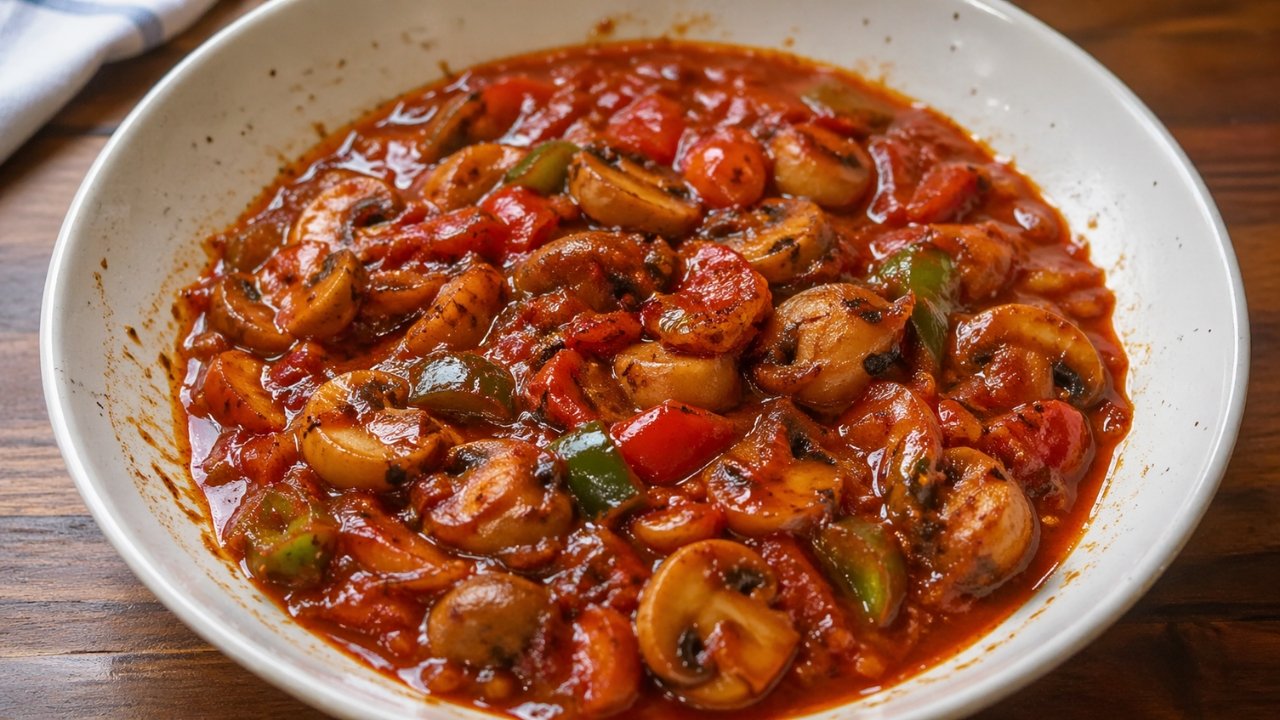
Mushroom chilly masala sauce is useful when you want something bold, quick, and flexible without opening half the pantry. The common mistake with mushroom sauces is making them watery, flat, or too salty before the mushrooms have had time to brown. This version keeps the ingredient list tight and practical: six main ingredients, a short cooking method, and a sauce that works with rice, noodles, roti, grilled bread, or simple vegetables.
The idea is not to make a complicated restaurant-style dish. It is to make a dependable mushroom chilly masala sauce that has heat, body, and enough savory depth to carry a weekday meal. The sauce can be made thick for wraps and toast, slightly loose for rice bowls, or glossy for tossing with noodles.
Ingredients
- 300 g mushrooms — button mushrooms are affordable and easy to find. Cremini or mixed mushrooms give a deeper flavor. Wipe them clean instead of soaking if possible.
- 2 tablespoons oil — any neutral cooking oil works. Use a little more if your pan is wide and the mushrooms are dry.
- 1 large onion, finely chopped — this gives body to the sauce. A red or yellow onion both work.
- 1 tablespoon ginger-garlic paste — use fresh crushed ginger and garlic if you prefer. About 2 garlic cloves and a small piece of ginger is enough.
- 2 tablespoons chilly masala paste — use a ready chilly masala paste, or mix 1 tablespoon red chilli paste with 1 teaspoon garam masala and a pinch of cumin powder.
- 200 ml tomato puree — canned tomato puree, blended fresh tomatoes, or passata all work. If the puree is very sharp, cook it a little longer before adding water.
You will also need salt and a small splash of water as basic cooking support. These are not counted among the six main ingredients because they only adjust the sauce. Add them carefully, especially if your chilly masala paste already contains salt.
Preparation
Start by preparing the mushrooms properly. Trim the ends if they look dry. Wipe the caps with a damp cloth or kitchen paper. If they are visibly dirty, rinse them quickly and dry them well. Do not leave them sitting in water. Mushrooms absorb moisture easily, and extra water makes the sauce thin before it has a chance to develop flavor.
Cut the mushrooms into thick slices or quarters. Thin slices cook fast, but they can shrink too much and disappear into the sauce. For a better texture, keep the pieces large enough to feel in the finished dish. Small mushrooms can simply be halved.
Place a wide pan over medium-high heat and let it warm before adding the oil. Add the mushrooms first, without the onion. This is the small step that improves the sauce most. Spread them out and cook for several minutes, stirring only occasionally. At first they will release water. Keep cooking until most of that liquid evaporates and the edges start to brown.
This first mushroom stage matters because it prevents the sauce from tasting boiled. When mushrooms are cooked directly in tomato sauce, they release water into the pan and dilute everything. By cooking them first, you control that moisture and get a firmer bite.
Once the mushrooms have reduced and browned lightly, move them to one side of the pan or transfer them to a plate. Add the chopped onion to the same pan. If the pan looks dry, add a teaspoon more oil. Cook the onion over medium heat until it softens and turns lightly golden. Stir often so the small pieces do not burn at the edges.
Add the ginger-garlic paste and cook for about one minute. The raw smell should fade, but the paste should not darken too much. If it sticks, add one spoon of water and scrape the base of the pan. Those browned bits from the mushrooms and onion help the sauce taste fuller.
Now add the chilly masala paste. Stir it into the onion mixture and cook it briefly. This step wakes up the spices and removes any raw paste taste. Keep the heat moderate. If the paste contains chilli powder, it can burn quickly and make the sauce bitter.
Pour in the tomato puree and stir well. Let it simmer until the color deepens slightly and the oil begins to show around the edges. This usually takes several minutes, depending on the thickness of the puree. Do not rush this part. Tomato that is not cooked enough can make the sauce sharp and unfinished.
Return the mushrooms to the pan and mix them through the sauce. Add salt carefully. Add a small splash of water only if the sauce is too thick to coat the mushrooms. Cover the pan loosely and cook for a few more minutes so the mushrooms absorb the masala without becoming soft and spongy.
The finished mushroom chilly masala sauce should be thick enough to cling to a spoon. For rice, loosen it with a little hot water. For wraps, toast, or stuffed rolls, keep it thicker and cook it uncovered for an extra minute. Taste before serving. If it feels too spicy, add a little more tomato puree or a spoon of plain yogurt off the heat. If it feels flat, it usually needs a pinch more salt or one extra minute of simmering, not more spice.
Useful Kitchen Tools
A wide frying pan helps mushrooms brown instead of steaming, which makes a real difference in this sauce. A flat wooden spatula is useful for scraping the browned onion and mushroom bits from the base of the pan. If you often make quick sauces, a small blender is practical for turning fresh tomatoes into puree without extra preparation.
Cooking, Baking, or Use Tips
The most useful rule for mushroom chilly masala sauce is to cook the mushrooms before building the sauce. Mushrooms release a lot of water when heated. If they go straight into tomato masala, that water makes the sauce thin and weak. Cooking them first lets the moisture evaporate and gives the mushrooms a better bite.
Use a wide pan if possible. A small deep pan traps steam, so the mushrooms simmer instead of browning. If your pan is small, cook the mushrooms in two batches. It takes a few extra minutes, but the sauce will be thicker and more flavorful.
Do not add salt too early. Salt pulls water from mushrooms and can flood the pan before they brown. Add salt after the mushrooms have reduced, or once the sauce is almost finished.
Cook the chilly masala paste with the onion before adding tomato puree. This removes the raw spice taste and helps the flavor spread through the oil. Keep the heat medium, because chilli paste can burn quickly and turn bitter.
Tomato puree needs time to cook. If the sauce tastes sour, simmer it a little longer before adding anything else. As the tomato reduces, the sharp taste becomes softer. If it still feels too sharp, add a small pinch of sugar or a spoon of cream, yogurt, or coconut milk at the end.
After the mushrooms go back into the pan, keep the final simmer short. The aim is to coat the mushrooms, not stew them. Too much cooking can make them soft and spongy.
Adjust the thickness based on how you want to serve it. For rice, keep the sauce slightly loose. For noodles, keep it a little stronger because noodles dilute flavor. For roti, toast, or wraps, reduce it until thick and almost spreadable.
A simple texture check is the spoon trail test. Drag a spoon through the sauce. If the line closes immediately, the sauce is still loose. If the line stays visible for one or two seconds, it is ready. This works better than timing because mushroom moisture and tomato thickness can vary.
If the sauce sticks at the bottom, lower the heat and add one spoon of water. If it has burned, do not scrape the burnt layer into the sauce. Move the good sauce to a clean pan and continue gently.
Variations or Conservation
This mushroom chilly masala sauce is easy to adjust. For a milder version, use less chilly masala paste and add more onion. A spoon of yogurt, cream, or coconut milk can also soften the heat. Add it at the end, away from high heat, so the sauce stays smooth.
For a brighter taste, add lemon juice after cooking. Do not simmer the lemon in the sauce, because it can lose its fresh flavor. A small squeeze is enough, especially if you are serving the sauce with fried snacks, paratha, or rich flatbread.
To make the dish more filling, add paneer, tofu, chickpeas, or boiled potatoes. Add these after the tomato puree has cooked down, then simmer until everything is coated. Avoid adding raw potatoes unless they are cut very small, because they may take too long to soften.
You can also add more vegetables. Capsicum works well if added near the end so it stays slightly crisp. Peas can go straight into the sauce and cook quickly. Small cauliflower florets should be lightly cooked first or cut small so they do not stay hard.
For a low-waste version, use the mushroom stems. Chop them finely and cook them with the onion. They blend into the sauce and add body without making the dish look crowded. This is useful when using larger mushrooms with thick stems.
Leftover sauce keeps well in the fridge for about two days in a covered container. Let it cool before storing. Reheat it gently in a pan with a spoon of water, stirring slowly so the mushrooms do not break.
Freezing is possible, but the mushrooms may become softer after thawing. If you plan to freeze the sauce, keep the mushrooms slightly firm during the first cooking. Thaw in the fridge, then reheat in a pan and reduce any extra liquid.
Small leftovers are still useful. Spread the sauce on toast, mix it into fried rice, fold it into scrambled eggs, stir it into lentils, or use it as a quick wrap filling. Since the sauce is already seasoned, taste the new dish before adding extra salt.
For packed lunches, keep the sauce a little thick. Let it cool slightly before closing the container. Hot sauce trapped under a
Conclusion
Mushroom chilly masala sauce is a practical recipe for quick meals because it uses simple ingredients and works with rice, noodles, roti, toast, or wraps. Cooking the mushrooms first keeps the sauce thick and full of flavour, while proper simmering gives the tomato masala a smoother taste. It is easy to adjust, simple to store, and useful for turning small leftovers into another meal.
