
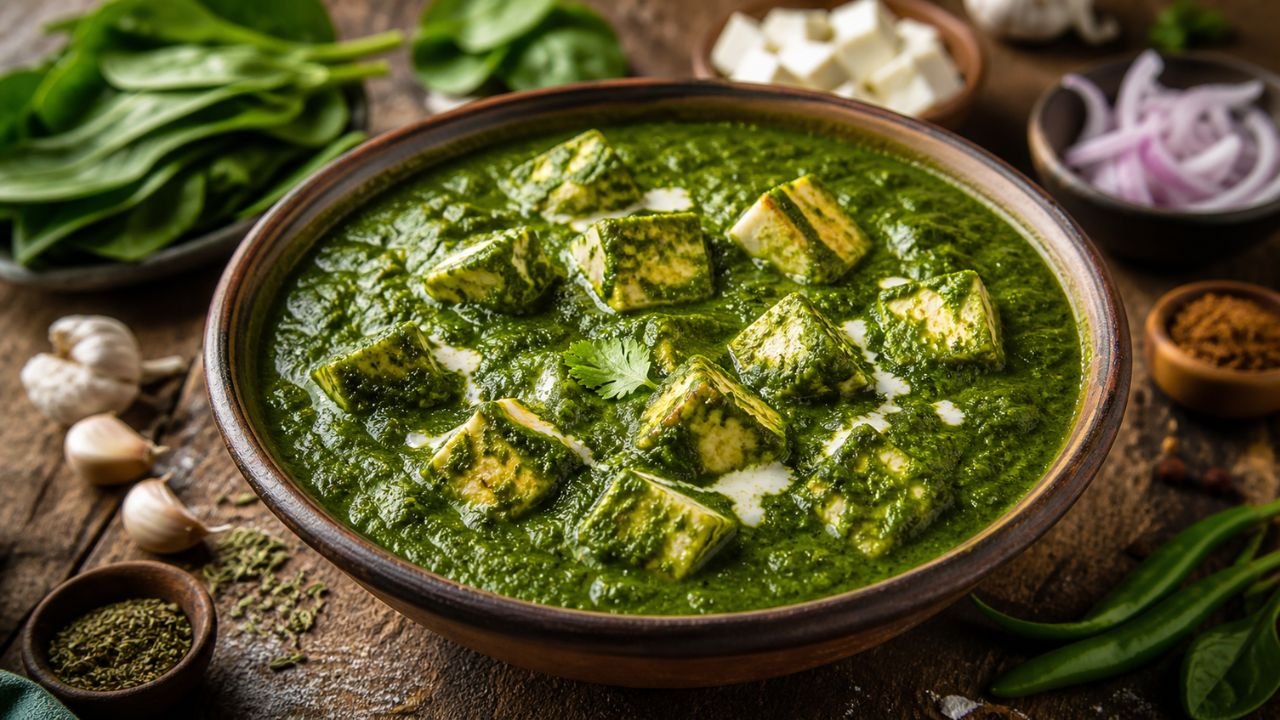
Palak paneer is one of the most loved North Indian dishes because it combines everyday ingredients with comforting flavor, appealing color, and satisfying texture. This version of Palak Paneer Recipe with Fresh Spinach and Soft Paneer Cubes focuses on building a smooth spinach gravy that tastes fresh rather than heavy, while keeping the paneer tender and delicate. The dish is nourishing enough for a family lunch, elegant enough for guests, and practical enough for a weeknight dinner when you want something wholesome with roti, naan, paratha, or steamed rice. Using fresh spinach gives the curry a cleaner taste and brighter green color, while soft paneer cubes add richness that balances the gentle earthiness of the greens.
A great palak paneer depends on a few simple but important choices. Fresh spinach should be washed very well so the puree stays clean and pleasant. The leaves are briefly cooked and blended with aromatics to create a silky base. Onion, tomato, ginger, garlic, and a small selection of spices add body without overwhelming the spinach. The paneer can be used as it is for a soft bite, or lightly warmed for extra tenderness. The final texture should be creamy and spoonable, not watery and not overly thick. The flavor should be mildly spiced, savory, and balanced with a hint of richness from cream or milk.
This recipe is designed for home cooks who want dependable results without complicated techniques. It explains not only what to do, but also why each stage matters. From blanching the spinach correctly to simmering the gravy gently after adding paneer, every step helps preserve color, texture, and flavor. Once you understand the method, palak paneer becomes a dish you can make confidently again and again. It is also flexible enough to suit different tastes, whether you prefer it restaurant-style and creamy or lighter and more focused on spinach.
Recipe Information
Palak paneer is valued not only for its taste but also for its balance. Spinach contributes color, freshness, and a hearty vegetable base, while paneer adds protein and a mild milky flavor. The result is a dish that feels complete and deeply comforting. It is also a useful recipe for serving vegetarian guests because it is filling, familiar, and pairs easily with other dishes such as jeera rice, tandoori roti, cucumber raita, onion salad, and pickles. Leftovers keep well for a short time and can be reheated gently, making this a practical choice for meal planning.
- PreparationTime – 20 minutes
- Cook Time – 30 minutes
- Total Time – 50 minutes
- Recipe Category – Main Course
- Recipe Cuisine – North Indian
- Recipe Yield – 4 servings
Ingredients
- 500 grams fresh spinach leaves
- 250 grams paneer, cut into medium cubes
- 2 tablespoons oil or ghee
- 1 tablespoon butter
- 1 large onion, finely chopped
- 2 medium tomatoes, chopped
- 1 to 2 green chilies
- 1 tablespoon ginger, chopped
- 5 to 6 garlic cloves, chopped
- 10 to 12 cashews
- 1 teaspoon cumin seeds
- 1 small bay leaf
- 1/2 teaspoon turmeric powder
- 1 teaspoon coriander powder
- 1/2 teaspoon red chili powder
- 1/2 teaspoon garam masala
- 1/4 teaspoon roasted cumin powder
- 3 to 4 tablespoons fresh cream or 1/4 cup milk
- Salt to taste
- 1/2 teaspoon sugar, optional
- 2 to 3 tablespoons water as needed for blending and simmering
- Ice-cold water for refreshing the spinach after blanching
Each ingredient has a role in shaping the final dish. Spinach is the heart of the recipe, so choose leaves that are fresh, green, and not wilted. Paneer should be soft and moist, not dry or rubbery. Cashews help create a creamy consistency without making the gravy too heavy. Onion and tomato provide structure and body. Ginger, garlic, cumin, and green chili bring warmth and aroma, while a small amount of cream smooths the finish and softens any bitterness from the greens.
If you prefer a lighter version, reduce the cream and use milk instead. If your tomatoes are very tangy, balance them with a pinch of sugar. If your paneer is store-bought and firm, soaking the cubes in warm water for 10 minutes before adding them to the curry will improve the texture significantly. Good palak paneer is rarely about more spice; it is about balanced seasoning and careful cooking.
Preparation
Begin by cleaning the spinach thoroughly. Separate the leaves, trim any tough stems, and wash them in several changes of water to remove all grit. Bring a large pot of water to a boil and add the spinach for about 2 minutes, just until the leaves wilt. Do not overcook at this stage because extended boiling can dull the color and reduce the fresh flavor. Immediately transfer the spinach to a bowl of ice-cold water. This quick cooling step helps retain the vibrant green shade and stops the cooking process.
Once cooled, drain the spinach well. Add it to a blender with green chilies, ginger, garlic, and cashews. Blend to a smooth puree. If needed, add only a little water to keep the puree thick and concentrated. A smoother puree gives the finished dish a more refined texture, so take a little extra time here if necessary. Set the puree aside.
Next, heat oil or ghee in a pan over medium heat. Add cumin seeds and bay leaf. Let the cumin crackle and release its aroma. Add the chopped onion and cook until soft and light golden. The onion should not be deeply browned because that would make the gravy darker and heavier in taste. Add the chopped tomatoes and cook until they break down completely and the oil begins to separate slightly from the masala. This indicates that the moisture from the tomatoes has reduced and the base is ready for spices.
Add turmeric powder, coriander powder, and red chili powder. Stir for a few seconds on low heat so the spices bloom without burning. If the pan looks too dry, add a spoonful of water. At this point, the masala should smell fragrant and look cohesive. You may blend this onion-tomato mixture for an even smoother restaurant-style gravy, but that is optional. Many home cooks prefer the slight body that comes from leaving it as it is.
Now add the spinach puree to the pan and mix well. Cook on low to medium heat for about 6 to 8 minutes, stirring occasionally. Avoid aggressive boiling because it can cause the spinach to lose its fresh green color. Add salt, roasted cumin powder, and garam masala. If the mixture is too thick, add a little water to reach a creamy consistency. Taste and adjust the seasoning. If the spinach has a slightly strong flavor, add the optional sugar to soften the edges.
For the paneer, you can either use the cubes directly or soften them first. To soften, place the paneer cubes in warm water for 5 to 10 minutes, then drain gently. This is especially helpful when using packaged paneer from the refrigerator. Add the paneer cubes to the simmering spinach gravy and cook for 3 to 4 minutes on very low heat. Paneer should be heated through, not cooked for too long, otherwise it may turn chewy. Finish with butter and fresh cream or milk, stirring gently so the cubes do not break.
Turn off the heat and let the curry rest for 2 minutes before serving. This short resting time allows the flavors to settle. Serve hot with naan, tandoori roti, phulka, jeera rice, or plain basmati rice. A small drizzle of cream on top can be added before serving, but it is not necessary if you want a simpler presentation. The finished palak paneer should have a soft green color, a mild glossy gravy, and paneer cubes that feel delicate when cut with a spoon.
The key to mastering this dish is understanding the cooking rhythm. First preserve the freshness of the spinach, then build flavor with a gentle masala, then combine both without overcooking. Once you get that balance right, the recipe becomes very reliable. It is also a forgiving dish because small adjustments in cream, spice, or consistency can tailor it to your preference while keeping the identity of the dish intact.
Tips
- Always wash spinach very thoroughly, as even a little grit can affect the final texture.
- Blanch the spinach briefly and cool it immediately in cold water to preserve color.
- Blend the spinach puree until smooth for a silky gravy.
- Do not over-brown the onions if you want a bright green and balanced curry.
- Cook the tomato masala well before adding spinach so the gravy does not taste raw.
- Use warm-water-soaked paneer for especially soft cubes.
- Simmer gently after adding paneer; prolonged cooking can make it firm.
- Add cream at the end for a rounded finish and smoother flavor.
- Adjust the consistency with small amounts of water only.
- Taste before serving and balance tanginess, salt, and spice carefully.
Another useful tip is to avoid covering the pan for too long after adding the spinach puree. Trapped steam can sometimes darken the color. Keeping the heat moderate and the pan partly open helps maintain freshness. If you want a more pronounced garlic flavor, reserve a small amount of finely chopped garlic, sauté it in a little butter, and stir it into the dish at the end. This gives the curry a fragrant finishing note.
For a richer version, add a spoonful of malai or a few extra cashews. For a cleaner and lighter home-style version, rely more on spinach and use just enough dairy to round out the flavor. If reheating leftovers, do so on low heat and add a splash of water or milk to loosen the gravy. This prevents the dish from becoming too thick and helps keep the paneer soft.
Variations
There are many ways to adapt palak paneer while staying true to its character. One popular variation includes sautéing the paneer cubes lightly before adding them to the gravy. This creates a firmer outer layer and a slightly richer taste. However, if you love very soft paneer, skipping the frying step is better. Another variation uses a combination of spinach and fenugreek leaves for a deeper, slightly more complex flavor. This can be delicious, though the distinctive identity of classic palak paneer remains best when spinach is the main green.
You can also make a no-onion version for a simpler profile. In that case, the gravy relies more heavily on tomatoes, ginger, garlic, cashews, and spices. Some cooks prefer to add a little yogurt instead of cream for mild tang and body. If you want extra heat, increase the green chilies rather than adding too much red chili powder, which can affect the color. For a vegan adaptation, replace paneer with firm tofu and use dairy-free cream or cashew cream. The result is different but still satisfying and close in spirit to the original dish.
Another attractive variation is restaurant-style palak paneer, where both the spinach puree and the onion-tomato masala are blended separately and then cooked together into a very smooth sauce. A small amount of butter and cream gives it a luxurious finish. By contrast, a rustic home-style variation keeps some texture in the masala and uses less cream, creating a more everyday dish that pairs beautifully with hot phulkas.
Conclusion
Palak Paneer Recipe with Fresh Spinach and Soft Paneer Cubes is a classic that proves a simple dish can still feel special. Its appeal lies in contrast: fresh spinach turned into a velvety gravy, mild paneer enriched by warm spices, and a final texture that feels both comforting and elegant. When made carefully, the dish tastes fresh, balanced, and deeply satisfying without relying on heavy seasoning. It is the kind of recipe that suits many occasions, from regular family meals to festive spreads.
What makes this recipe particularly rewarding is that it teaches a valuable approach to cooking: preserve freshness, build flavor in layers, and finish gently. Once you understand that method, you can make palak paneer with confidence and even adapt it to your household preferences. Whether you serve it with naan for a celebratory dinner or with simple rice for a nourishing lunch, it remains a dish that people return to again and again. With fresh spinach, soft paneer, and a well-made gravy, every spoonful delivers the comforting taste that has made palak paneer a favorite for generations.
