
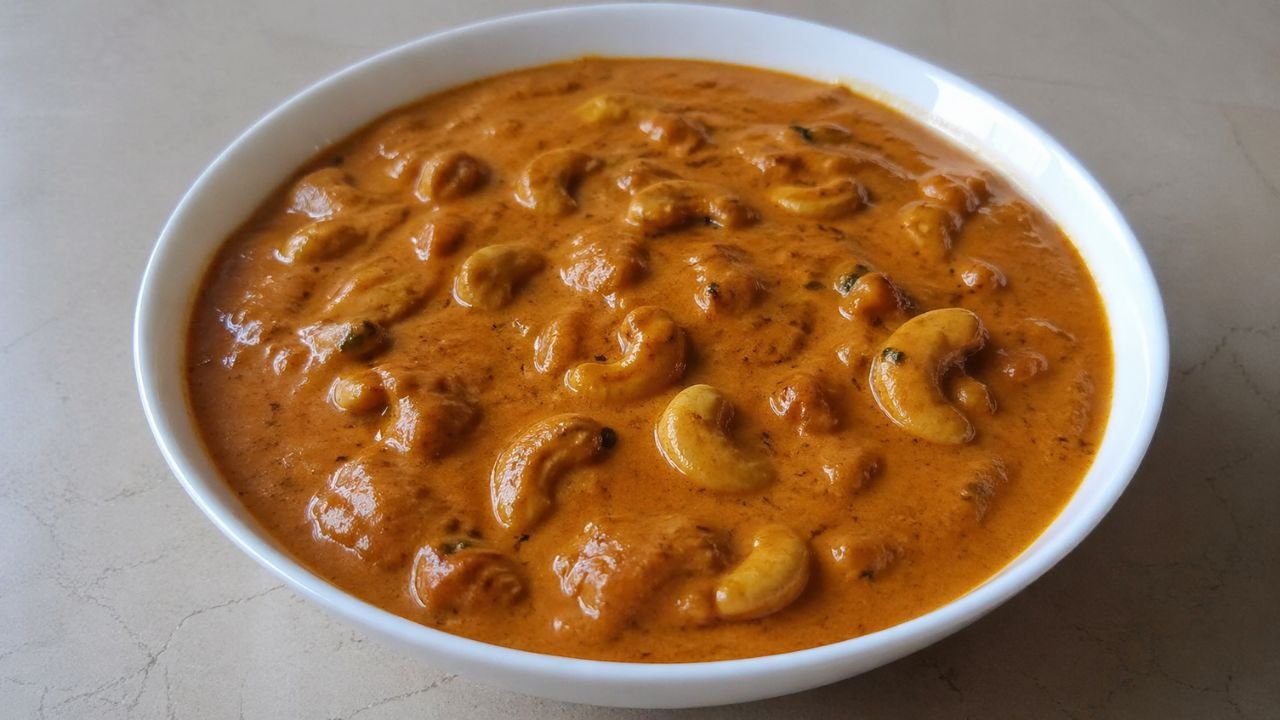
A good kaju masala recipe depends less on complicated cooking and more on using the right ingredients in the right way. The usual mistake is treating cashews like a simple garnish. In this dish, cashews are the main ingredient, the thickener, and part of the flavor base. If they are not handled properly, the curry can turn flat, oily, too sweet, or grainy.
This recipe keeps the process practical. It uses six key ingredients to build a rich, smooth kaju masala without needing restaurant equipment or a long list of extras. The gravy is creamy, lightly spiced, and useful for everyday meals when you want something special but still manageable in a home kitchen.
Ingredients
This kaju masala recipe serves about 3 to 4 people with roti, naan, paratha, jeera rice, or plain steamed rice.
- Cashews, 1 cup – Use whole or broken cashews. Broken cashews are usually cheaper and work well because some will be ground into paste. Keep a few whole or halved cashews for texture.
- Onions, 2 medium, sliced – Onions give body and mild sweetness to the gravy. Cook them until golden, not dark brown, or the masala can taste bitter.
- Tomatoes, 2 medium, chopped – Tomatoes balance the richness of cashews. Use ripe tomatoes for better color and smoother flavor. If tomatoes are very sour, add a small pinch of sugar later.
- Ginger-garlic paste, 1 tablespoon – This gives the curry its base aroma. Freshly crushed ginger and garlic work well if you do not have paste.
- Spices – Use 1 teaspoon coriander powder, 1/2 teaspoon cumin powder, 1/2 teaspoon turmeric, 1 teaspoon Kashmiri chilli powder, 1/2 teaspoon garam masala, and salt to taste. Kashmiri chilli powder gives color without making the curry too hot.
- Cream or thick milk, 3 to 4 tablespoons – Cream gives a richer finish. Thick milk is lighter and works for everyday cooking. You can also use a little cashew paste instead of cream if you want to avoid dairy.
For cooking, you will also need 2 tablespoons oil or ghee, 1 bay leaf, 1 small cinnamon stick, 2 green cardamoms, 1 tablespoon kasuri methi, and about 1 to 1 1/2 cups water. These support the six key ingredients but do not need to dominate the dish.
Preparation
Start by separating the cashews. Keep about 1/4 cup aside for frying or roasting. Soak the remaining 3/4 cup in hot water for 15 to 20 minutes. This short soaking step makes the cashews easier to blend and helps avoid a grainy gravy.
While the cashews soak, heat 1 tablespoon oil or ghee in a pan. Add the sliced onions and cook them over medium heat. Stir often. The target is soft golden onions, not deep brown onions. Golden onions blend smoothly and give the gravy a round taste. Dark onions can overpower the cashew flavor.
Add the chopped tomatoes to the onions. Cook until the tomatoes soften and the mixture looks jammy. This step matters because raw tomato taste stays noticeable in a mild kaju masala. Add the ginger-garlic paste and cook for another minute until the sharp smell reduces.
Turn off the heat and let the mixture cool for a few minutes. Drain the soaked cashews. Blend the onion-tomato mixture with the soaked cashews and a little water. Use only enough water to help the blades move. A thick paste is better than a thin one because you can control the gravy later.
Wipe the pan if needed, then add the remaining oil or ghee. Add the bay leaf, cinnamon, and cardamoms. Keep the heat medium-low. Let the whole spices release aroma for a few seconds, but do not burn them.
Add the blended paste to the pan. It may splutter, so keep the heat controlled. Stir well and cook the paste for 6 to 8 minutes. This is where the flavor develops. The paste should thicken, look glossy, and begin to leave the sides of the pan slightly. If it sticks, add a spoonful of water and continue cooking.
Add turmeric, coriander powder, cumin powder, Kashmiri chilli powder, and salt. Cook the spices in the paste for 1 to 2 minutes. Do not add all the water immediately. Spices bloom better in a thicker masala, and the final gravy will taste less watery.
Now add 1 cup warm water and stir until smooth. Bring the gravy to a gentle simmer. Avoid hard boiling because cashew-based gravies can thicken suddenly and stick at the bottom. Simmer for 5 to 7 minutes until the sauce becomes creamy and stable.
In a small pan, lightly roast or fry the reserved cashews until they turn pale golden. This takes only a short time. Add them to the gravy. Crush kasuri methi between your palms and add it near the end. Stir in cream or thick milk on low heat. Add garam masala last, simmer for one minute, and switch off the heat.
Rest the kaju masala for 5 minutes before serving. This short rest helps the gravy settle and thicken. If it becomes too thick, loosen it with a little hot water or warm milk.
Cooking, Baking, or Use Tips
Graininess is the main texture problem in kaju masala. It usually happens when cashews are not soaked, the paste is blended with too little liquid, or the gravy is cooked on high heat after adding the cashew paste. Soak the cashews well, blend with enough water, and cook on moderate heat.
After blending, rub a little cashew paste between your fingers. If it feels sandy, blend again with one or two tablespoons of water. If it feels smooth and thick, it is ready to use.
Cook the onion-tomato base patiently on medium heat. Undercooked onions and tomatoes can make the gravy taste raw and oddly sweet, while over-browning can hide the mild cashew flavor.
Use warm water to adjust the gravy consistency. Add it little by little because kaju masala thickens as it rests. Stop slightly before the desired thickness and check again after a few minutes.
Add cream on low heat to avoid splitting. If using milk, add it slowly while stirring. For better color, bloom a little Kashmiri chilli powder in warm oil and mix it into the gravy.
Adjust salt near the end, as cashew gravies are naturally slightly sweet. Add salt gradually, stir, wait, and taste before adding more.
Crush kasuri methi between your palms and add it at the end. Adding it too early can make the gravy slightly bitter.
If the gravy is too thick, add hot water a spoon at a time. If it is too thin, simmer uncovered on low heat. Avoid adding dry cashew powder directly; first mix it with warm water, then add.
Serve kaju masala with roti, naan, paratha, or kulcha. With rice, keep the gravy a little thinner. Since the dish is rich, serve it with a light side like cucumber salad, curd, vegetables, or dal.
Useful Kitchen Tools
A small blender jar is useful for this recipe because it makes a smoother cashew paste than a large jar with too little volume. A heavy-bottomed pan also helps because cashew gravy can stick quickly on thin cookware. A silicone spatula is practical for scraping the thick masala from the sides without wasting it.
Variations or Conservation
Kaju masala is flexible as long as the base remains balanced. The six key ingredients should stay in place, but you can adjust the finish based on what you have at home.
- Without cream: Use 2 extra tablespoons of soaked cashews while blending. This keeps the gravy rich without dairy.
- With paneer: Add cubed paneer near the end and simmer for 2 minutes. Do not boil too long, or the paneer can become firm.
- With vegetables: Add steamed peas, carrots, cauliflower, or beans after the gravy is cooked. Keep the vegetables lightly cooked so they do not release too much water.
- Spicier version: Add a chopped green chilli with the ginger-garlic paste or increase the chilli powder slightly. Keep garam masala modest so it does not dominate the cashews.
- Budget version: Use broken cashews for the paste and save whole cashews only for garnish. The final taste stays close, and the cost is lower.
Cool kaju masala fully before refrigerating and store it in a clean, covered container for up to 2 days. Cashew-based gravy becomes thicker when cold, so check the texture only after reheating. Warm it on low heat with a little water or milk, stirring often.
Avoid reheating the curry again and again. Reheat only the amount you need, because nut-based sauces can lose their smooth texture after repeated cooling and heating. If making it ahead, store the gravy and fried cashews separately, then add the cashews after reheating.
For freezing, freeze the gravy before adding cream. Cool it, pack it in meal-sized containers, and thaw it in the fridge before reheating gently. Add cream or milk at the end. If the gravy separates slightly, blend it again or heat it slowly until it becomes smooth.
Leftover kaju masala can be reused in simple ways. Thin it with water or milk and serve it with rice, spread it in wraps with vegetables, or mix a few spoons into dal. Small amounts of leftover gravy can also be added to mushrooms, peas, or potatoes for a quick filling.
To save waste, rinse the blender jar with warm water and add that water to the pan while cooking. You can also prepare only the onion-tomato-cashew paste in advance and cook it with spices later for a fresher curry. Balance the taste with salt, chilli powder, lemon, cream, or milk as needed.
Conclusion
Kaju masala is practical, rich, and easy to repeat when the base is cooked well. With cashews, onions, tomatoes, spices, and a creamy finish, it delivers strong flavor without complicated work. Use broken cashews to save cost, adjust the gravy easily, and reuse leftovers in wraps, rice, or vegetables.
