
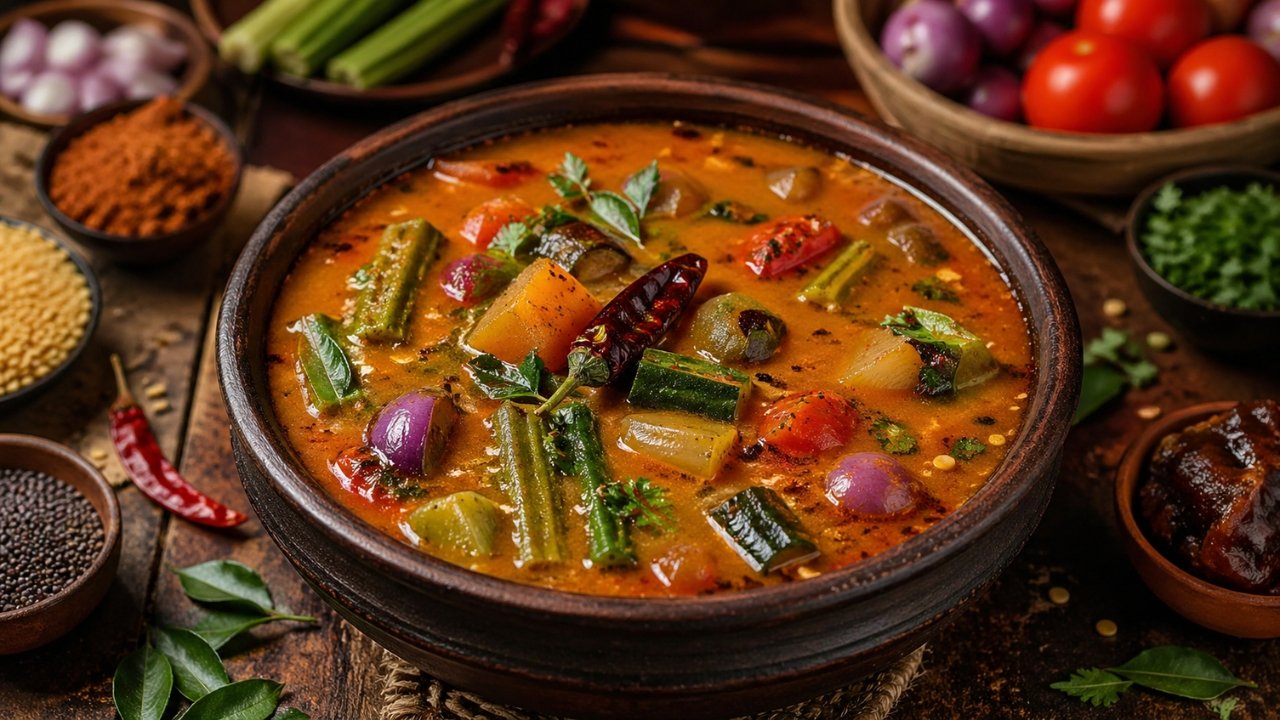
Sambar Recipe with 7 Vegetables and Balanced South Indian Flavor is a wholesome, comforting, and deeply satisfying dish that brings together lentils, fresh vegetables, tamarind, spices, and a fragrant tempering. Sambar is one of the most loved dishes in South Indian cooking because it is nourishing, versatile, and full of layered flavor. It can be served with steamed rice, idli, dosa, vada, pongal, upma, or even a simple millet meal. What makes this version special is the use of seven vegetables, each adding its own texture, sweetness, earthiness, or mild sharpness to the final dish.
A balanced sambar should not taste too sour, too spicy, or too thick. It should have a pleasant tang from tamarind, mellow sweetness from vegetables, richness from cooked toor dal, warmth from sambar powder, and aroma from the final tempering. This recipe is designed to give a classic South Indian flavor while keeping the method practical for home cooking. The vegetables used here are drumstick, carrot, pumpkin, brinjal, radish, okra, and shallots. Together, they create a colorful and flavorful sambar that feels complete without needing many side dishes.
The secret to a good sambar lies in cooking each component properly. The dal must be soft and creamy, the tamarind must be balanced, the vegetables should be tender but not mushy, and the tempering should be fresh and aromatic. A final simmer brings everything together and allows the spices to settle into the lentils and vegetables. This recipe gives you a reliable method, useful tips, and practical variations so you can make a flavorful sambar for everyday meals or special South Indian breakfasts.
Recipe Information
- Recipe name: Sambar Recipe with 7 Vegetables and Balanced South Indian Flavor
- Preparation time: 20 minutes
- Cooking time: 40 minutes
- Total time: 60 minutes
- Servings: 6 servings
- Recipe category: Main dish
- Recipe cuisine: South Indian
- Main ingredients: Toor dal, mixed vegetables, tamarind, sambar powder, and tempering spices
- Best served with: Steamed rice, idli, dosa, vada, pongal, or upma
- Texture: Medium-thick, smooth from dal, and chunky from vegetables
- Flavor profile: Tangy, mildly spicy, earthy, savory, and aromatic
This sambar is suitable for lunch, dinner, and traditional South Indian breakfast combinations. It is naturally vegetarian and can be made vegan by using oil instead of ghee for tempering. The recipe uses toor dal because it gives the classic body and taste associated with traditional sambar. However, the vegetables are just as important as the lentils. Drumstick gives a signature South Indian aroma, pumpkin adds mild sweetness, radish gives depth, brinjal absorbs the spices, carrot adds color, okra gives body, and shallots add a gentle sweetness that balances the sourness of tamarind.
The preparation time includes washing and soaking the dal briefly, chopping vegetables, extracting tamarind pulp, and gathering spices. The cooking time includes pressure cooking the dal, simmering the vegetables, combining the dal with tamarind and spices, and preparing the final tempering. These timings are kept consistent throughout the recipe and schema so the dish remains practical and accurate for meal planning.
Ingredients
- 1 cup toor dal, washed well
- 3 cups water for cooking the dal
- 1 small piece turmeric, or 1/2 teaspoon turmeric powder
- 1 teaspoon oil for pressure cooking the dal
- 1 medium drumstick, cut into 2-inch pieces
- 1 medium carrot, peeled and sliced
- 1 cup pumpkin, peeled and cubed
- 1 small brinjal, cut into wedges
- 1/2 cup radish, sliced into rounds
- 6 okra pieces, trimmed and cut into halves
- 10 to 12 shallots, peeled
- 1 medium tomato, chopped
- 1 lemon-sized ball of tamarind, soaked in 1 cup warm water
- 2 to 2 1/2 tablespoons sambar powder
- 1/2 teaspoon red chili powder, optional
- 1/4 teaspoon asafoetida
- Salt, as needed
- 2 to 3 cups water for simmering and adjusting consistency
- 2 tablespoons fresh coriander leaves, chopped
- 2 teaspoons sesame oil or coconut oil
- 1 teaspoon mustard seeds
- 1/2 teaspoon cumin seeds
- 1/2 teaspoon fenugreek seeds
- 2 dried red chilies, broken
- 1 sprig curry leaves
- 1 pinch asafoetida for tempering
The vegetable combination in this recipe is chosen for balance. Drumstick and shallots give the sambar a traditional aroma. Pumpkin and carrot soften the tanginess of tamarind with natural sweetness. Radish adds a sharp, earthy note that becomes mellow after simmering. Brinjal absorbs the sambar powder and becomes soft and flavorful. Okra adds a light thickness and a distinct taste, but it should be added at the right stage so it does not become overly slimy.
Use good-quality sambar powder because it controls much of the final flavor. Homemade sambar powder gives the deepest aroma, especially when made with roasted coriander seeds, dried chilies, chana dal, urad dal, fenugreek, cumin, black pepper, and curry leaves. A trusted store-bought sambar powder also works well. Tamarind should be used carefully. Too much tamarind can overpower the vegetables and dal, while too little can make the sambar taste flat. The goal is a balanced tang that brightens the dish without dominating it.
Preparation
Wash the toor dal several times until the water runs mostly clear. Add the washed dal to a pressure cooker with 3 cups of water, turmeric, and 1 teaspoon oil. Pressure cook until the dal becomes very soft. Depending on the cooker, this usually takes 4 to 5 whistles on medium heat. Let the pressure release naturally. Open the cooker and mash the dal until smooth and creamy. A well-mashed dal helps create the classic body of sambar and prevents the dish from tasting watery.
While the dal cooks, soak the tamarind in 1 cup warm water for about 15 minutes. Squeeze the soaked tamarind well and extract the pulp. Strain it to remove seeds and fibers. Keep the tamarind extract aside. Chop all seven vegetables into medium pieces. Do not cut them too small, because sambar needs visible vegetable pieces that hold their shape after simmering. Keep okra separate because it cooks faster than firm vegetables like carrot, drumstick, pumpkin, and radish.
In a large pot, add drumstick, carrot, pumpkin, brinjal, radish, shallots, and tomato. Add about 2 cups of water, salt, and a pinch of turmeric if desired. Cook on medium heat until the vegetables are almost tender. The drumstick should soften, the carrot should be cooked but not mushy, and the pumpkin should hold its shape. Add the okra after the firmer vegetables are partly cooked. Simmer for a few more minutes until the okra becomes tender.
Add the tamarind extract to the cooked vegetables and simmer for 6 to 8 minutes. This step removes the raw smell of tamarind and allows the vegetables to absorb the sourness. Do not add the cooked dal before the tamarind has simmered properly, because the acidity of tamarind can sometimes slow down the softening of vegetables. Once the tamarind aroma becomes mellow, add sambar powder, optional red chili powder, and asafoetida. Stir well so the spice powder does not form lumps.
Add the mashed dal to the pot and mix thoroughly. Pour in enough water to reach a medium-thick consistency. Sambar thickens as it rests, so keep it slightly looser than the final consistency you want. Simmer the sambar on low to medium heat for 10 to 12 minutes. Stir occasionally to prevent the dal from settling at the bottom. Taste and adjust salt, tamarind, and spice. If the sambar tastes too sharp, simmer it a little longer or add a small piece of jaggery to balance the tang.
Prepare the tempering in a small pan. Heat sesame oil or coconut oil. Add mustard seeds and let them splutter. Add cumin seeds and fenugreek seeds. Keep the heat moderate because fenugreek burns quickly and can turn bitter. Add broken dried red chilies, curry leaves, and a pinch of asafoetida. Stir for a few seconds until aromatic. Pour this hot tempering over the simmering sambar. Cover the pot immediately for a few minutes so the aroma stays trapped inside.
Finish with chopped coriander leaves. Let the sambar rest for at least 10 minutes before serving. Resting improves the flavor because the dal, vegetables, tamarind, and spices settle into each other. Serve hot with steamed rice and a spoon of ghee, or pair it with idli, dosa, medu vada, or pongal. For breakfast, keep the sambar slightly thinner. For rice, a medium-thick consistency works best. Leftover sambar often tastes even better the next day because the vegetables continue to release flavor into the broth.
Tips
- Cook the dal until completely soft. Grainy dal will not give sambar its smooth, comforting texture.
- Do not add tamarind before the firm vegetables are partly cooked. Tamarind can slow the cooking of some vegetables.
- Add okra later than the other vegetables so it stays tender and does not become too soft.
- Use sesame oil for a traditional Tamil-style aroma or coconut oil for a Kerala-inspired flavor.
- Roast store-bought sambar powder lightly for a few seconds if it smells dull, but do not burn it.
- Add a small piece of jaggery only if the sambar tastes too sour or too spicy.
- Keep the consistency medium-thick for rice and slightly thinner for idli or dosa.
- Let the sambar rest after tempering. This short resting time improves aroma and balance.
- Use fresh curry leaves for the best tempering flavor. Dried curry leaves will not give the same fragrance.
- Avoid overcooking pumpkin and brinjal because they can break down and make the sambar too thick.
Balance is the most important part of this recipe. If the sambar tastes too sour, add more cooked dal or a small amount of jaggery. If it tastes too thick, add hot water and simmer for a few minutes. If it tastes flat, it likely needs more salt, sambar powder, or a longer simmer after adding tamarind. If it tastes bitter, the fenugreek in the tempering may have burned, so always temper on moderate heat.
For deeper flavor, you can cook the sambar in advance and reheat it gently before serving. Avoid boiling it aggressively after adding the tempering, because the fresh aroma of curry leaves and spices can fade. When reheating leftovers, add a splash of water because dal thickens in the refrigerator. Store cooled sambar in an airtight container and refrigerate it for up to 2 days. Reheat only the portion needed for the meal.
Variations
For a temple-style version, skip onions and shallots and add a small piece of jaggery. Use sesame oil for tempering and keep the sambar mildly spiced. This style tastes excellent with rice, ven pongal, and idli. For a hotel-style version, add a little more tomato, slightly more sambar powder, and a thinner consistency. Hotel-style sambar is often lighter, more pourable, and designed to pair well with idli and dosa.
For a thicker rice sambar, reduce the water slightly and simmer the dal longer after adding the vegetables. You can also add a tablespoon of cooked mashed pumpkin to increase body naturally. For a tiffin-style sambar, use moong dal along with toor dal or replace part of the toor dal with moong dal. This gives a lighter texture and a softer flavor that works well with breakfast dishes.
You can change the vegetables based on season and availability. Bottle gourd, chow chow, beans, potato, ash gourd, raw mango, and small onions are all good options. However, try to keep a mix of firm, soft, sweet, and aromatic vegetables. Avoid using too many strongly flavored vegetables at once, because they can disturb the balance. The seven-vegetable combination in this recipe works well because no single vegetable dominates the dish.
For a spicier version, increase red chili powder or use a stronger sambar powder. For a milder family-friendly version, reduce the chili powder and use more carrot and pumpkin. For a vegan version, use oil instead of ghee when serving. For a richer festive version, finish with a spoon of ghee and serve with hot rice, papad, pickle, and a simple vegetable poriyal.
Conclusion
Sambar Recipe with 7 Vegetables and Balanced South Indian Flavor is a complete, nourishing dish that shows why sambar remains a favorite across South Indian homes. The combination of creamy toor dal, tamarind, aromatic spices, and seven vegetables creates a meal that is hearty without being heavy. Each vegetable contributes something valuable, from the sweetness of pumpkin and carrot to the traditional aroma of drumstick and shallots.
Once you understand the balance of dal, tamarind, vegetables, spice, and tempering, sambar becomes easy to customize. The method in this recipe keeps the flavor classic while giving enough flexibility for everyday cooking. Serve it with rice for a comforting lunch, with idli or dosa for breakfast, or with vada for a special meal. With the right simmering time and a fresh tempering, this seven-vegetable sambar delivers a balanced South Indian flavor in every spoonful.
