
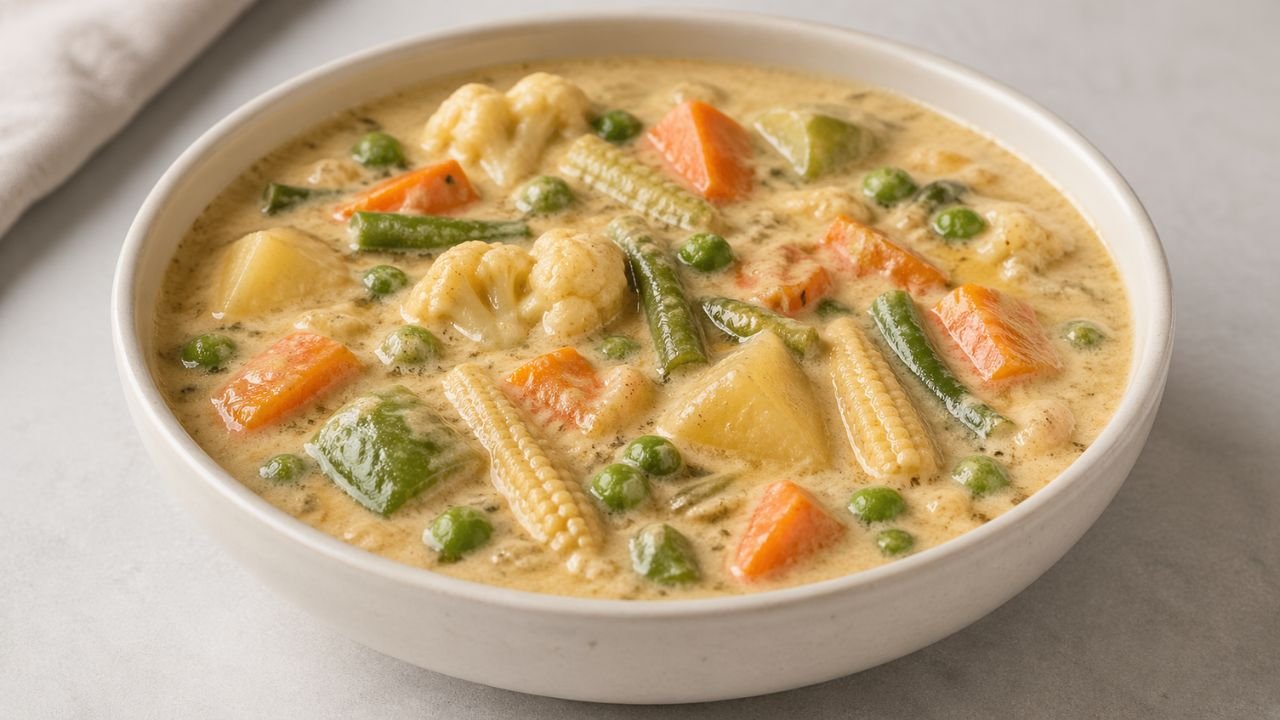
Veg shahi kurma can turn heavy, bland, or watery if the vegetables are chosen without thinking about texture. The sauce is rich, mild, and creamy, so the vegetables need to hold their shape, cook at the right speed, and give enough bite to balance the gravy.
This recipe article focuses on 7 vegetables that work well in veg shahi kurma and how to use them properly: potato, carrot, green beans, cauliflower, green peas, capsicum, and baby corn. Together, they give the kurma body, color, sweetness, and crunch without making it fussy. The method is practical for home cooking and works with basic pantry ingredients.
Ingredients
- 1 medium potato, peeled and cut into small cubes
- 1 medium carrot, peeled and cut into small cubes
- 10 to 12 green beans, trimmed and cut into short pieces
- 1 cup cauliflower florets, cut small
- 1/2 cup green peas, fresh or frozen
- 1/2 capsicum, cut into small squares
- 4 to 5 baby corn, sliced into rounds or diagonal pieces
- 2 tablespoons oil or ghee, or a mix of both
- 1 medium onion, finely chopped
- 1 teaspoon ginger-garlic paste
- 1 medium tomato, chopped or pureed
- 8 to 10 cashews, soaked in warm water for 10 minutes
- 2 tablespoons fresh coconut or 1 tablespoon desiccated coconut
- 2 tablespoons curd, whisked until smooth
- 1 bay leaf
- 2 green cardamoms
- 2 cloves
- 1 small cinnamon stick
- 1/2 teaspoon cumin seeds
- 1/2 teaspoon turmeric powder
- 1 teaspoon coriander powder
- 1/2 teaspoon red chilli powder, or less for a milder kurma
- 1/2 teaspoon garam masala
- Salt, as needed
- 3/4 to 1 cup water, adjusted for gravy thickness
- 1 tablespoon cream or milk, optional
- 1 tablespoon chopped coriander leaves
Preparation
Start by preparing the vegetable mix. The best veg shahi kurma does not need too many vegetables, but the pieces should be cut evenly. Potato and carrot can be cut into small cubes because they take longer to cook. Beans should be short enough to eat easily with roti or rice. Cauliflower should be kept in small florets, not large chunks. Capsicum should be added later, because it becomes limp if cooked from the beginning.
Rinse all vegetables well and drain them. If the cauliflower looks gritty, soak the florets in salted warm water for a few minutes, then rinse again. This also helps loosen dirt from the tight florets. Frozen peas can be used directly. There is no need to thaw them separately.
Make the kurma paste next. Blend the soaked cashews with coconut and a little water until smooth. The paste should not be grainy, because it forms the base of the shahi-style gravy. If the blender is small, use warm water and blend twice. A smooth paste gives a better finish than adding chopped nuts directly to the pan.
Heat oil or ghee in a thick-bottomed pan. Add bay leaf, cardamoms, cloves, cinnamon, and cumin seeds. Let them warm gently for a few seconds. Do not burn the whole spices. They should smell aromatic, not sharp or smoky.
Add the chopped onion and cook it on medium heat until it turns soft and light golden. This step matters. If the onion stays raw, the gravy will taste flat. If it browns too much, the kurma will become darker and less mild. A pale golden onion is enough.
Add ginger-garlic paste and cook for about one minute. Stir well so it does not stick. Add the chopped tomato and a little salt. Cook until the tomato softens and the oil begins to separate lightly around the edges. This does not need to become a dry masala. The goal is to remove the raw taste.
Lower the heat and add turmeric powder, coriander powder, and red chilli powder. Stir for a few seconds. Add potato, carrot, beans, cauliflower, and baby corn. Mix them with the masala so the vegetables are lightly coated. Add 3/4 cup water, cover the pan, and cook until the vegetables are almost tender.
This usually takes 10 to 14 minutes, depending on the size of the pieces. Stir once or twice during cooking. The vegetables should be soft enough to eat, but not collapsing. If the pan dries out, add a few tablespoons of hot water.
Now add green peas and capsicum. These two vegetables need less cooking. Peas become dull and mushy if boiled for too long, while capsicum loses its fresh bite. Cook for 3 to 4 minutes after adding them.
Reduce the heat to low before adding the cashew-coconut paste. Stir it in slowly. If the gravy looks too thick at this point, add a little water. Simmer gently for 4 to 5 minutes. Do not boil the gravy hard after adding the nut paste, because it can thicken too quickly and stick to the bottom.
Whisk the curd in a small bowl. Add one spoon of hot gravy to the curd and mix it. Then add this warmed curd mixture back into the pan. This simple step lowers the chance of curd splitting in the kurma. Keep the heat low and stir continuously for a minute.
Add garam masala and check the salt. If using cream or milk, add it now and simmer for one more minute. Finish with chopped coriander leaves. Turn off the heat and let the kurma rest for 5 minutes before serving. Resting helps the gravy settle and cling better to the vegetables.
Cooking, Baking, or Use Tips
For veg shahi kurma, cook vegetables according to their cooking time. Potato, carrot, beans, cauliflower, and baby corn should go in first, while peas and capsicum should be added later. This keeps the vegetables firm and prevents the kurma from turning into a soft mash. A good test is to press a potato cube with a spoon; if it breaks easily but still holds its shape, the vegetables are ready for the paste.
Cut the vegetables evenly so they cook at the same pace. Use smaller pieces for chapati or paratha and slightly larger pieces for rice. Potato adds body, carrot gives sweetness and color, beans add firmness, cauliflower absorbs flavor, peas cook quickly, capsicum adds freshness, and baby corn gives bite. Avoid using too much potato, as it can make the dish heavy.
Cook the vegetables mostly in a light masala-water base before adding cashew-coconut paste, cream, curd, or milk. Rich ingredients thicken the gravy and slow down cooking, so adding them too early can cause sticking. To avoid curd splitting, lower the heat, whisk the curd, and mix it with a spoon of hot gravy before adding it to the pan.
If the gravy becomes too thick, add hot water little by little. If it is too thin, simmer it uncovered before adding dairy. Do not boil heavily after adding cream or milk. A thick-bottomed pan is best because nut-based gravies can stick easily.
For extra flavor and less waste, simmer clean vegetable trimmings like carrot peels, bean ends, and cauliflower stems for 15 minutes, strain, and use the liquid instead of plain water. Serve veg shahi kurma with chapati, paratha, poori, jeera rice, plain rice, or mild pulao.
Useful Kitchen Tools
A small blender jar is useful for making a smooth cashew-coconut paste without adding too much water. A thick-bottomed pan helps prevent the nut-based gravy from sticking. A sharp knife also makes the recipe easier because evenly cut vegetables cook more evenly.
Variations or Conservation
Veg shahi kurma is flexible, but the best results come from keeping a balance between soft, firm, sweet, and fresh vegetables. The 7 vegetables in this recipe already cover that balance. You can still adjust based on what is available at home.
If you do not have baby corn, use a few paneer cubes or extra beans. Paneer should be added near the end, after the gravy is almost ready, so it stays soft. If you do not have cauliflower, use broccoli in small amounts, but cook it briefly because it has a stronger flavor and softer texture.
For a lighter kurma, reduce the cashews to 5 or 6 and skip cream. Use milk only if needed at the end. For a richer version, add a few more cashews and finish with a small spoon of cream. Avoid increasing every rich ingredient at once. Too many cashews, coconut, curd, and cream together can make the dish heavy.
For a no-onion version, skip onion and use a little extra tomato with the cashew-coconut paste. The taste will be different, but still useful for a quick home-style kurma. Cook the tomato well before adding the vegetables so the gravy does not taste raw.
For a no-coconut version, use extra cashews or a spoon of melon seeds if available. The flavor will be less traditional, but the gravy will still be creamy. If using only cashews, keep the heat low because the sauce can thicken quickly.
Leftover kurma stores well for 2 days in the refrigerator. Cool it fully before transferring it to a covered container. Since the gravy contains nuts and curd, do not leave it at room temperature for long after cooking.
When reheating, use low heat and add a splash of water or milk. Stir gently until the gravy loosens. Avoid hard boiling, because the sauce can split or become oily. If the vegetables have absorbed too much gravy overnight, add hot water in small amounts until the texture returns.
Leftover veg shahi kurma can be reused in simple ways. Mash the vegetables lightly and use the thickened gravy as a filling for toasted sandwiches. Spread it inside a wrap with sliced onion and coriander. You can also mix a small portion with cooked rice for a quick lunch, but keep the heat gentle so the gravy does not dry out.
If you plan to cook ahead, stop before adding cream and coriander. Refrigerate the base kurma, then reheat gently and finish with cream or milk just before serving. This gives a fresher taste and better texture than fully finishing the dish too early.
Freezing is possible, but not ideal. Potato and curd-based gravies can change texture after thawing. If you need to freeze it, freeze a version without potato and cream. Add freshly cooked potato and a little milk after reheating. This gives a better result than freezing the complete dish.
The most practical way to make veg shahi kurma regularly is to keep the vegetable mix simple. Seven vegetables are enough. More than that can make the dish crowded and harder to cook evenly. Potato, carrot, beans, cauliflower, peas, capsicum, and baby corn give a reliable mix for taste, color, and texture.
Conclusion
Veg shahi kurma is worth repeating because it uses ordinary vegetables in a rich but manageable gravy. With the right vegetable timing, a smooth paste, and gentle reheating, it stays useful for everyday meals, lunch boxes, and leftovers. It is low-waste, adaptable, and filling without needing complicated cooking.
